

Daily Dose Of Jazz…
Norman Louis Bates was born on August 26, 1927 in Boise, Idaho. His mother was an organist and he was a younger brother of bassist Bob Bates. He played in Jimmy Dorsey’s band for a year in 1945, then with Raymond Scott and Carmen Cavallaro shortly thereafter.
By 1948 he was part of the Dave Brubeck Trio, and the following year performed with Paul Desmond. Norman recorded with Jack Sheedy’s Dixieland Jazz Band in 1950.
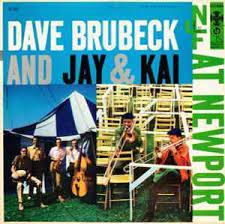
After spending four years in the Air Force, Bates played with Wally Rose’s Dixieland Band in 1955 and then replaced his brother Bob in Brubeck’s quartet, playing on multiple albums from Dave Brubeck and Jay & Kai at Newport (1956) onwards. He also recorded with Desmond’s group again in 1956. In 1957 he left Brubeck, and led a trio in San Francisco, California.
Double bassist Norman Bates transitioned on January 29, 2004.
Bestow upon an inquiring mind a dose of a Boise bassist to motivate the perusal of the genius of jazz musicians worldwide whose gifts contribute to the canon…

More Posts: bass,history,instrumental,jazz,music
Daily Dose Of Jazz…
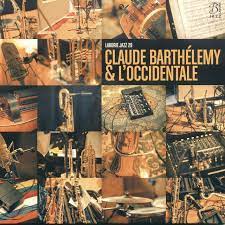
Claude Barthélemy was born on August 22, 1956 in St. Denis, France and started playing guitar when he was fourteen years old. He began playing professionally with Michel Portal’s Ensemble Unit in 1978 and worked with Aldo Romano, Stu Martin, and Gérard Marais.
In the early 1980s he assembled a trio with Jacques Mahieux and Jean-Luc Ponthieux. Additionally he worked with Jean-Marc Padovani and Nouvel Orchestre Philharmonique. By the mid-1980s he concentrated on composition, writing for mixed ensembles. Several of his pieces incorporated video and dance.
Barthélemy co-founded the group Zhivaro in 1987 and from 1989 to 1991 was the director of Orchestre National de Jazz. The 1990s saw him leading the octet La Nouvelle-Orleans, the quartet Monsieur Claude, and accompanying Elise Caron and Sylvie Cobo.
Guitarist Claude Barthélemy continues to perform as a director and leader of various ensemble configurations
More Posts: bandleader,composer,guitar,history,instrumental,jazz,music
Daily Dose Of Jazz…
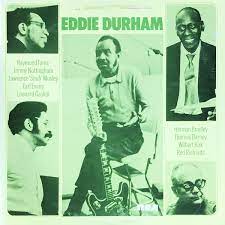
Edward Durham was born on August 19, 1906 in San Marcos, Texas to Joseph Durham, Sr., and Luella Rabb Durham. From an early age he performed with his family in the Durham Brothers Band. At the age of eighteen, he began traveling and playing in regional bands.
From 1929 Eddie started experimenting to enhance the sound of his guitar using resonators and megaphones. In 1935 he was the first to record an electrically amplified guitar with Jimmie Lunceford in Hittin’ the Bottle that was recorded in New York for Decca.
In 1938, Durham wrote I Don’t Want To Set The World On Fire with Bennie Benjamin, Sol Marcus, and Eddie Seiler. During the 1940s he created Eddie Durham’s All-Star Girl Orchestra, an all black female swing band that toured the United States and Canada.
That same year Eddie recorded single string electric guitar solos with the Kansas City Five or Six, which were both smallish groups that included members of Count Basie’s rhythm section along with the tenor saxophone playing of Lester Young. The orchestras of Bennie Moten, Jimmie Lunceford, Count Basie and Glenn Miller took great benefit from his composing and arranging skill.
Guitarist, trombonist, composer and arranger Eddie Durham, who was one of the pioneers of the electric guitar in jazz, transitioned on March 6, 1987.
More Posts: arranger,guitar,history,instrumental,jazz,music,trombone
Daily Dose Of Jazz…
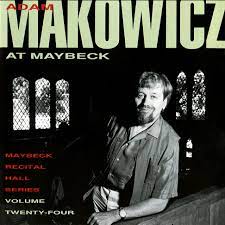
Adam Makowicz was born Adam Matyszkowic on August 18, 1940 into a family of ethnic Poles in Hnojník, Poland now the Czech Republic. After World War II he was raised in Poland and went on to study classical music at the Chopin Conservatory of Music in Kraków, Poland. Overcoming cultural restrictions under the communist government he developed a passion for modern jazz. At the time, political freedom and improvisation were disapproved of by the pro-Soviet authorities.
He embarked on a new professional life as a touring jazz pianist and after years of hardship, Makowicz gained a regular gig at a small jazz club in a cellar of a house in Kraków. He was named the Best Jazz Pianist by the readers of Poland’s Jazz Forum magazine, and was awarded a gold medal for his contribution to the arts.
1977 saw Adam on a 10-week concert tour of the United States, produced by John Hammond. At that time he settled in New York City and recorded a solo album titled Adam on the CBS record label, having been banned from Poland during the 1980s after the Polish regime imposed martial law to crush the Solidarity movement.
Moving to Toronto, Canada in the 2000s he continued his career as a concert pianist and recording artist. In the course of his career, Makowicz has performed with major symphony orchestras and major concert halls in the Americas and in Europe. He has recorded over 30 albums of jazz, popular, and classical music, with his own arrangements and recorded his own compositions for piano. Pianist Adam Makowicz continues to compose, arrange, record and perform.
More Posts: bandleader,composer,history,instrumental,jazz,music,piano
Daily Dose Of Jazz…
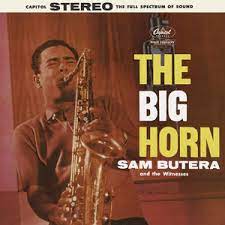
Sam Butera was born on August 17, 1927 and raised in an Italian-American family in New Orleans, Louisiana where his father ran a butcher shop and played guitar in his spare time. Hearing the saxophone at seven for the first time at a wedding, with his father’s encouragement he began to play.
His professional career blossomed early, beginning with a stint in big band drummer Ray McKinley’s orchestra directly after high school. At eighteen Butera was named one of America’s top upcoming jazzmen by Look magazine and by his early twenties, he had landed positions in the orchestras of Tommy Dorsey, Joe Reichman, and Paul Gayten.
As the big band era wound down Sam re-settled in New Orleans, where he played regularly at the 500 Club for four years. The club, owned by Louis Prima’s brother, was the connection that led him to his Las Vegas, Nevada collaborations with Prima and Keely Smith.
Prima transitioned from big band to Vegas and the Sahara and called Butera to assemble a band posthaste. They drove from New Orleans to Las Vegas and without a name on opening night in 1954 when Prima asked Butera before a live audience he responded spontaneously, “The Witnesses”, and the name stuck, remaining the bandleader for more than twenty years.
Noted for his raucous playing style, his off-color humor, and the innuendo in his lyrics, he also wrote arrangements, composed music. Sam is widely regarded as the inspiration for the vocal style of fellow New Orleans-born jazz singer Harry Connick, Jr. He went on to appear on television and in movies. Tenor saxophonist Sam Butera transitioned from pneumonia in Las Vegas on June 3, 2009 at the age of 81.
More Posts: arranger,bandleader,composer,history,instrumental,jazz,music,saxophone