

Daily Dose Of Jazz…
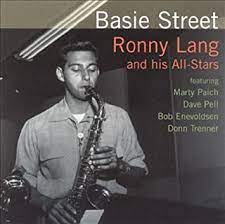
Ronnie Lang was born July 24, 1929 in Chicago, Illinois. Sometimes spelled Ronny, his professional début was with Hoagy Carmichael’s Teenagers. He went on to play for a year with Earle Spencer in 1946, then with Ike Carpenter, and Skinnay Ennis the following year.
Gained attention during his two tenures with Les Brown’s Orchestra between 1949–50 and 1953 to 1956, he recorded with the Dave Pell Octet in the mid-1950s. During this time he moved to California and attended Los Angeles State College of Applied Arts and Sciences studying music and woodwinds.
By 1958 he had become a prolific and busy studio musician in Los Angeles, often employed by Henry Mancini. Ronnie played the iconic sax melodic line in Bernard Herrmann’s score for the 1976 movie Taxi Driver. He also recorded with Pete Rugolo, Bob Thiele, and Peggy Lee.
Alto saxophonist Ronnie Lang, who also played flute and clarinet in the bop, progressive, big band, swing idioms, is now retired at 92.

More Posts: bandleader,clarinet,flute,history,instrumental,jazz,music,saxophone
Daily Dose Of Jazz…
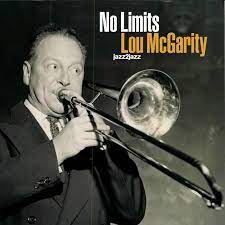
Lou McGarity was born Robert Louis McGarity on July 22, 1917 in Athens, Georgia. He started out playing violin when he was seven and didn’t switch to trombone until he was 17. He studied at the University of Georgia from 1934-36, gigged locally around the South and toured with Ben Bernie from 1938-40
He hit the big time with Benny Goodman from 1940-42, becoming the first trombonist to play both with the big band and his smaller groups. During the war years 1942-44 he worked with Raymond Scott’s Orchestra at CBS, and after military service teamed up with his friend and fellow trombonist Cutty Cutshall and rejoined Goodman in ‘46.
Lou was a busy studio musician in New York City beginning in 1947 while performing in clubs at night with Eddie Condon and playing Dixieland with the Lawson/Haggard band. He worked with Bob Crosby in the mid-’60s andwas a member of the World’s Greatest Jazz Band at the end of the 1960s. He recorded with Urbie Green, J.J. Johnson, Kenny Davern, Jimmy McPartland, Charlie Parker, Cootie Williams and Bobby Hackett among others.
Trombonist Lou McGarity, who recorded as a leader and played in the big band, swing and Dixieland genres until bad health shortened his life, transitioned on August 28, 1971 in Alexandria, Virginia.
More Posts: bandleader,history,instrumental,jazz,music,trombone
Daily Dose Of Jazz…
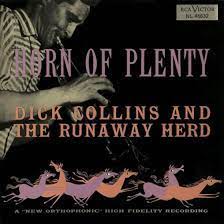
Dick Collins was born Richard Harrison Collins on July 19, 1924 in Seattle, Washington into a musical family where several of his parents and grandparents were professional musicians. He attended Mills College in 1946–47, where he studied music formally under Darius Milhaud, and moved with Milhaud to Paris, France for the next academic year. As a student at Mills, he first met Dave Brubeck, and while in Paris he played with Hubert Fol and Kenny Clarke.
Returning to the States he landed in San Francisco, California where he began playing with Brubeck in his Bay Area-based octet, then completed his bachelor’s degree in music at San Francisco State College. In the 1950s he performed and recorded with Charlie Barnet, Charlie Mariano, Nat Pierce, Paul Desmond, Cal Tjader, and Woody Herman. By 1957 Dick was working with Les Brown, an association that continued for nearly a decade that included worldwide tours.
In 1965, Collins took a position as a music librarian, which he held through 1967, and took a second position from 1971 to 1986, mostly receding from active performance. In later years, he still occasionally performed live or recorded, including with Nat Pierce, Mary Ann McCall, and Woody Herman.
Trumpeter Dick Collins transitioned on April 19, 2016 in Hesperia, California, at the age of 91.
More Posts: bandleader,history,instrumental,jazz,music,trumpet

Daily Dose Of Jazz…
Milton Brent Buckner was born July 10, 1915 in St. Louis, Missouri to parents who encouraged him to learn to play piano, but they both died when he was nine years old. Milt and his younger brother Ted were sent to Detroit where they were adopted by members of the Earl Walton band, trombonist John Tobias, drummer George Robinson fostered Milt and reedplayer Fred Kewley fostered Ted. He studied piano for three years from the age 10, then at 15 began writing arrangements for the band. He and his brother went on to become active in the Detroit jazz world in the 1930s.
He first played in Detroit with the McKinney’s Cotton Pickers and then with Cab Calloway. In 1941, he joined Lionel Hampton’s big band, and for the next seven years served as its pianist and staff arranger. Buckner was part of a Variety Revue of 1950 organized by Lionel Hampton at the Cavalcade of Jazz concert held at Wrigley Field in Los Angeles, California. He led a short-lived big band of his own for two years, but then returned to Hampton’s in 1950.
In 1952, Milt formed his own trio and pioneered the use of the electric Hammond organ. He often played in Europe in the late 1960s. His last studio session took place in Paris. France on July 4, 1977. He is also known for the use of his song The Beast in the title menu of the video game, Battlefield: Bad Company.
Pianist and Hammond B3 organist Milt Buckner, who pioneered the parallel chords style that influenced Red Garland, George Shearing, Bill Evans, and Oscar Peterson, transitioned from a heart attack on July 27, 1977, in Chicago, Illinois, at the age of 62.
More Posts: bandleader,hammond b3,history,instrumental,jazz,music,piano
Daily Dose Of Jazz…
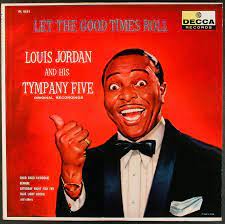
Louis Thomas Jordan was born on July 8, 1908 in Brinkley, Arkansas. His father, James Aaron Jordan, was a music teacher and bandleader for the Brinkley Brass Band and the Rabbit Foot Minstrels. His mother died when he was young and his grandmother Maggie Jordan and his aunt Lizzie Reid raised him. At an early age he studied clarinet and saxophone with his father and by his teens he was a member of the Rabbit Foot Minstrels and was playing professionally in the late 1920s.
In the early Thirties he was performing in Philadelphia, Pennsylvania and New York City with Charlie Gaines. He recorded with Clarence Williams and was a brief member of the Stuff Smith Orchestra. Joining the Chick Webb Orchestra he sang and played alto saxophone, however, in 1938 he started a band that recorded a year later as the Tympany Five.
In 1942, Jordan and his band moved to Los Angeles, California where he began making soundies, the precursors of music video. He appeared on many Jubilee radio shows and a series of programs for the Armed Forces Radio for distribution to American troops overseas. Though a hernia condition kept him out of the war his recordings made him very popular with both black and white soldiers.
During the 1940s Jordan and the band became popular with such hits as Choo Choo Ch’Boogie, Knock Me a Kiss, Is You Is or Is You Ain’t My Baby, and Five Guys Named Moe. Within a year of his breakthrough, the Tympany Five’s appearance fee rose from $350 to $2,000 per night. But the breadth of Jordan’s success and the size of his combo had larger implications for the music industry. His raucous recordings were notable for the use of fantastical narrative, best exemplified on Saturday Night Fish Fry, a two-part 1950 hit that was split across both sides of a 78-rpm record. It was one of the first popular songs to use the word “rocking” in the chorus and to feature a distorted electric guitar.
From July 1946 through May 1947, Jordan had five consecutive number one songs, holding the top slot for 44 consecutive weeks. In 1961, the IRS filed an income tax lien against Jordan and he had to sell property well below its value to pay off his debts. Musician Ike Turner stepped in and contacted and convinced the president of Jordan’s booking agency in Chicago, Illinois. to send Jordan a check for $20,000. He was unaware of this deed.
Over his career he charted dozens of singles, eighteen #1 and fifty-four in the Top Ten. He ranked fifth among the most successful musicians of the period 1942~1995, however, many he did not own the rights to, hence no financial benefit. Saxophonist, multi~instrumentalist, songwriter and bandleader Louis Jordan suffered a heart attack and transitioned on February 4, 1975, in Los Angeles.
More Posts: bandleader,history,instrumental,jazz,music,saxophone,songwriter