

Daily Dose Of Jazz…
Walt Weiskopf was born in Augusta, Georgia on July 30, 1959 and grew up outside of Syracuse, New York. His father, a physician by profession, was also a serious classical pianist. Classically trained, it wasn’t the albums of Al Hirt or Herb Alpert his mother brought home but Miles Ahead that turned his attention. Already filled with Charlie Parker, Stan Getz, Dexter Gordon and John Coltrane at 14 he set his sight in earnest on jazz. At 16, he began playing alto saxophone in a local big band alongside the great tenorist J.R. Monterose, who became his first mentor.
Heading to the Eastman School of Music in Rochester, New York, Walt acquired a B.A. and after a move to New York City at twenty in 1980 he made a name for himself in jam sessions and was drafted into the Buddy Rich Big Band, adding tenor to his arsenal. By 1983, he began a 14-year association with Toshiko Akiyoshi, touring and recording with her jazz orchestra and small group.
The late ’80s, saw him playing with and writing for his first quartet that included his brother Joel, bassist Jay Anderson, and drummer Jeff Hirshfield. In 1989, he released his debut album as a leader, Exact Science, with that band. A sextet album followed as his sophomore project with Conrad Herwig, Andy Fusco, Joel Weiskopf, Peter Washington, and Billy Drummond. This began a long association with Criss Cros,s Jazz in which eleven albums were recorded and released.
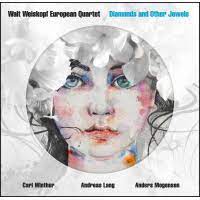
His latest project, the debut of the European Quartet takes him further into his composing, arranging and thematic compositions. The group has released a number of albums, such as Worldwide, Introspection and Introspection 2.0, and a three song ep A Little Christmas Music.
As outstanding as this output is and all of his efforts as a sideman are (he is especially great on Billy Drummond’s Dubai), Weiskopf is best known to many fans for his work with Steely Dan over the past 20 years—before and after the untimely passing of its genius co-founder Walter Becker in 2017.
As an educator he has taught at numerous schools including the Eastman School of Music, Temple University, New Jersey City University and the New School. He published numerous books, Intervalic Improvisation, Around the Horn, and Understanding the Diminished Scale. Moving to Virginia, he retired from teaching and working commercially and is concentrating on practicing and composing.
Tenor saxophonist, composer, arranger and educator Walt Weiskopf, who was a 20 year staple of the studio-only jazz rock fusion band Steely Dan, continues to push the realm of his music.

More Posts: arranger,bandleader,composer,educator,history,instrumental,jazz,music,saxophone
Daily Dose Of Jazz…
James David Hughart was born July 28, 1936 in Minneapolis, Minnesota to Fritz and Annette Hughart, the father being bassist with the Minneapolis Symphony and San Diego Symphony. He began studying the bass as a child.
Starting his music career working as a musician in 1953, four years later he received a B.A, degree in Music Composition & Theory, Bass from the University of Minnesota. Following graduation, Hughart was drafted into the Army and for two years, traveled throughout Europe performing with the Seventh Army Symphony Orchestra. After his discharge he joined Ella Fitzgerald’s touring band following a recommendation from Ray Brown. During his three years with Fitzgerald, he started his extensive recording career.
A move to Los Angeles, California in 1964 put him imposition to become a very active session musician. He studied electric bass under the veteran session musician Carol Kaye.
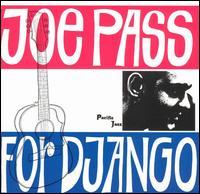
He performed as a regular sideman for guitarist Joe Pass and singer Tom Waits. He has participated in over 200 record albums, 300 motion picture scores, and many television shows. Jim has recorded with many artists including Frank Sinatra, Peggy Lee, Frank Rosolino, Paul Smith, Barney Kessel, Milt Jackson and Natalie Cole, as well as Diana Ross, Joni Mitchell, Joan Baez, and Barry Manilow,
Double bassist Jim Hughart continues to work locally and resides in Los Angeles.
More Posts: bass,history,instrumental,jazz,music

Daily Dose Of Jazz…
Einar “Pastor’n” Iversen was born July 27, 1930 in Mandal, Vest-Agder, Norway to a pastor. Raised in Oslo, Norway where he studied classical piano under Inge Rolf Ringnes, Artur Schnabel and Finn Mortensen. He quickly established himself on the Oslo jazz scene in 1949. He released his debut album with Rowland Greenberg’s Orchestra in 1953 and became one of the most respected Norwegian jazz musicians, and ws awarded Buddyprisen at 28 years old.
He played with Dizzy Gillespie at Birdland in 1952, on the America Boat with Anthony Ortega and the Modern Jazz Quartet. He was a regular pianist at Metropol Jazz Club, where he played with Dexter Gordon, Coleman Hawkins, Johnny Griffin, Svend Asmussen and Stuff Smith, among other visiting musicians. He recorded an album with his own trio, Me and My Piano, in 1967.
Beyond busy session work Einar led his own “E. I. Trio” with bassit Tor Hauge and drummer Jon Christensen. They released Norways first jazz trio recording in 1967, Me And My Piano, containing Jazz standards. The trio would go on to release on Gemini Records Jazz På Norsk, Who Can I Turn To, Portrait Of A Norwegian Jazz Artist – Einar Iversen, and on Hazel Records, Seaview.
Pianist and composer Einar Iversen, who through more than sixty years played with everyone in Norwegian jazz, transitioned on April 3, 2019, at the age of 88.
More Posts: bandleader,history,instrumental,jazz,music,piano
Daily Dose Of Jazz…
Bob Davis was born on July 26, 1927 in Cosmos, Minnesota and was directly inspired by the efforts of his mother, a pianist who frequently hit the road with touring bands. He began his music career as a drummer and by age 13 had been absorbed into a family band. Leaving home meant not only no longer backing up his mother, but a chance to play piano himself. By the age of 18, his piano styles were ahead of his time and he was playing improvisational jazz with some of the greats.
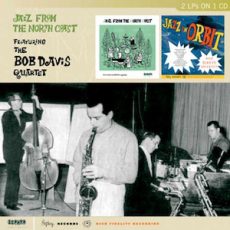
Davis spent a couple of years gigging with Herbie Fields prior to starting his own group, which was active through the ’50s and recorded for several small labels, The group featuring fellow Minneapolis drummer Bill Blakkestad gigged frequently around the Midwest, including Chicago, Illinois. Though influenced by Oscar Peterson and Bud Powell, he saw advantages in Nashville and established a relationship with guitarist and producer Chet Atkins on the 1953 Jazz from the Hills project that led to other session work.
He recorded three great albums, in addition to recording with Sarah Vaughn, Al Hirt, Dizzy Gillespie. He also was musical director for Playboy Clubs, taught as a music college & high school professor, and was a promoter and agent for music giants such as the Jacksons and Tina Turner. He continued playing jazz and ballads in concerts and clubs into his older years while living most of his life in Miami, Florida. After retiring at the age of 69, Bob continued to play incomparable jazz feats.
In his last days, pianist, educator, promoter and agent Bob Davis retired from music, suffering from bone cancer which robbed him of the joy of playing music.
More Posts: bandleader,history,instrumental,jazz,music,piano

Daily Dose Of Jazz…
Darnell Howard was born on July 25, 1895 in Chicago, Illinois and began playing violin at age seven, picking up clarinet and saxophone later in his youth. He began playing professionally with John H. Wickcliffe’s Ginger Orchestra from 1913 to 1916.
Moving to New York City in 1917, Darnell played and recorded as a violinist with W. C. Handy, then headed back to Chicago, where he led his own band, played with Charlie Elgar before joining James P. Johnson’s Plantation Days Band, which toured London, England in 1923. The following year he toured Europe again as a member of the Singing Syncopators that also played in Shanghai later in the decade.
His Chicago years saw him playing with Carroll Dickerson, King Oliver, and Erskine Tate, Jerome Carrington, Dave Peyton and Earl Hines. He led a quartet in 1928, but his jazz violin is featured on the Hines band’s February, 1933 recording of the Earl Hines/Jimmy Mundy swing composition Cavernism.
In the late 1930s, Howard was freelancing into the Forties and playing with Fletcher Henderson and Coleman Hawkins, and putting together another band in Chicago from 1943 to 1945. He would go on to play with Kid Ory in California for part of 1945, then returned to Chicago and back again in 1948 with Muggsy Spanier until 1953. His only recordings as a leader were done while he worked with Bob Scobey in 1950, amounting to only four sides.
Through the 1950s he played with Jimmy Archey, rejoined Earl Hines to play Dixieland in San Francisco, California and recorded with Don Ewell on his 1956–1957 albums. Sometime after 1962 Darnell suffered a prolonged illness and after recuperating he played with Elmer Snowden, Burt Bales, and his own groups. His final tour in 1966, was in Europe as a member of the New Orleans All-Stars, then he fell ill again. Clarinetist, violinist and alto saxophonist Darnell Howard transitioned on September 2, 1966 in San Francisco.
More Posts: bandleader,clarinet,history,instrumental,jazz,music,saxophone,violin