

Daily Dose Of Jazz…
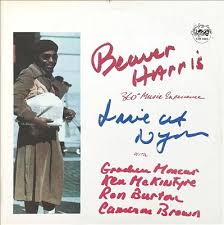
Beaver Harris was born William Godvin Harris on April 20, 1936 in Pittsburgh, Pennsylvania. Coming from an athletic family, he played baseball as a teenager for the Kansas City Monarchs, which was part of the Negro American League, and was scouted by the Brooklyn Dodgers and New York Giants.
After his Army service, Beaver began playing drums. Moving in 1963 to New York City and was encouraged to pursue a musical career by Max Roach. The city did him quite well as he worked and/or toured with Marion Brown, Dexter Gordon, Albert Ayler, Joe Henderson, Freddie Hubbard, Clifford Jordan, Howard Johnson, Sheila Jordan, Lee Konitz, Thelonious Monk, Roswell Rudd, Sonny Rollins, McCoy Tyner, Sonny Stitt, Clark Terry, Chet Baker, Doc Cheatham and Larry Coryell among other musicians.
Harris founded a world music band calling it the 360 Degree Music Experience. The band included Buster Williams, Hamiet Bluiett, Don Pullen, Jimmy Garrison, Ron Carter, Ricky Ford, and many others.
Drummer Beaver Harris, who worked extensively with Archie Shepp, died of prostate cancer in New York City at the age of 55 on December 22, 1991.
More Posts: bandleader,drums,history,instrumental,jazz,music
Daily Dose Of Jazz…
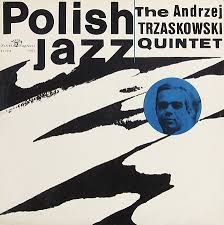
Andrzej Trzaskowski was born on March 23, 1933 in Kraków, Poland. He began playing piano at age four and founded his first jazz band, Rhythm Quartet. He attended Jan III Sobieski High School, passed his final exams cum laude, and eventually was admitted to Jagiellonian University where he earned his masters degree with his thesis being on Charlie Parker. Prior to his admittance he earned his living by playing in Kraków, Łódź and Zakopane night clubs.
By 1956 he was performing at jazz festivals and being recognized as the best jazz pianist by a Przekrój poll. From 1958, he played together with Jan Ptaszyn Wróblewski in the band Jazz Believers. The following year Trzaskowski moved permanently to Warsaw, established his own hard bop band, The Wreckers, that drew inspiration from the music of Charlie Parker, Dizzy Gillespie, and Horace Silver. In 1960, the Trzaskowski’s Trio accompanied saxophonist Stan Getz, and they recorded together the album Stan Getz & Andrzej Trzaskowski Trio.
At the end of the 1950s he began working with Polish cinema, arranging and recording music for the film Night Train, composed or created soundtracks for films and appeared on the screen, playing piano in Innocent Sorcerers in 1960 and Feliks Falk’s Był jazz in 1981. Andrzej moved to the United States in 1961 with a new configuration of The Wreckers and toured the country.
The Andrzej Trzaskowski Quintet would go on to perform with Don Ellis, Ted Curson, and in 1963 the Quintet gave concerts in Germany, Italy, Switzerland, Yugoslavia, East Germany and Belgium over the next year. By 1963, he began to move away from bop music towards free jazz.
In the Seventies he performed and recorded at the Polskie Radio Jazz Studio, and became the head of Polish Radio Symphony Orchestra Studio S-1. From 1992 he lectured at the Jazz Department of the State Music School of Warsaw and during the last years of his life he composed almost exclusively for cinema and television. In 1995, he was awarded the Cross of Merit for his artistic career.
Pianist, composer and musicologist Andrzej Trzaskowski, who from the mid-1950s onward was regarded as an authority on syncopated music, died in Warsaw on September 16, 1998, aged 65.

More Posts: bandleader,composer,history,instrumental,jazz,music,piano
Daily Dose O fJazz…
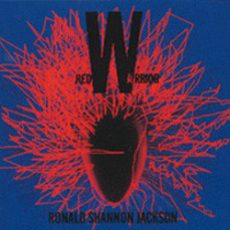
Ronald Shannon Jackson was born on January 12, 1940 in Fort Worth, Texas and as a child he was immersed in music. His father monopolized the local jukebox business and established the only African American-owned record store in the metropolitan area. His mother played piano and organ at their local church. Beginning at age five until nine he took piano lessons and in the third grade he studied music with John Carter. He graduated from I.M. Terrell High School, where he played with the marching band and learned about symphonic percussion. By the age of 15, he was playing professionally. His first paid gig was with tenor saxophonist James Clay.
Attending Lincoln University in Jefferson City, Missouri gave him access to St. Louis, Missouri and the musicians touring the Midwest. His roommate was pianist John Hicks and his bandmates also included Lester Bowie and Julius Hemphill. Transferring first to Texas Southern University, then to Prairie View A & M before landing at the University of Bridgeport in Connecticut studying history and sociology. In 1966, through trumpeter Kenny Dorham he attended New York University on a full music scholarship.
Once in New York City he performed with many jazz musicians, including Charles Mingus, Betty Carter, Jackie McLean, Joe Henderson, Kenny Dorham, McCoy Tyner, Stanley Turrentine, Charles Tyler and Albert Ayler. By 1975 he joined Ornette Coleman’s electric free funk band, Prime Time, where he learned composition and harmolodics. He would go on to play Paris, France, record four albums with Cecil Taylor, and formed his band, The Decoding Society, in 1979. In addition to leading Decoding Society lineups, guitarist James Blood Ulmer recruited Ron for another group.
Continuing to push the envelope over the next few years he formed several groups including Last Exit, SXL, Mooko, and Power Tools. Jackson joined trumpeter Wadada Leo Smith’s Golden Quartet, then played with the Punk Funk All Stars, and toured Europe with The Last Poets. In 2011 he formed a power trio called Encryption.
Drummer Ron Jackson who recorded nineteen albums as a leader, six with Last Exit and as a sideman fifteen with Albert Ayler, James Blood Ulmer, Cecil Taylor, SXL, Music Revelation Ensemble, and Ornette Coleman, died of leukemia on October 19, 2013, aged 73.

More Posts: bandleader,history,instrumental,jazz,music,percussion

Daily Dose Of Jazz…
Eugene Chadbourne was born January 4, 1954 in Mount Vernon, New York but grew up in Boulder, Colorado. He started playing guitar when he was eleven or twelve, inspired by the Beatles and hoping to get the attention of girls. Although he was initially drawn to Jimi Hendrix and played in a garage band, he found rock and pop music too conventional. Gravitating to the avant-garde jazz of Anthony Braxton and Derek Bailey, it was the former musician who persuaded him to abandon his journalism endeavors and pursue music.
During the early 1970s, he lived in Canada to avoid military service in the Vietnam War. Returning to the United States, he moved to New York City and played free improvisation with Henry Kaiser and John Zorn. Around this time, he released his first album, Solo Acoustic Guitar. In the early 1980s, he led the avant-rock band Shockabilly with Mark Kramer and David Licht.
He explored other genres, playing with a Cajun band, a Russian folk band and mixed country, western, and improvisation in the band LSD C&W. For many years Eugene was in a duo, and then worked with Han Bennink, Fred Frith, Elliott Sharp, and Charles Tyler..
Chadbourne invented an instrument known as the electric rake by attaching an electric guitar pickup to a rake. He played a duet of electric rake and classical piano with Bob Wiseman on his 1991 album Presented by Lake Michigan Soda. He also played the instrument on a Sun Ra tribute album.
Banjoist, guitarist and music critic Eugene Chadbourne, who has recorded 39 albums as a leader, continues to perform and record.
More Posts: bandleader,banjo,critic,guitar,history,instrumental,jazz,music
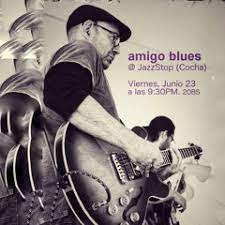
Daily Dose Of Jazz…
Cristian Amigo was born on January 2, 1963 in Santiago, Chile and emigrated with his family to the United States as a child. At twelve he began studying music with Joseph Torello in New Haven, Connecticut. Two years later the family moved to Miami, Florida where he began performing professionally with Six Feet Under, a rock band he formed. While attending Hialeah-Miami Lakes Senior High School he taught classes in guitar to his peers and took courses in music theory, classical guitar and jazz at Miami-Dade Community College.
By the time he turned 17 he was in the music program at Florida State University studying classical guitar. With an Associate of Arts diploma he returned to Miami, began actively performing in recording sessions and original and cover bands while attending music classes at University of Miami. His first recording session at 17 was producer Narada Michael Walden’s We Don’t Have To Take Our Clothes Off.
He moved to Los Angeles, California and earned his bachelor and master degrees and studied jazz with Kenny Burrell and Gary Pratt, and the sitar with Harihar Rao. He studied composition with Wadada Leo Smith. While a university student Amigo made a living as an assistant travel agent, a janitor, a session guitarist, band leader, music producer, film composer, jingle producer, concert producer, music teacher and performed in a number of bands.
He worked as a session guitarist with artists including Hans Zimmer, Mark Mancina, Jay Rifkin, Les Hooper, Wadada Leo Smith, David Ornette Cherry, John Van Tongeron, Justo Almario, and others.
His awards include the John Simon Guggenheim Fellowship in music composition, a Senior Fulbright Scholar/Teacher/Artist Award and the Van Leir Fellowship from Meet the Composer. His work has been supported and/or produced by numerous New York organizations, the Danish Arts Council, Smithsonian Institution Center for Folklife and Cultural Heritage and others too numerous to mention.
Guitarist and composer Cristian Amigo continues to compose, perform and record.
More Posts: guitar