

Daily Dose Of Jazz…
Billy Bang was born on William Vincent Walker on September 20, 1947 in Mobile, Alabama and while he was still an infant his family moved to the Bronx in New York City. As a child he attended a special school for musicians in Harlem and being small in physical size was assigned a violin instead his first choices, the saxophone or drums. It was around this time that he acquired the nickname of “Billy Bang”, derived from a popular cartoon character.
Billy studied the violin until he earned a hardship scholarship to a private high school in Stockbridge, Massachusetts, at which point he abandoned the instrument due to a lack of a music program. He had difficulty adjusting to school life, encountering racism and developing confusion about his identity, and his later onset of schizophrenia.
Bang left the school after two years, attended a school in the Bronx, dropped out when he was drafted, at 18 joined the Army and arrived in Vietnam in time for the Tet Offensive. Returning from the war he became politically active, fell in with an underground group of revolutionaries, purchased weapons and impulsively bought another violin from the same pawnshop.
He later joined Sun Ra‘s band. In 1977, Bang co-founded the String Trio of New York with guitarist James Emery and double bassist John Lindberg, exploring his experience in Vietnam in two albums: Vietnam: The Aftermath and Vietnam: Reflections.
Free jazz composer and violinist Billy Bang passed away on April 11, 2011 from complications due to lung cancer. He is survived by a legacy of some three-dozen albums.
More Posts: violin
Daily Dose Of Jazz…
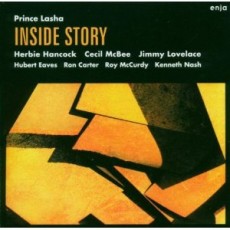
Prince Lasha (pronounced “La-shay“) was born William B. Lawsha on September 10, 1929 in Fort Worth, Texas. He came of age studying and performing alongside fellow I.M. Terrell High School students John Carter, Ornette Coleman, King Curtis, Charles Moffett and Dewey Redman.
Lasha moved to California during the 1950s. In the 1960s, Prince Lasha was active in the burgeoning free jazz movement, of which his Fort Worth cohort Ornette Coleman was a pioneer. Lasha worked closely with saxophonist Sonny Simmons , with whom he recorded two albums, The Cry and Firebirds no the Contemporary label, the latter receiving five stars and an AMG Albumpick at Allmusic. Later, he played with Harold Land.
Living to Europe for twenty years beginning in 1965, Lasha worked as a sideman appearing on recordings with Eric Dolphy, Elvin Jones/Jimmy Garrison Sextet featuring McCoy Tyner, and with Michael White. He also played with Steve Lacy , Paul Bley , Attila Zoller , Gary Peacock , and Barry Altschul. In the 1970s, Lasha and Simmons made additional recordings under the name Firebirds. In 2005, Lasha recorded the album The Mystery of Prince Lasha with the Odean Pope Trio.
From 1965, Lasha lived in Europe for two years, where In the 1970s, he recorded with the sextet of
Saxophonist, flautist and clarinetist Prince Lasha died on December 12, 2008, in Oakland, California. He left a small legacy of six recordings as a leader marking his place in jazz history.
Daily Dose Of Jazz…
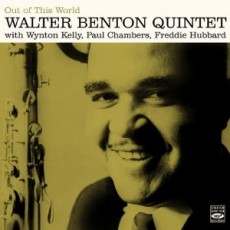
Walter Benton was born September 9, 1930 in Los Angeles, California and first began playing saxophone as in high school. After three years of service in the Army in the early 1950s, he played in 1954 with Kenny Clarke, Max Roach and Clifford Brown.
From 1954 to 1957 he played Afro-Latin jazz with Pérez Prado, touring Asia with the band. Returning to the States, he went on to work with Quincy Jones in 1957 and Victor Feldman in 1958-59. He led his own group from 1959, recording under his own name in 1960 with Freddie Hubbard , Wynton Kelly , Paul Chambers , and Albert “Tootie” Heath.
That same year he worked again with Max Roach and Julian Priester. In 1961 he recorded with Abbey Lincoln, Roach once more, Eric Dolphy and Slide Hampton. By the late 1960s he was working with Gerald Wilson and John Anderson.
As so often happens with great players, in the late 60’s Benton became discouraged with the state of jazz and the overall music business, disappeared from the scene, sank into poverty never re-discovered. He stopped playing and lived the rest of his days in cheap rooming houses and collected a pittance of social assistance.
On August 14, 2000, West Coast tenor saxophonist Walter Benton, who played cool and bluesy, ventured into free and wild before returning to his roots with his beautiful dark and somewhat diffused sound coupled with his own ideas and phrasing, passed away in total obscurity in Los Angeles at the age of 69.
More Posts: saxophone
Daily Dose Of Jazz…
Sonny Sharrock was born Warren Harding Sharrock on August 27, 1940 in Ossining, New York. He began his musical career singing doo-wop in his teen years. One of few guitarists in the first wave of free jazz in the 1960s, Sonny was known for his incisive, heavily chorded attack, his highly-amplified bursts of wild feedback, and for his use of saxophone-like lines played loudly on guitar.
He collaborated with Pharoah Sanders and Alexander Solla in the late 1960s, appearing first on Sanders’s 1966 effort, “Tauhid”, made several appearances with flautist Herbie Mann and also made an un-credited guest appearance on Miles Davis’s “A Tribute to Jack Johnson”, perhaps his most famous cameo.
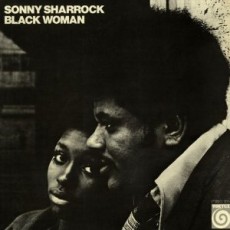
Sharrock released three albums as a leader in the late ’60s through the mid-’70s: Black Woman, Monkey-Pockie-Boo and Paradise. Following the last release he went into semi-retirement for much of the 1970s until bassist and producer Bill Laswell coaxed him out to play on a 1981 effort, Memory Serves. He would go on to join punk/jazz band Last Exit, record and perform with the improvisational group Machine Gun and would record another seven albums under his own name, such as, a solo project Guitar, the metal-influenced Seize the Rainbow, and the well-received Ask The Ages featuring Pharoah Sanders and Elvin Jones.
Best known for composing the soundtrack to “Space Ghost: Coast To Coast for the Cartoon Network, with more than thirty-two albums to his credit as a leader and sideman, guitarist Sonny Sharrock passed away of a heart attack on May 26, 1994 at age 53.
More Posts: guitar
Daily Dose Of Jazz…
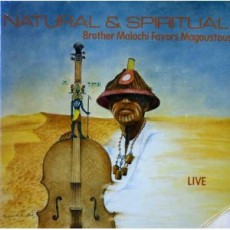
Malachi Favors was born August 22, 1927 in Lexington, Mississippi. He began playing double bass at age fifteen and began performing professionally upon graduating high school. His early performances included work with Dizzy Gillespie and Freddie Hubbard. But by 1965, he was a founding member of the AACM – Association for the Advancement of Creative Musicians and a member of Muhal Richard Abrams’ Experimental Band.
Malachi was a protégé of Chicago bassist Wilbur Ware. His first known recording was a 1953 session with tenor saxophonist Paul Bascomb and four years later recorded with pianist Andrew Hill. He began working with Roscoe Mitchell in 1966 and this group eventually became the Art Ensemble of Chicago, for which he is most prominently known. Favors also worked outside the group, with artists including Sunny Murray, Archie Shepp and Dewey Redman.
Favors’ most notable records include “Natural and the Spiritual”, “Sightsong” andthe 1994 Roman Bunka collaboration and recording at the Berlin Jazz Fest of the German Critics Poll Winner album “Color Me Cairo”.
At some point in his career Malachi added the word “Maghostut” to his name and because of this he is commonly listed on recordings as Malachi Favors Maghostut.
Most associated musically with bebop, hard bop and particularly free jazz, Favors not only plays the double bass but electric bass, guitar, banjo, zither, gong and other instruments. Malachi Favors died of pancreatic cancer in Chicago, Illinois on January 30, 2004 at the age of 76.