

Daily Dose Of Jazz…
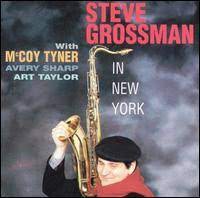
Steven Mark Grossman was born on January 18, 1951 in Brooklyn, New York to Rosalind, an amateur pianist, and Irving, an RCA salesman and later president of KLH Research and Development Corporation. At 18, he went on to replace Wayne Shorter in Miles Davis’ jazz-fusion band. Then, from 1971 to 1973, he was in Elvin Jones’ band.
In the late 1970s, he was part of the Stone Alliance trio with Don Alias and Gene Perla. The group released four albums during this period, including one featuring Brazilian trumpeter Márcio Montarroyos. The albums also feature an array of other musicians. They went on to release three live reunion albums during the 2000s.
Fusion and hard bop saxophonist Steve Grossman passed away of cardiac arrest in Glen Cove, New York, on August 13, 2020, at the age of 69.
More Posts: bandleader,history,instrumental,jazz,music,saxophone
Daily Dose Of Jazz…
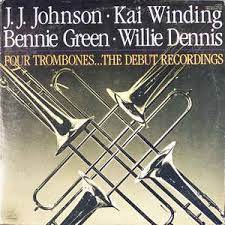
Willie Dennis wsa born William DeBerardinis on January 10, 1926 in Philadelphia, Pennsylvania. After working with Elliot Lawrence, Claude Thornhill, and Sam Donahue, he went to work with Charles Mingus, appearing on two of Mingus’s albums in 1959, Blues & Roots and Mingus Ah Um. In 1953, due to his relationship with Mingus he recorded Four Trombones (on the bassist’s Debut Records label and was released in 1957. The other three trombones were J. J. Johnson, Kai Winding and Bennie Green.
In 1951, Dennis began studying with Lennie Tristano. To make ends meet, he worked as an attendant at the Museum of Modern Art. The fullest recorded example of Dennis’s solo work is on a little-known 1956 Savoy disc by English pianist Ronnie Ball, who was also a Tristano student. The album was titled All About Ronnie, and included Ted Brown and Kenny Clarke.
He toured with Mingus in 1956, published an essay, The History of the Trombone, in Metronome. By the late 1950s Willie had returned to his big band roots and joined Buddy Rich in 1959 after stints with Benny Goodman and Woody Herman. During the 1960s, he often performed with Gerry Mulligan.
He had an extremely fast articulation on the trombone, which he obtained by means of varying the natural harmonics of the instrument with minimal recourse to the slide, a technique known as crossing the grain. He recorded with Cannonball Adderley, Manny Albam, Al Cohn, Mundell Lowe, Gary McFarland, Gerry Mulligan, Oliver Nelson, Anita O’Day, Shirley Scott, Zoot Sims and Phil Woods.
Known for his big band musicianship but who could also execute as an excellent bebop soloist, trombonist Willie Dennis, who was married to Morgana King in 1961, transitioned due to an automobile accident in Central Park on July 8, 1965 in New York City.
More Posts: bandleader,history,instrumental,jazz,music,trombone
Daily Dose Of Jazz…
William Fredrick Bean was born on December 26, 1933 into a musical family in Philadelphia, Pennsylvania. His mother played the piano, his father was an amateur singer and guitarist, and his sister sang professionally. He started on guitar at the age of twelve.
His father taught him some of the basics on guitar before he received lessons from Howard Herbert. He went on to study with Dennis Sandole for a year. During the late 1940s and 1950s, he performed at venues in the Philadelphia area, until in the mid-Fifties he moved to New York City and recorded with Charlie Ventura and Red Callender. By 1958 he was moving to the West Coast and settling in Los Angeles, California to record for Decca. In Los Angeles, he worked with Buddy Collette, Paul Horn, John Pisano, Bud Shank, Milt Bernhart, Les Elgart, Herb Geller, Lorraine Geller, Calvin Jackson, and Zoot Sims.
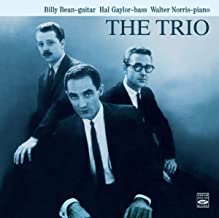
Returning to New York City in 1959 after accepting Tony Bennett’s offer to join his band, Bean remained with Bennett’s band for less than one year. Hal Gaylor, who had been Bennett’s bassist, assembled a trio with Bean and pianist Walter Norris, calling themselves The Trio. They recorded an album for Riverside Records in 1961. Finding it difficult to find work, the trio disbanded shortly after recording.
Bean performed with Stan Getz, Herbie Mann, and John Lewis, recording albums with Mann and Lewis. He co-led six recording albums and another 16 as a sideman. Returning to his hometown of Philadelphia, guitarist Billy Bean retired in 1986, and passed away on February 6, 2012.

More Posts: bandleader,guitar,history,instrumental,jazz,music
Daily Dose Of Jazz…
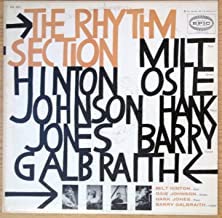
Joseph Barry Galbraith, born on December 18, 1919 in Pittsburgh, Pennsylvania.
Moving to New York City in the early 1940s he found work playing with Babe Russin, Art Tatum, Red Norvo, Hal McIntyre, and Teddy Powell. He played with Claude Thornhill in 1941–1942 and again from 1946–1949 after serving in the Army. In ‘53 he did a tour with Stan Kenton.
Having extensive work as a studio musician for NBC and CBS in the 1950s and 1960s, presented him with the opportunity to work with among others Miles Davis, Michel Legrand, Tal Farlow, Coleman Hawkins, George Barnes, John Lewis, Hal McKusick, Oscar Peterson, Max Roach, George Russell, John Carisi, and Tony Scott.
He accompanied on the recording of singers Anita O’Day, Chris Connor, Billie Holiday, Helen Merrill, Sarah Vaughan and Dinah Washington. He was a mentor to Ralph Patt.
In 1961, he appeared in the film After Hours. In 1963-1964 he played on Gil Evans’s album The Individualism of Gil Evans, and in 1965 he appeared on Stan Getz and Eddie Sauter’s soundtrack to the 1965 film Mickey One.
As an educator he taught for five years from 1970 to 1975 at CUNY (City University of New York) and published a guitar method book in 1982. From 1976–77 Galbraith taught guitar at New England Conservatory in Boston, Massachusetts.
Guitarist and bandleader Barry Galbraith passed away from cancer at the age of 63 on January 13, 1983 in Bennington, Vermont.
More Posts: bandleader,guitar,history,instrumental,jazz,music

Daily Dose Of Jazz…
Anthony Tillmon Williams was born of African, Portuguese, and Chinese descent on December 12, 1945 in Chicago, Illinois and grew up in Boston, Massachusetts. He studied with drummer Alan Dawson at an early age, and began playing professionally at the age of 13 with saxophonist Sam Rivers. Saxophonist Jackie McLean hired Williams when he was 16.
At 17 Williams gained attention when he joined Miles Davis in what was later dubbed Davis’s Second Great Quintet. A vital element of the group, his playing helped redefine the role of the jazz rhythm section through the use of polyrhythms and metric modulation.
He recorded his first two albums as leader at nineteen for the Blue Note label, Life Time in 1964) and Spring in 1965.. He also recorded as a sideman for the label including, in 1964, Out to Lunch! with Eric Dolphy and Point of Departure with Andrew Hill.
By 1969, he had formed his trio, the Tony Williams Lifetime, with John McLaughlin on guitar and Larry Young on organ. Lifetime was a pioneering band of the fusion movement. Disbanding the group, in 1975 he put together a band he called The New Tony Williams Lifetime, featuring bassist Tony Newton, pianist Alan Pasqua, and English guitarist Allan Holdsworth, which recorded two albums for Columbia Records..
In mid-1976, Tony reunited with Herbie Hancock, Ron Carter, and Wayne Shorter. Freddie Hubbard replaced Miles Davis who was in the midst of a six-year hiatus. The resulting record was later released as V.S.O.P. and the group toured for several years and produced a series of live albums released under the name V.S.O.P. or V.S.O.P.: The Quintet.
1979 saw Williams, McLaughlin and bassist Jaco Pastorius united for a one-time performance at the Havana Jazz Festival. This trio came to be known as the Trio of Doom. In 1985, returning to Blue Note he released six albums through 1993, playing his compositions almost exclusively ubtil he left Blue Note for the final time.
He lived and taught in the San Francisco Bay Area, was one of the pioneers of jazz fusion, and was inducted into the Modern Drummer Hall of Fame in 1986. On February 20, 1997 he checked into Seton Medical Center in Daly City, California, suffering from stomach pain. Three days later, while recuperating from gallbladder surgery, drummer Tony Williams passed away of a heart attack at 51 on February 23, 1997.
More Posts: bandleader,drums,history,instrumental,jazz,music