Daily Dose Of Jazz…
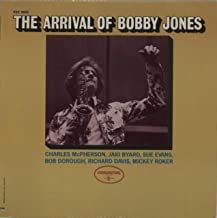
Bobby Jones, born October 30, 1928 in Louisville, Kentucky and played drums as a child, started on clarinet at age 8, and his father encouraged him to explore jazz. He studied with Simeon Bellison, Joe Allard, Charlie Parker, and George Russell.
He played with Ray McKinley from 1949 into the mid-1950s, and then with Hal McIntyre before rejoining McKinley later in the decade. During a stint in the Army he met Nat and Cannonball Adderley as well as Junior Mance. After his discharge he played country music and rock & roll as a studio musician, and did time with Boots Randolph. He worked with Glenn Miller in 1950 before returning to McKinley from 1959 to 1963.
He spent a brief time with Woody Herman and Jack Teagarden in 1963, and after the latter’s death he retired to Louisville and started a local jazz council there in addition to teaching at Kentucky State College. In 1969 he moved to New York City and played with Charles Mingus from 1970 to 1972, touring Europe and Japan with him. He also recorded sessions under his own name in 1972 and 1974.
Late in his life he moved to Germany, where he ceased performing due to emphysema. Saxophonist Bobby Jones passed away on March 6, 1980 in Munich, Germany.

More Posts: bandleader,history,instrumental,jazz,music,saxophone
Requisites
Whistle Stop ~ Kenny Dorham | By Eddie Carter
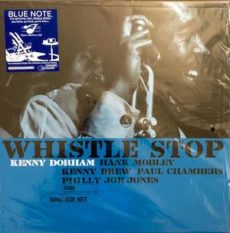
One of the biggest pleasures I get from listening to and discussing records from my library each week is I’m able to revisit favorite albums and artists to share my thoughts with my readers. If you’re a fan of Hard-Bop, this morning’s subject of discussion is one of the best by trumpet player, Kenny Dorham. Whistle Stop (Blue Note BLP 4063/BST 84063) was recorded and released in 1961 with a stellar supporting cast: Hank Mobley on tenor sax, Kenny Drew on piano, Paul Chambers on bass, and Philly Joe Jones on drums. Kenny was born in Fairfield, Texas; he played and recorded with many great jazz musicians during his lifetime. He was also a member of the orchestras of Billy Eckstine, Dizzy Gillespie, Mercer Ellington, and The Jazz Messengers. Dorham composed all seven tunes on Whistle Stop and my copy used in this report is the 2017 Music Matters Stereo audiophile reissue (MMBST-84063).
Side One starts with ‘Philly’ Twist, a driving blues that’s off to the races from the opening notes of Philly’s brief introduction into the quintet’s brisk melody. Kenny opens with a vigorously agile reading, then Hank wails convincingly on the second solo. Kenny sinks his teeth into the third performance vigorously. Paul is especially impressive on a concise statement ahead of Philly’s dazzling velocity and propulsive timing on the song’s finale. Buffalo is good soul-food cooking at midtempo with a carefree theme in unison. Mobley starts the soloing with four mellow verses. Dorham responds with a leisurely ride punctuated by the rhythm section’s groundwork. Drew keeps the laid-back feeling going with an infectiously swinging interpretation that’ll have the listener snapping their fingers and tapping their toes. Chambers wraps up everything with a short stroll anchored by only Jones into the reprise and exit.
Sunset closes the first side with the trio’s tastefully elegant introduction to one of the album’s loveliest tunes. Kenny on muted trumpet and Hank lead the quintet through a pretty mid tempo melody. Dorham remains on the mute for the opening statement, cooking easily. Hank strolls into the second performance with jaunty confidence. Kenny dips into a well of positive energy on the next reading. Paul adds the closing word with a feisty finale leading to a soft fade. Whistle Stop starts Side Two with the ensemble’s brisk melody. Mobley ignites the opening chorus with a fiery passion, then Dorham provides an electrically charged reading. Drew steps up next for a zesty performance of creative energy. Philly shares a moment with the front line in an exchange on the closing statement, before executing a lively finale preceding the climax.
Sunrise In Mexico has a soulful personality that comes alive as the day begins on the quintet’s theme. Dorham starts with a solid groove on the first interpretation. Hank demonstrates a lesson in musicality on the second reading. Kenny is as cool as the other side of the pillow on the next solo, and Paul swings softly on an effective closing statement ahead of the reprise and gentle dissolve. Windmill is an energized swinger right out of the gate beginning with a blazing melody. Dorham begins the lead solo with an aggressive fierceness, then Mobley makes searing heat on the second statement. Drew adds an abundant amount of high voltage to the third performance. Chambers walks with a happy bounce on an abbreviated reading. Jones breaks loose briefly on the finale with vivacious brushwork leading to the quintet’s high-spirited ending.
The album closes with Dorham’s Epitaph, a short, beautiful ensemble tune Kenny wrote for his passing. It illustrates his ability as a ballad composer and opens with a very gentle opening chorus by the leader complemented by the sentimental support by Hank and the rhythm section. An expanded version of this song was also written for a large orchestra and renamed Fairy Tale. Kenny Dorham continued recording excellent albums throughout the sixties that were easily the equivalent of those released by Miles Davis, Freddie Hubbard, and Lee Morgan, but sadly never received the recognition that might have catapulted him to stardom. He passed away at age forty-eight from kidney disease on December 5, 1972.
The mastering by Kevin Gray of Cohearent Sound and audio engineer Steve Hoffman is phenomenal and improves on the original recording by Rudy Van Gelder with a crystal-clear sound that’s demonstration class placing you in the studio alongside the musicians. Each of the MMJ reissues receives a great deal of care with attention to detail including high-definition gatefold photos, superb packaging of the covers, and 180-gram audiophile vinyl for the music. If you’re looking for a Hard-Bop album that’ll excite your ears, I invite you to audition Whistle Stop by Kenny Dorham. It’s a delightfully rewarding album by one of the best trumpet players in jazz that merits multiple listens and is worth adding to any jazz library!
© 2021 by Edward Thomas Carter
More Posts: choice,classic,collectible,collector,history,instrumental,jazz,music,trumpet
Daily Dose Of Jazz…
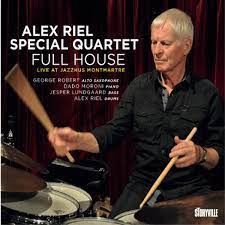
Alex Riel was born in Copenhagen, Denmark on September 13, 1940. His career began in the mid-Sixties when he got the house drummer position at the club Montmarte in his home city with bassist Niels-Henning Ørsted Pedersen, and pianists Tete Montoliu or Kenny Drew. They accompanied visiting American musicians Ben Webster, Dexter Gordon, Kenny Dorham, Johnny Griffin, Don Byas, Donald Byrd, Brew Moore and Yusef Lateef.
Among those mentioned above he also worked with Ray Brown, Don Cherry, Art Farmer, Stéphane Grappelli, Hank Jones, and Thad Jones. He formed a renowned jazz ensemble with bass player Niels-Henning Ørsted Pedersen and Kenny Drew.
Riel has recorded thirteen albums as a leader and another twenty-five as a sideman with Drew, Gordon, Webster, Kenny Werner, Bob Brookmeyer, Thomas Clausen, Bill Evans, Eddie “Lockjaw” Davis, Ken McIntyre, Archie Shepp, Lars Gullin, Sahib Shihab, Thorgeir Stubø and Jackie McLean.
Delving into rock music, in 1968 Alex was a founding member of the Danish rock group The Savage Rose. His album The Riel Deal won a Danish Grammy Award Jazz in 1996.
In September 2010, Riel turned seventy years old and the milestone was celebrated at the famed Jazzhus Montmartre. The event was broadcast live with the title Celebration of a Living Jazz Legend by the Danish national television station TV2 which was also showing rare photos depicting Riel with Duke Ellington, Ben Webster, Bill Evans and The Savage Rose.
His first group Alex Riel/Palle Mikkelborg Quintet won the Montreux Grand Prix Award at the Montreux Jazz Festival in 1968. Over the course of his career drummer Alex Riel has founded several groups and continues to advance the music.

More Posts: bandleader,drums,history,instrumental,jazz,music

Daily Dose Of Jazz…
Virgil Gonsalves was born in Monterey, California on September 5, 1931. In 1950 he took the baritone saxophone chair in the Alvino Rey Orchestra and then with Tex Beneke in 1952. In 1954 he formed an ensemble with Bob Enevoldsen, the tenor saxophonist Buddy Wise, Lou Levy, Harry Babasin, and Larry Bunker. They recorded the album Virgil Gonsalves Sextet that same year on Nocturne Records 8. Later members were Leo Wright, Junior Mance, Ron Crotty, and Eddie Khan.
Working mainly in the San Francisco, California area as a freelance musician, he ventured into rock during the Sixties and Seventies, and became a member of the Pacific Gas & Electric rock band from 1971 to 1972. Baritone saxophonist Virgil Gonsalves passed away in Salinas, California on October 20, 2008.
More Posts: bandleader,history,instrumental,music,saxophone
Daily Dose Of Jazz…
Gilbert Rovère was born on August 29, 1939, Toulon, France and attended the Conservatory of Nice studying the double bass. He becme one of the most in-demand musicians in France in the Sixties.
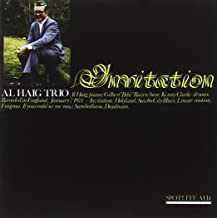
He appeared and/or recorded with Bud Powell, Dexter Gordon, René Thomas, Jean-Luc Ponty, Barney Wilen, Al Haig, and Steve Grossman among others. For several years during his career Rovère was a member of the Martial Solal Trio with Daniel Humair.
Bibi was hired by Duke Ellington to play a Paris recording session with the orchestra and Alice Babs in 1963. He also hired him the following year to play with one of Duke’s small groups on the Italian Riviera.
Bassist Gilbert ‘Bibi’ Rovère, who received the Prix Django Reinhardt award in 1967, passed away from cancer in southern France on March 13, 2007 in Gorbio, France. He was 67.