

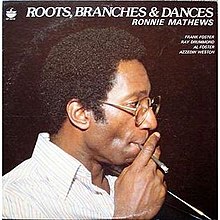
Daily Dose Of Jazz…
Ronald Mathews was born on December 2, 1935 in New York City and in his twenties, he toured internationally and recorded with Max Roach, Freddie Hubbard and Roy Haynes. He was a member of Art Blakey’s Jazz Messengers in the late Fifties through the 1960s. By age thirty, he was teaching jazz piano and leading workshops, clinics and master classes at Long Island University in New York City.
During the 1970s Ronnie recorded with Dexter Gordon and Clark Terry, toured and recorded on two Louis Hayes projects, the Louis Hayes~Woody Shaw Quintet and the Louis Hayes~Junior Cook Quintet. One of his longest associations and a highlight of his career was with the Johnny Griffin Quartet. For almost five years, from 1978~1982, he was an integral part of this band, forging lasting relationships with Griffin, drummer Kenny Washington, and bassist Ray Drummond.
The Eighties saw Mathews honing his role as a frontman, performing as a leader in duo, trio, and quartet configurations around the world. He again toured with Freddie Hubbard and Dizzy Gillespie’s United Nations Band, was the pianist for the Tony Award~winning Broadway musical, Black and Blue in 1989, and, in 1990, he was one of the artists who recorded for Spike Lee’s movie, Mo’ Better Blues.
After a stint touring and recording with the Clifford Jordan Big Band in the early 1990s, Mathews joined T.S. Monk for eight years of touring and recording three albums with the band. In 1998, Hal Leonard Books published his collection of student arrangements: Easy Piano of Thelonious Monk.
As both a mentor and musician with Generations, a group of jazz musicians headed by veteran drummer Jimmy Cobb, he contributed two new compositions for the album that was released posthumously to his death by San Francisco State University’s International Center for the Arts on September 15, 2008.
Pianist Ronnie Matthews recorded 14 albums as a leader and more than three dozen as a sideman during his career, passing away on June 28, 2008 in Brooklyn, New York.
More Posts: bandleader,composer,educator,history,instrumental,jazz,music,piano
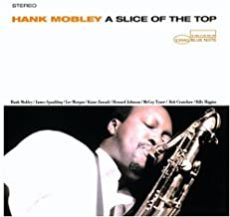
Daily Dose Of Jazz…
Kiane Zawadi was born Bernard Atwell McKinney on November 26, 1932 in Detroit, Michigan into a family of ten children, several of whom also became musicians. A trombone and euphonium player, he first worked with Barry Harris and Sonny Stitt in 1951, and then played with Alvin Jackson’s band early in the decade. Toward the middle of the decade, he joined Art Blakey, and by 1959 he moved with Yusef Lateef to New York City.
The 1960s had him playing with Illinois Jacquet, James Moody, and Curtis Fuller. It was later in the Sixties that Bernard adopted the name Kiane Zawadi. By the 1970s he was performing with Archie Shepp, Carlos Garnett, Harold Vick, Frank Foster, Charles Tolliver, Abdullah Ibrahim, and McCoy Tyner.
In 1978, he played in the pit orchestra for Dancin’, a Broadway show. He also appeared at a Charlie Parker tribute at Town Hall in New York City in 1985. Other musicians Zawadi worked with include Mongo Santamaría, Dizzy Gillespie, Clark Terry, Joe Henderson, and Aretha Franklin.
As a sideman, he has recorded thirty-eight albums with Foster, Slide Hampton, Freddie Hubbard, Clifford Jordan, Yusef Lateef, Donald Byrd, Pepper Adams, James Moody, Sun Ra, Hank Mobley, Howard McGhee, Freddie Roach, Archie Shepp, Willis “Gator” Jackson, Dollar Brand, McCoy Tyner, Les McCann, Shirley Scott, Jackie DeShannon, Harold Vick, Charles Tolliver, Carlos Garnett, Kenny Vance, Ralph MacDonald, Phyllis Hyman, Cornell Dupree, Grant Green, Mickey Bass, Illinois Jacquet, Rodney Kendrick, Joe Henderson, and Patience Higgins.
Trombonist and euphonium player Kiane Zawadi, one of the few jazz soloists on the latter instrument, at 87 he continues to perform and record.
More Posts: euphonium,history,instrumental,jazz,music,trombone
Requisites
A Tribute To Cannonball – Don Byas and Bud Powell | By Eddie Carter
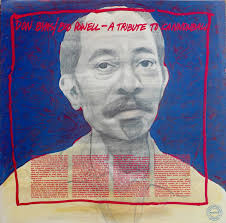
This next album from the library was recorded in 1961 but remained shelved until its release in 1979, four years after the death of the musician it honors. A Tribute To Cannonball (Columbia Contemporary Master Series JC 35755) brings together Don Byas on tenor sax and Bud Powell on piano for a program of standards and two original tunes. Completing the ensemble are Idrees Sulieman (tracks: A5, B1, B2, B4) on trumpet, Pierre Michelot on bass, and Kenny Clarke on drums. My copy used in this report is the 1979 US Stereo album.
The quartet begins Side One with the Cole Porter classic, Just One of Those Things that made its debut in the 1935 musical comedy, Jubilee. The trio opens with a scintillating conversation in the opening chorus. Don adds some fierce dialogue on the second verse, then continues traveling at breakneck speed on the first solo. Bud’s nimble fingers fly over the keys at a brisk pace on the finale towards the quartet’s enthusiastic ending.
Jackie My Little Cat is a pretty ballad by Pierre Michelot that slows the tone to a softer tempo. From the first phrase of the elegantly tranquil theme, the quartet creates a warmly affectionate atmosphere for Byas who infuses the lead statement with tasteful subtlety. Powell also produces a reading of extraordinary tenderness that compliments the rhythm section’s graceful groundwork into a sensuous finale. Cherokee, also known as Indian Love Song, was written in 1938 by Ray Noble as the first movement of his five-part Indian Suite. It became a hit for bandleader Charlie Barnet in 1939 and a jazz standard after Charlie Parker’s blistering rendition in 1941 with The Kansas City Band. The song begins with a brisk duet by Don and Pierre on the introduction, then proceeds with a lightning-fast melody. Byas begins his first solo with a sizzling performance, then Powell flexes his muscles with incredible virility. The saxophonist is completely energized on the closer with fiery intensity before the out-chorus.
I Remember Clifford by Benny Golson is a 1957 jazz standard honoring Clifford Brown who perished in an auto accident the year before with pianist Richie Powell and his wife Nancy. It became a huge hit for Golson after appearing on the albums, Jazz Lab and Lee Morgan, Volume 3 (1957), and Jon Hendricks wrote lyrics for it the same year. The quartet is beautifully disciplined on the melody, and Don taps a well of serenity, bringing out the most intimate feelings in every note of the lead solo. Bud closes with a warmly affectionate reading leading to a tender finale. Good Bait is by Tadd Dameron and Count Basie and was written in 1944. It became a significant part of Basie’s repertoire and Idrees Sulieman makes his first appearance. Kenny’s drums make the introduction, and the front line leads the quintet to establish the melody. Don starts the solos with long, flowing tenor phrases. Idrees follows with a fierce flow of notes from his trumpet. Bud comes next with a deliciously spry statement. Pierre makes a brief reading with an unrestrained flow of bass lines in between a few final remarks by both horns.
Side Two starts with the 1960 jazz standard, Jeannine by Duke Pearson. A brief workout by Clarke introduces the tune, segueing into the ensemble’s medium-fast melody. Don digs into the lead statement with a smoldering groove of vibrant verses. Idrees’ sentimental choruses on the second solo are tightly voiced and executed smoothly. Bud flies high on the third reading with a muscular drive. Kenny delivers a satisfying finale before the horns return to drive Jeannine home. All The Things You Are by Jerome Kern and Oscar Hammerstein II was originally written in 1939 for the unsuccessful Broadway musical Very Warm For May that year. The song survived, becoming one of Kern’s most cherished and recorded compositions. Byas and Sulieman exchange a peppy dialogue with the trio on the melody. Idrees says something special with a firm tone on the first solo. Don delivers the next message confidently in an authoritative manner. Bud also displays his virtuosity in an invigorating reading. Both horns split the next few choruses and Clarke provides a passionate showcase on a brief statement ahead of the coda.
Let me stop for a moment to describe this next tune. On the Side Two label, track three is listed as Jackie by pianist Hampton Hawes. It isn’t Hawes’ tune at all, it’s actually an alternate take of Pierre Michelot’s Jackie My Little Cat. Like the song on Side One, it’s a quartet piece with Byas and Powell as the featured soloists. After a beautiful theme statement, Don delivers an absolutely gorgeous opening solo. Bud follows with a haunting melodic interpretation ahead of the compassionate climax. The album ends with the second original by bassist Michelot, Myth is a cheery little tune full of fun and good spirits as evident by the sprightly introduction by the trio, ahead of the front line’s opening chorus. Byas starts the solos with a compelling performance that holds your attention from start to finish. Sulieman follows with a beautifully articulated presentation. Powell swings with exhilarating verses on the closing statement that bounces happily to the superb foundation by Michelot and Clarke.
A Tribute To Cannonball was produced by Cannonball Adderley and the engineer was Russ Payne who worked on many other Columbia LP’s. The music is excellent, and the sound quality is superb with the musicians surrounding your sweet spot providing some amazing jazz. The only issue I have with this album has nothing to do with the music, but the cover design. To read the liner notes by Gary Giddins, you need a high wattage light bulb or a well-lighted room because the words are small and dark blue on a red background. This is particularly notable on the back cover where the picture of Bud Powell is. Whoever thought this was a good idea, I hope they’ve never been allowed to design another record cover. That issue aside, I hope you’ll seek out A Tribute To Cannonball by Don Byas & Bud Powell on your next vinyl hunt. If you’re a fan of Hard-Bop, it’s an overlooked jewel that’s worthy of your consideration for a spot on your shelf!
~ Jazz Lab (Columbia CL 988); Lee Morgan, Volume 3 (Blue Note BLP 1557) – Source: Discogs.com
~ Cherokee, Indian Love Song, I Remember Clifford, All The Things You Are – Source: JazzStandards.com
~ Just One of Those Things – https://www.youtube.com/watch?v=9Gg0Md1geMw ~ Jackie My Little Cat – https://www.youtube.com/watch?v=9JmZCGKjrc0 © 2020 by Edward Thomas Carter
More Posts: choice,classic,collectible,collector,history,instrumental,jazz,music,piano,saxophone
The Quarantined Jazz Voyager
POWER TO THE PEOPLE 11.12.20
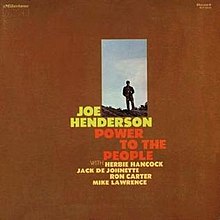
As I sit socially distanced from the rest of the world ever vigilant of this pandemic, the next choice from the library is Power To The People by jazz saxophonist Joe Henderson. The album was recorded on May 23 and May 29, 1969 at Plaza Sound Studios in New York City and released on Milestone Records the same year.
Produced by Orrin Keepnews, all songs are written by Henderson except Opus One-Point-Five and Lazy Afternoon. It was his first to feature an electric instrument with Hancock playing the electric piano. This Quarantined Jazz Voyager is looking forward to listening to this lineup of talented musicians.
Track Listing | 42:27- Black Narcissus ~ 4:50
- Afro-Centric ~ 7:00
- Opus One-Point-Five (Ron Carter) ~ 4:56
- Isotope ~ 4:53
- Power to the People ~ 8:42
- Lazy Afternoon (Moross, Latouche) ~ 4:33
- Foresight and Afterthought (An Impromptu Suite in Three Movements) ~ 7:33
- Joe Henderson — tenor saxophone
- Mike Lawrence — trumpet (2, 5)
- Herbie Hancock — piano (3, 4, 6), electric piano (1, 2, 5)
- Ron Carter — bass
- Jack DeJohnette — drums
As you listen I hope you enjoy this great addition to the jazz catalog. Continue your social distancing, wear your masks and stay healthy. During this sabbatical from flying and investigating jazz around the globe, enjoy the listen and know that the world and I will be back.
More Posts: adventure,club,genius,jazz,museum,music,preserving,restaurant,saxophone,travel,voyager
Daily Dose Of Jazz…
James Theodore Powell was born on October 24, 1914. He played on two recording dates with Billie Holiday for Columbia Records, the first in 1940, was with a band comprising of trumpeter Roy Eldridge, alto saxophonists Carl Frye and Powell, tenor saxophonist Kermit Scott, pianist Sonny White, guitarist Lawrence Lucie, bassist John Williams, and Hal West on drums. The second recording session was in 1941, again with Eldridge, Lester Boone, Ernie Powell, and Jimmy Powell on alto saxophones, Eddie Heywood on piano, Paul Chapman on guitar, Grachan Moncur on bass, and drummer Herbert Cowans.
1944 had Jimmy recording with Billy Eckstine and His Orchestra, with Oscar Pettiford, Art Blakey, Dexter Gordon, Gene Ammons, Thomas Crump, Wardell Gray, Dizzy Gillespie, Chippy Outcalt, and Trummie Young, among others. The album was released in 1960 as Mr. B. In 1945, he recorded in New York with Don Byas and Hal Singer.
At the beginning of 1947, Powell was with Illinois Jacquet and his Orchestra, which featured Miles Davis, Marion Hazel, Fats Navarro and Joe Newman on trumpets, Gus Chapwell, Ted Kelly, Eli Robinson and Dickie Wells on trombones, Ray Perry and Powell on alto saxes, Jacquet and Big Nick Nicholas on tenor saxes, Leo Parker on baritone sax, Bill Doggett and Leonard Feather on piano, Al Lucas on bass and Shadow Wilson on drums, together with Tadd Dameron and Jimmy Mundi as arrangers. And again, in April the same year, with a slightly different line-up, this time featuring Russell Jacquet, Navarro and Newman on trumpets, J.J. Johnson on trombone, Powell or Ray Perry on alto, Illinois Jacquet on tenor, Leo Parker on baritone, Sir Charles Thompson on piano, Freddie Green on guitar, Al Lucas on bass and Shadow Wilson on drums.
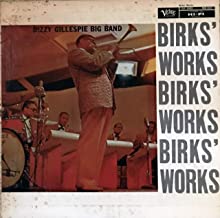
In 1956, Powell was a member of the Dizzy Gillespie Big Band that recorded Groovin’ High live at Birdland with Walter Bishop on piano, Nelson Boyd on bass, Marty Flax on baritone, Gillespie, Quincy Jones, Carl Warwick and Joe Gordon on trumpets, Benny Golson and Ernie Wilkins on tenor, Ernie Henry and Phil Woods on alto saxes, Roy Levitt and Melba Liston on trombones. He went on to record several albums with Gillespie.
Alto saxophonist Jimmy Powell, who never recorded as a leader but as a sideman was part of nine recording sessions, passed away on February 16, 1994.
More Posts: history,instrumental,jazz,music,saxophone