


Daily Dose Of Jazz…
Jemeel Moondoc was born in Chicago, Illinois on August 5, 1946 and studied clarinet and piano before settling on saxophone at sixteen. He became interested in jazz largely due to Cecil Taylor and at the University of Wisconsin–Madison, and was a student of Taylor’s.
After his time at the university he moved to New York City, where he founded “Ensemble Muntu” with William Parker, Roy Campbell, Jr., and Rashid Bak. The group had its own Muntu record label, but eventually faced financial difficulties.
In 1984, he formed the Jus Grew Orchestra, which secured a residency at the Neither/Nor club on the Lower East Side. He worked with Parker again in 1998’s album, New World Pygmies.
Alto saxophonist, clarinetist and pianist Jemeel Moondoc, a proponent of a highly improvisational style, died on August 29, 2021, at the age of 75 from the effects of sickle cell anemia.

More Posts: clarinet,history,instrumental,jazz,music,piano,saxophone

Daily Dose Of Jazz…
Peter Perfido‘was born on July 21, 1956 in Hartford, Connecticut. He started his drumming musical journey in the early Sixties being influenced by the British Wave of the Beatles, the Kinks, the Animals, and the Who. By the mid 70’s Peter had begun to discover jazz and improvised music. While predominantly self-taught, he studied privately with Kit McDermott, Bob Moses and Jerry Granelli. His career has involved playing jazz, improvised music, rock and blues with scores of lauded musicians from diverse styles and backgrounds.
Peter has performed and/or recorded with Chet Baker, Gary Peacock, Lee Konitz, Jimmy Woode, Bill Barron, Art Lande, Julian Priester, David Friedman, Tomasz Stanko, Sal Nistico, Kent Carter, Rasul Siddik, Bob Degen, Heinz Sauer, Bob Mover, Ed Schuller, Anthony Braxton, Joe Lee Wilson, Lou Bennett, Bobby Few, Barney Wilen, Bobby Few, Liz McComb, Michelle Hendricks, Ferenc Snetberger, Rinde Eckert, Lonnie Plaxico , Stephen Haynes, Michel Pilz, Lonnie Plaxico, and the list goes on.
He has toured across the USA, Western Canada, Europe, Asia, the USSR and the Pacific islands. Currently living in Hohrod, Alsace, France, drummer Peter Perfido performs mostly in Europe these days with groups spanning a wide spectrum of influences from mainstream modern jazz to open ended explorations with free improvisation, as well as shuffling and rocking the blues.

More Posts: bandleader,drums,history,instrumental,jazz,music
Daily Dose Of Jazz…
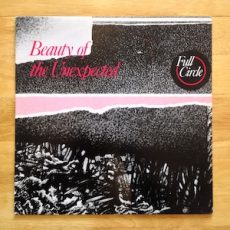
Adrian Tilbrook was born on July 20, 1948 in Hartlepool, Co. Durham, England. The son of a tenor saxophone/clarinet player, he studied drums for two years with Max Abrams. In 1974 he replaced Tony Hicks in the blues-influenced rock trio Back Door and toured extensively in Germany and the UK in the 70s with British blues giant Alexis Korner.
Tilbrook formed Full Circle with trombonist Rick Taylor in 1984 and ventured into jazz. Throughout his freelance career, played with many American musicians, including Eddie ‘Lockjaw’ Davis, Al Grey, James Moody, Jimmy Witherspoon and Al Casey, as well as British artists such as Ian Carr, Allan Holdsworth, Don Weller and Stan Tracey.
A powerful and tasteful technician, he has been influenced by Elvin Jones and Billy Higgins. Drummer Adrian Tilbrook, who has taught percussion for many years and since 1986 has worked with Northern Arts/Yorkshire Arts as Jazz Development Officer based at Jazz Action in Darlington, continues to perform and record.
More Posts: bandleader,drums,educator,history,instrumental,jazz,music
Daily Dose Of Jazz…
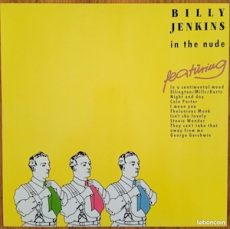
Charles William Jenkins was born July 5, 1956 in Bromley, Kent, England and was known to the jazz and blues worlds as Billy. He began learning the violin from the age of nine and two years later added piano and choir. By twelve he taught himself to play the guitar.
As a young teenager, Billy started regular jam sessions in the basement of the bohemian twenty-three room former hotel where he grew up. This jam session attracted many local contemporaries, his best friend at the time, Bill Broad, who the world came to know as Billy Idol and Steven Bailey, later to become Steven Severin.
During those teen years he performed in local church halls, USAF Bases in East Anglia, riverside pubs, local colleges and clubs under various names 1970-72. Jenkins toured and recorded for Arista Record’s Clive Davis with art rock band Burlesque from 1972-77, performed as a young adult with ‘alternative musical comedy’ duo The Fantastic Trimmer & Jenkins from 1979-82 and drummer Ginger Baker before founding the VOGC, the Voice of God Collective.
From 1983 – 93 he lived and worked at Wood Wharf Rehearsal Studios in Greenwich, England. Since then Billy has produced a large body of over 40 recorded albums including Scratches of Spain, Motorway At Night, Entertainment USA and Music For Two Cassette Machines. Some of his recordings are about his SE London environs and include Sounds Like Bromley, Greenwich, Still Sounds Like Bromley and Suburbia.
Guitarist, composer and bandleader Billy Jenkins, who is immersed in improvisation as ell as standards, continues to pursue his love of jazz and blues.

More Posts: bandleader,composer,guitar,history,instrumental,jazz,music
Daily Dose Of Jazz…
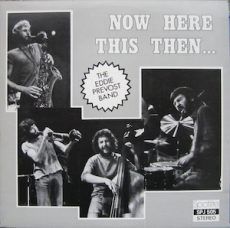
Edwin John Prévost was born June 22, 1942 in Hitchin, Hertfordshire, England of Huguenot heritage. Brought up by a single parent mother in war-damaged London Borough of Bermondsey. He won a state scholarship to Addey and Stanhope Grammar School, Deptford, London. Enrolled in the Boy Scouts Association’s 19th Bermondsey Troop to join the marching band and as a teenager began to get involved with the emerging youth culture music, first skiffle, then introduced to a big jazz record collection of a school friend with rich parents.
Prévost worked part-time after school, purchasing his first snare drum from the Len Hunt Drum Shop on Archer Street. Leaving school at 16, he took various clerical positions, while continuing his musical interests. Immersed in the music of bebop, his playing technique was insufficient, however, New Orleans trad jazz offered scope for his growing musical prowess.
He played in various bands mostly in the East End of London. It was during a tenure with one of these bands he met trumpeter David Ware, who shared a passion for hard-bop jazz. Together, while in their early twenties they formed a modern jazz quintet which included Lou Gare, who was a member of the Mike Westbrook Jazz Orchestra.
In 1965 AMM was co-founded by Eddie, Lou Gare, and Keith Rowe and were shortly joined by Lawrence Sheaff. All had a jazz background and were soon augmented by composer Cornelius Cardew. They stayed together until 1972 when some split and others took their place.
Over the years Prévost has conducted many improvised music workshops. However, as a result of a seminar he conducted at The Guelph Jazz Festival, Canada in 1999, Prévost began to formulate a framework for a workshop based upon a more thorough working of AMM principles and practice.
Percussionist Eddie Prévost, who has recorded twenty albums as a leader, twenty-eight with the free improvisation group AMM, and another thirty as a sideman with Derek Bailey, John Wolf Brennan, John Butcher, Cornelius Cardew, Chris Corsano, Sachiko M, Jim O’Rourke, Bruce Russell, David Sylvian, Telectu, Ken Vandermark, Alexander von Schlippenbach, Christian Wolff, Marilyn Crispell, continues to perform and record.

More Posts: bandleader,history,instrumental,jazz,music,percussion