


Daily Dose Of Jazz…
Claudio Roditi was born on May 28, 1946 in Rio de Janiero, Brazil. He began his musical studies of trumpet when he was just five years old and his native Brazilian music nearly took a back seat as he became enamored with jazz recordings of Louis Armstrong, Harry James and other American trumpeters.
By 13, he became familiar with Charlie Parker, Dizzy Gillespie and Miles Davis. At the age of twenty, he was named a finalist in the International Jazz Competition in Vienna, and the following year, moved to Mexico City where he was active on the contemporary music scene. Relocating to Boston in 1970 he enrolled at the Berklee School of Music.
In 1976 Roditi moved to New York eventually establishing himself in the highly competitive atmosphere of the world’s jazz capital. He would go on to perform with Joe Henderson, Charlie Rouse, Herbie Mann, Tito Puente, McCoy Tyner, and Paquito D’Rivera. He has been a member of Dizzy Gillespie’s United Nation Orchestra, The Jazz Masters led by Slide Hampton and his solo work Symphonic Bossa Nova with Ettore Stratta and the Royal Philharmonic earned Roditi a Grammy nomination in 1995 as well as Brazilliance X4 in 2010.
Claudio easily integrates post-bop elements and Brazilian rhythmic concepts, is in demand as a studio musician and a sideman, has composed, arranged and recorded seventeen critically acclaimed albums. The trumpeter currently tours leading his own band, is frequently travels as a member of Dizzy Gillespie’s United Nations Orchestra and is on the faculty of the School of Contemporary Music.
More Posts: trumpet
Daily Dose Of Jazz…
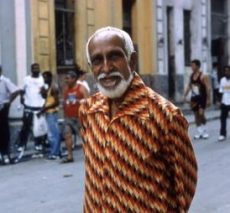
Rubén González was born on May 26, 1919 in Santa Clara, Cuba. He learned to play piano at the music high school of Cienfuegos. He studied medicine for a time, abandoned it due to financial difficulties and began playing with groups in Las Villas. In 1940, he moved to Havana, where he played in the charangas of Paulina Álvarez and Paulín, with Arsenio Rodríguez, Kubavana and Senén Suárez and in the big bands Siboney and Riverside.
By 1943, he released his first recording with Arsenio Rodriguez and during the 50s he served as a member of the Orquesta America, Orquesta de Enrique Jorrin and CMQ. Between 1957 and 1961, he worked in Venezuela but very soon he became known in Cuba and other parts of Latin America. In the early 1960s Rubén became the pianist for the Orquesta de Enrique Jorrín for 25 years, took over leadership after Jorrín’s death in 1987, but retired soon after.
It wasn’t until a meeting with Ry Cooder that González came out of retirement, recorded his first solo album in years and became a part of the Buena Vista Social Club with a host of veteran Cuban musician whose fame became worldwide.
Pianist Ruben González’s last public appearances were in Mexico and Cuba in 2002 and the next year the pianist passed away on December 8, 2003 at age 84.
More Posts: piano
Daily Dose Of Jazz…
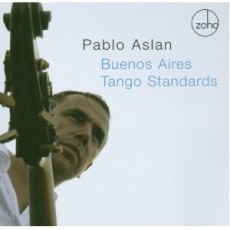
Pablo Aslan was born in Buenos Aires, Argentina on May 5, 1962 and began playing bass in his youth. He received his music education at University of California – Santa Cruz, CalArts and UCLA, and in the 90’s in the clubs of New York.
Pablo has led several groups like New York Buenos Aires Connection, Avantango, and New York Tango Trio, which included musicians such as the late Thomas Chapin, pianist Ethan Iverson (now of The Bad Plus), drummer Kenny Wollesen, saxophonist Donny McCaslin, and bandoneonists Raul Jaurena and Tito Castro.
Aslan has worked with Yo Yo Ma, Lalo Schifrin, Pablo Ziegler, Osvaldo Golijov, Arturo O’Farrill, Emilio Solla and Fernando Otero. In 2009 he released “Tango Grill” that was nominated for both a Grammy and Latin Grammy. He has collaborated with Paquito D’Rivera, “Tango Jazz” Live at Jazz @ Lincoln Center” and also for a tribute to tango master Astor Piazzolla on the 90th anniversary of his birth. Bassist Pablo Aslan continues to champion the fusion of jazz and tango as he records, performs and tours.
Daily Dose Of Jazz…
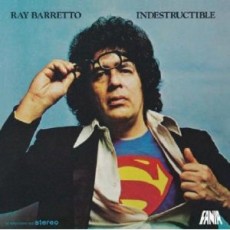
Ray Barretto was born on April 29, 1929 in New York City of Puerto Rican descent. Raised in Spanish Harlem he was influenced by his mother’s love of music and the jazz of Duke Ellington and Count Basie. At 17 he was in the Army, met Belgium vibist Fats Sadi and realized his true calling when hearing Chano Pozo and Dizzy Gillespie play Manteca.
After his return in 1949 Barretto started joining in on jam sessions perfecting his conga style, played with Charlie Parker, Jose Curbelo and Tito Puente, with whom he would play for four years. He was soon sought by other jazz bandleaders and as a result of Ray’s musical influence, Latin percussionists started to appear in jazz groups.
By 1960, Barretto was a house musician for the Prestige, Blue Note, and Riverside labels. He also recorded on Columbia Records with jazz flautist Herbie Mann. New York had become the center of Latin music in the U.S. from which “pachanga” arose as the Latin music craze of the time. In 1961, Barretto recorded his first hit, “El Watusi” that became the first Latin song to enter the Billboard charts. He would go on to record 41 records as a leader, 11 with the groups Guarare and New World Spirit and seven as a sideman working with Dizzy Gillespie, Yusef Lateef, Herbie Mann, Celia Cruz, Red Garland and Kenny Burrell.
Ray became musical director of Fania All Stars, played with the Rolling Stones, and Bee Gees, was nominated for three Grammys, won one for Ritmo en el Corazon was crowned Conga Player of the Year in 1980 and inducted into the International Music Hall Of Fame. On February 17, 2006 conguero and percussionist Ray Barretto passed away from heart failure.
More Posts: percussion
Daily Dose Of Jazz…
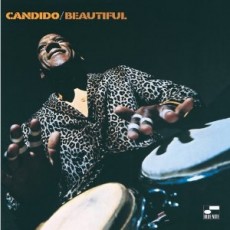
Candido was born Candido de Guerra Camero on April 22, 1921 in Havana, Cuba and learned to play percussion as a child listening to the music of his native land. Early in his career, Camero focused on conga and bongo, recording in his native Cuba with fellow jazz musician Machito. Although he has been credited as the first person to use the congas in jazz music, both Diego Iborra and Luciano “Chano” Pozo Gonzales preceded him in the 1940s.
Moving to New York in 1952 he started recording with Dizzy Gillespie and from 1953-54 he was in the Billy Taylor Quartet. The next year saw him performing and recording with Stan Kenton. During the Seventies Candido enjoyed success during the disco era, most notably with the Babatunde Olatunji-penned track “Jingo” from his Dancin’ and Prancin’ album on the Salsoul Record label, that has been acknowledged as a precursor five years prior to the birth of the house music genre.
He has performed and recorded Errol Garner, Gene Ammons, Art Blakey, Sonny Rollins, Wes Montgomery, Elvin Jones and Lionel Hampton on the short list of jazz luminaries. Percussionist Candido was honored with the National Endowment for the Arts Jazz Masters Award in 2008. In 2014, Camero recorded his last album, The Master, also for Chesky.
He continued to perform in jazz clubs in New York until the late 2010s. AWhen he was 96 years of age he was residing in his home in Cuba. Candido, who played conga, bongo, tres and bass died on November 7, 2020, at his home in New York. He was 99.
More Posts: percussion