

Daily Dose Of Jazz…
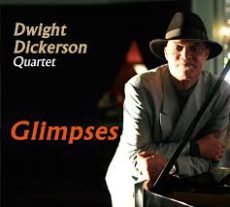
Lowell Dwight Dickerson was born in Los Angeles, California on December 26, 1944 and grew up in the city where his influences were Horace Silver, McCoy Tyner, Kenny Barron, and Bud Powell, among others. He became active on the local jazz scene in the 1960s.
In the early Sevenites he appeared on the Chicago, Illinois tenor titan Gene Ammons’ Free Again album on Prestige, and the latter part of the decade found him being featured on a few LPs by baritone saxophonist Nick Brignola. In the 1980s Dickerson started recording as a leader when he provided his debut album, Sooner or Later, for Discovery. In 1992,
Dickerson recorded Dwight’s Rights which features Red Holloway on tenor sax for the small Night Life label. He has played as a sideman in the 1990s with saxman Rickey Woodard, singer Michael Martin and Albert “Tootie” Heath. The early 2000s saw him featured on singer David Coss’ Simple Life album.
Pianist Dwight Dickerson, who occasionally sings and plays a variety of genres ranging from hard bop, funk and soul jazz, to modal post-bop, continues to perform and record at 80.

More Posts: bandleader,history,instrumental,jazz,keyboard,music,piano
Daily Dose Of Jazz…
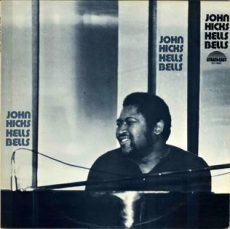
John Josephus Hicks Jr. was born December 21, 1941 in Atlanta, Georgia, the eldest of five children. As a child he moved around the United States as his father, Rev. John Hicks Sr, took up jobs with the Methodist church. His mother was his first piano teacher after he began playing at six or seven in Los Angeles, California. He took organ lessons, sang in choirs and tried the violin and trombone. Once he learned to read music around the age of 11, he started playing the piano in church.
His development accelerated once his family moved to St. Louis, Missouri when Hicks was 14 and he settled on the piano. Attending Sumner High School and played in schoolmate Lester Bowie’s band, the Continentals, which performed in a variety of musical styles. Hicks worked summer gigs in the southern United States with blues musicians Albert King and Little Milton with the latter providing his first professional work in 1958.
He studied music in 1958 at Lincoln University in Pennsylvania, where he shared a room with drummer Ronald Shannon Jackson. He also studied for a short time at the Berklee School of Music in Boston, Massachusetts before moving to New York in 1963.
In New York, John first accompanied singer Della Reese, then went on to play with Joe Farrell, Al Grey, Billy Mitchell, Pharoah Sanders, Jimmy Witherspoon, Kenny Dorham and Joe Henderson before joining Art Blakey’s Jazz Messengers in 1964. From 1965 to 1967 he worked on and off with vocalist Betty Carter, then joined Woody Herman’s big band, where he stayed until 1970, playing as well as writing arrangements for the band.
From 1972 to 1973, Hicks taught jazz history and improvisation at Southern Illinois University. From the 1970s onward he had a prolific career as a leader recording his debut in England followed by fifty-three more albums and as a sideman he recorded 300.
Towards the end of his life, he taught at New York University and The New School in New York. In 2006 John played in a big band led by Charles Tolliver, recorded his final studio album On the Wings of an Eagle.
Pianist, composer and arranger John HIcks, whose collection of papers, compositions, video and audio recordings are held by Duke University, died from internal bleeding on May 10, 2006.
More Posts: arranger,bandleader,composer,history,instrumental,jazz,music,piano

Daily Dose Of Jazz…
Pharoah Sanders was born Ferrell Lee Sanders on October 13, 1940 in Little Rock, Arkansas, an only child. He began his musical career accompanying church hymns on clarinet but his initial artistic accomplishments were in the visual arts. When he was at Scipio Jones High School in North Little Rock, he began playing the tenor saxophone.
After graduating from high school in 1959, Sanders moved to Oakland, California, where he lived with relatives. He briefly studied art and music at Oakland City College. He earned a Bachelor of Fine Arts from an unknown art institution.
He began his professional career playing tenor saxophone in Oakland, then moved to New York City in 1962. The following year he was playing with Billy Higgins and Don Cherry and caught the attention of Eric Dolphy and John Coltrane. In 1965, he became a member of Coltrane’s band, as the latter gravitated towards the avant-garde jazz of Albert Ayler, Sun Ra, and Cecil Taylor.
Sanders first recorded with Coltrane on Ascension, followed by their dual-tenor album Meditations, then joined Coltrane’s final quintet. Pharoah released his debut album as a leader, Pharoah’s First, was not what he expected. In 1966 he signed with Impulse! and the years Sanders spent with the label were both a commercial and critical success.
The 1970s had Sanders continuing to produce his own recordings including the 30-minute wave-on-wave of free jazz, The Creator Has A Master Plan from the album Karma, featuring vocalist Leon Thomas and to work with Alice Coltrane on her Journey in Satchidananda album. Although supported by African-American radio, Sanders’ brand of brave free jazz became less popular.
His major-label return came in 1995 when Verve Records released Message from Home, followed by Save Our Children (1998). But again, Sanders’s disgust with the recording business prompted him to leave the label. In the 2000s, a resurgence of interest in jazz kept Sanders playing festivals and was awarded a NEA Jazz Masters Fellowship for 2016 and was honored at a tribute concert in Washington DC on April 4, 2016.
In 2020 he recorded the album Promises, with the English electronic music producer Floating Points and the London Symphony Orchestra. It was widely acclaimed as a clear late-career masterpiece.
Saxophonist Pharoah Sanders, known for his overblowing, harmonic, and multiphonic techniques, died on September 24, 2022 at his home in Los Angeles at the age of 81.

More Posts: bandleader,history,instrumental,jazz,music,saxophone

Daily Dose Of Jazz…
Gene Ludwig was born on September 4, 1937 in Twin Rocks, Cambria County, Pennsylvania and raised in the boroughs of Wilkinsburg and Swissvale, near Pittsburgh, Pennsylvania. He began studying the piano at age 6 and became interested in rhythm and blues after hearing Ruth Brown, Big Joe Turner and organists Bill Doggett and Wild Bill Davis.
Graduating from Swissvale High School in 1955, he studied physics and mathematics at Edinboro State Teachers College. He left due to his father going on strike at Westinghouse Electric, and returned to Pittsburgh to work in construction.
Ludwig began performing in local vocal groups before hearing organist Jimmy Smith perform at the Hurricane nightclub in Pittsburgh’s Hill District. That initial encounter inspired him to take up the Hammond organ. He bought several organs before settling on the B-3 after sharing a bill with Jimmy Smith in 1964 in Atlantic City, New Jersey.
Traveling along the East Coast and to Ohio, he performed jazz and rhythm and blues, and released numerous singles and albums as a leader and a sideman. Gene released a 45-rpm single of the Ray Charles song Sticks & Stones in 1963, then in 1967 he released Mother Blues on Johnny Nash’s Jocida record label. He went on to replace Don Patterson in saxophonist Sonny Stitt’s band in 1969, appearing on Stitt’s album, Night Letter.
Ludwig toured with bass-baritone vocalist Arthur Prysock and guitarist Pat Martino. He released the album, Now’s the Time, in 1980 on Muse Records, and continued to travel and work through the ’80s and ’90s, regularly performing at Pittsburgh’s Crawford Grill and James Street Tavern. He signed with Loose Leaf/Blues Leaf Records in 1997 and released the albums Back on the Track, Soul Serenade, The Groove ORGANization, Hands On, and Live in Las Vegas, for the label.
Hammond B-3 organist Gene Ludwig, who was a prominent figure on the Pittsburgh jazz scene, died in Monroeville, Pennsylvania on July 14, 2010. A posthumous album, Love Notes of Cole Porter, was released in 2011 by Jim Alfredson’s Big O Records.

More Posts: bandleader,history,instrumental,jazz,music,organ
Daily Dose Of Jazz…
Steve Davis was born March 14, 1929 in Philadelphia, Pennsylvania. The youngest of 10 children, he became interested in music as a young teenager and was inspired by his older brother who also played the bass. He was part of a group of young Philadelphia jazz musicians that included saxophonists Benny Golson and John Coltrane. At age 16 he began playing with local big bands and dropped out of high school a year later to pursue a music career.
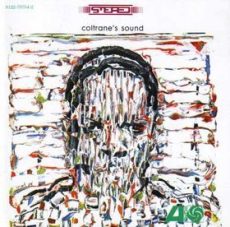
During the 1940s and 1950s he worked frequently playing with Philly Joe Jones and Jimmy Oliver among others. In 1960, he was briefly a part of the John Coltrane Quartet, before being replaced temporarily by Reggie Workman and permanently by Jimmy Garrison. He was the double bassist on the recordings of My Favorite Things, Coltrane Plays The Blues and Coltrane’s Sound.
He also recorded as a sideman with Chuck and Gap Mangione on Hey Baby! In 1961 and with quartet fellow and brother-in-law McCoy Tyner on the 1963 album Nights of Ballads & Blues. Davis went on to play on several of James Moody’s groups. He worked throughout the 1960s as a freelancer in New York and as a side man appearing on albums by Kenny Dorham and others.
Moving to Rochester, New York in 1970 Steve played bass with the Gap Mangione Trio, Spider Martin Group and other local bands. He was a mentor to younger jazz musicians in Rochester and enjoyed passing on his knowledge. 1980 saw him beginning to suffer from emphysema and returned to Philadelphia.
Bassist Steve Davis, who was also known by his Muslim name Luquman Abdul Syeed, died on August 21, 1987 at the age of 58.
More Posts: bass,history,instrumental,jazz,music