


Daily Dose Of Jazz…
Mika Mimura was born in Osaka, Japan on April 18, 1978. She began to play marimba when she was 6 years old. She studied classical music at Osaka College of Music and finished her Master’s degree at the college. Inspired by pianist Makoto Ozone, she began her study of jazz vibraphone after graduation. She entered Berklee College of Music in 2004 and studied with Dave Samuels, Ed Saindon, Tiger Okoshi, and Ed Tomassi , among others.
Mika became a regular member of Phil Wilson’s Rainbow Big Band and Rainbow All Stars. In 2007 she performed with Greg Osby in 2007. She joined The BandA ecLectics, whose leader, Petros Sakelliou, had won the first prize at Thelonious Monk Institute Composition Competition. Together they played the Kodak Theatre in Los Angeles, California. She has performed many times in concert throughout the Boston, Massachusetts and New York City areas.
Vibraphonist Mika Mimura, who is currently a part of the New York City jazz scene, continues to energetically perform, compose and arrange in jazz or classical.
More Posts: bandleader,history,instrumental,jazz,marimba,music,perccussion,piano,vibraphone
Daily Dose Of Jazz…
Jan Hammer was born in Prague, Czechoslovakia on April 17, 1948 to a mother who was a well-known Czech singer, and his doctor father who worked his way through school playing vibraphone and bass guitar. He began playing the piano at the age of four with formal instruction starting two years later. He aspired to follow his father into medicine until a family friend convinced him to develop his musical talents instead.
Forming a jazz trio in high school, he performed and recorded throughout Eastern Europe at the age of fourteen. Upon entrance to the Prague Academy of Musical Arts, he completed many compulsory classes including harmony, counterpoint, music history, and classical composition. He moved to the United States and resolved to become a citizen after receiving a scholarship at Berklee School of Music in Boston, Massachusetts. Upon completion of his studies, Jan spent a year touring with Sarah Vaughan, recorded with Elvin Jones and Jeremy Steig, then moved to New York City in 1971 and joined the original lineup of the Mahavishnu Orchestra.
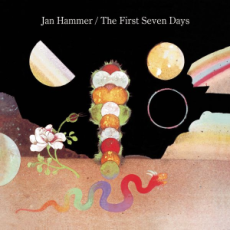
Though he previously recorded as a leader and sideman, his debut solo album, The First Seven Days, dropped in 1975. He formed the Jan Hammer Group in 1976 to support the album tour, which received good reviews from both jazz and rock critics. During the mid 70s to early 80s he recorded and played with Joni Mitchell, Billy Cobham, Santana, Tommy Bolin, Harvey Mason and Stanley Clarke.
Returning to solo work he recorded an album in 1978, formed a new band, known as Hammer, and wrote theme song for a British television series. He formed Schon & Hammer, played benefit concerts, and has received three Grammys and an Emmy nomination. By the Nineties and well into the new millennium, he continued to score and compose for film and television. In 2018 he released his first album of new material in over 10 years: Seasons – Part 1.
Keyboardist, drummer, composer, and record producer Jan Hammer continues to produce and perform.
More Posts: bandleader,composer,drums,history,instrumental,jazz,keyboard,music,producer,synthesizer
Daily Dose Of Jazz…
Roy Hamilton was born on April 16, 1929 in Leesburg, Georgia to Evelyn and Albert Hamilton, where he began singing in church choirs at the age of six. The summer of 1943 he was fourteen and the family migrated north to Jersey City, New Jersey in search of a better life. There he sang with the Central Baptist Church Choir, and attended Lincoln High School where he studied commercial art. Being gifted, his paintings were placed with a number of New York City galleries.
In 1947 the seventeen-year-old Hamilton took his first big step into secular music, winning a talent contest at the Apollo Theater. But nothing came of it, so to support himself he worked as an electronics technician during the day, and an amateur heavyweight boxer at night, with a record of six wins and one defeat. The following year he joined the Searchlight Gospel Singers, studied light opera, and continued to perform gospel until 1953 when the group broke up. Then he headed back into pop music with something different to offer.
1953 saw Roy discovered by Bill Cook, the first Black radio disc jockey and television personality on the East Coast. As his manager, Cook made a demo tape, brought it to the attention of Columbia Records and got him signed to Okeh Records. His first session produced Rodgers and Hammerstein’s You’ll Never Walk Alone from the musical Carousel. However Columbia released it on their pop label Epic and it topped the Billboard charts for eight weeks. He would go on to have hits with If I Love You, Ebb Tide and Unchained Melody and in 1955 was named Vocalist of the Year by Down Beat magazine. He would go on to record Great American Songbook singles Without a Song, Cuban Love Song, Everybody’s Got a Home But Me, and Somebody Somewhere.
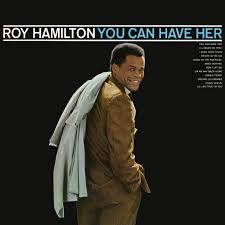
Hamilton’s last hit record, You Can Have Her, came in 1961, and the Epic label treated him as a major star and issued sixteen albums by him. By the middle of the decade his career declined while recording with MGM and then RCA. In 1969 in Memphis, Tennessee, he made the final recordings of his career.
In early July 1969, he suffered a massive cerebral hemorrhage at his home in New Rochelle, New York. He was taken to New Rochelle General Hospital where he lay in a coma for more than a week. On July 20, 1969 vocalist Roy Hamilton, who was inducted into the Georgia Music Hall of Fame, was Epic Records first star, inspired Sam Cooke, and influenced Elvis Presley and the Righteous Brothers, died after being removed from life support. He was 40 years old.
More Posts: bandleader,history,instrumental,jazz,music,vocal
Daily Dose Of Jazz…
Susanne Alt was born April 15, 1978 in Würzburg, Germany to Hans-Joachim and Maria Alt. Her father is a composer, poet and piano teacher, and mother a guitar teacher. After studying classical piano and guitar with her parents, she began playing the saxophone at thirteen and successfully participated in several saxophone competitions.
While still in high-school she started taking lessons in classical saxophone at the Meistersingerkonservatorium Nuremberg between 1993 and 1995, becoming a full-time student there in the 1995–96 academic year. During this period Susanne began practicing jazz and after winning the Siemens-Jazz-Förderpreis, she moved to the Netherlands to continue her studies at the Hilversums Conservatorium. Returning to Germany for postgraduate studies, she enrolled in the Berlin University of the Arts in 2000.
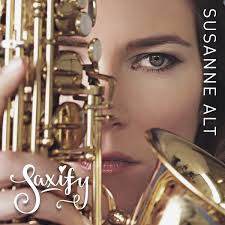
Forming the Susanne Alt Quartet in 2003, in the following year she released her debut album, Nocturne at Bimhuis, Amsterdam, Netherlands. Five jazz albums later, she released the funk album Saxify in 2016, preceded by the 7-inch single Saxify. The album features 36 musicians, amongst them are Fred Wesley, Michael “Clip” Payne, Michael Hampton, Rodney “Skeet” Curtis, and Roger Smith of Tower Of Power.
Alt has collaborated with a number of notable musicians and ensembles and has also toured worldwide. Saxophonist and composer Susanne Alt is based in Amsterdam, and continues to pursue her desire for new musical experiences.
More Posts: bandleader,composer,history,instrumental,jazz,music,saxophone

Daily Dose Of Jazz…
Frank Meester was born in Amsterdam, Netherlands on April 14, 1970 and studied philosophy and general literature at the University of Amsterdam and Erasmus University in Rotterdam, Netherlands. From 2010 to 2016 he was assistant lecturer in Philosophy and Professional Practice at The Hague University of Applied Sciences .
He went on to become the youngest of the writing duo Gebroeders Meester and wrote columns in Filosofie Magazine and de Volkskrant, among others. With Stine Jensen, they also wrote two books together about parenting and toured the country in 2018 and 2019 with the theater performance Het opvoedcircus.
Meester also plays in the Hot Club de Frank, founded in 1990 when he was just 20 years old. Two years later they expanded to a quartet and played in local cafes. In 1994 personnel changes took a turn at vocal swing and became a permanent salon band at the Amstel Hotel and the Amerstadam Bamboo Bar. They dropped their debut cd in 1996, De Heren van het Circus, to critical acclaim, and expanded once again to a quintet. Their sophomore release in 1999 hit success again being broadcast across the radio waves.
Another personnel transition has the band currently consisting of Meester, solo guitarist Harold Berghuis, violinist Jelle van Tongeren and saxophonist Wim Lammen. The band creates a new sound within gypsy jazz with different rhythms, other instruments and special arrangements. They have played festivals and European tours.
Double bassist Frank Meester, who has been published thirteen times, continues to perform with his sons Midas and Gilles in The Maestros.
More Posts: bandleader,bass,guitar,history,instrumental,jazz,music,vocal