

Daily dose Of Jazz…
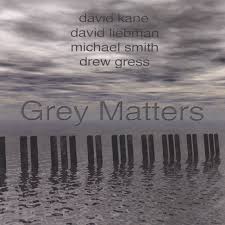
David Kane was born in Glasgow, Scotland on April 13, 1955 and moved to the United States with his family in 1965. He began playing piano and composing music at the age of eight and went on to attend North Texas State University in 1972. Moving to Washington, D.C. in 1975, he studied with Doctor Asher Zlotnik for five years. In addition, he studied with Ludmila Ulehla, Alan Mandel, and Clare Fischer.
He has performed with Woody Shaw, David Liebman, Marlene VerPlanck, Charlie Byrd, Jim Snidero, Mark Murphy, Eddie Daniels, Dizzy Gillespie, Pam Bricker, Maxine Sullivan, Tom Keenlyside, and Michelle Hendricks. In addition, he has led his jazz quartet featuring drummer Michael S. Smith, saxophonist Glenn Cashman, and bassist Drew Gress.
Kane has accompanied many classical artists including the Twentieth Century Consort, the National Symphony Orchestra, Baltimore Symphony Orchestra, Charlotte Church, Joshua Bell, Renée Fleming, Denyce Graves, and James Galway.
Having composed a variety of chamber works, David is also a prolific composer for film and television for over 30 years with over 250 credits to his name. Most notably, he composed music for the National Geographic Channel, the Smithsonian Channel and for Public Radio International.
From 2006 to 2015, he put on his music critic cap and wrote for Cadence Magazine. In 2021 Jamey Aebersold Jazz published his treatise on improvisation, Playing Outside the Chord. Pianist, composer, arranger, author and music critic David Kane continues to expand his endeavors in music.
More Posts: arranger,bandleader,composer,critic,history,instrumental,jazz,music,piano
Daily Dose Of Jazz…
Dave Mosick was born on April 12, 1967 and raised on Long Island, New York. He got into rock music very young, and went on to play in bands all through high school and college. While attending American University he was deeply inspired by a jazz history class taught by the great jazz historian Rusty Hassan, and was bitten by the bug.
Eventually Mosick settled into the Washington D.C. jazz scene where he studied with guitarists Paul Bollenback and Paul Wingo. He also studied ear training with Asher Zlotnik.
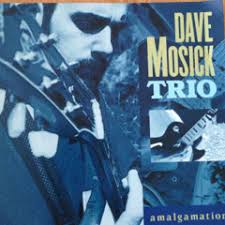
2002 saw Dave releasing his debut album Amalgamation to widespread critical acclaim. The next year he was the featured jazz guitar clinician at The Washington Jazz Academy. His unique concepts in Jazz Improvisation have been published in Just Jazz Guitar Magazine.
Guitarist Dave Mosick maintains a busy performance schedule as both a leader and sideman, as well as being an in demand jazz educator, regularly hosting clinics and giving private lessons.
More Posts: bandleader,educator,guitar,history,instrumental,jazz,music
Daily Dose Of Jazz…
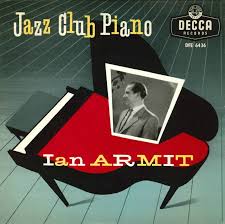
Ian Armit was born on April 11, 1929 in Kirckaldy, Fife, Scotland and little is known about his youth. Surfacing on the jazz scene in 1957 he was found performing with Sandy Brown and releasing the solo EP Jazz Club Piano for Decca Records.
In 1960 Ian began a two year stint with the Humphrey Lyttelton Band and went on to record with Al Fairweather, Cy Laurie, The Wally Fawkes-Sandy Brown Quintet and Wally Fawkes and The Troglodytes. He guested a few of Chris Barber appearances for BBC Radio in 1963. The following year he led his own quintet on the BBC Radio program “Three’s Company.
Tiring of jazz he turned his direction towards blues in late 1964 he joined Alexis Korner’s Blues Incorporated, followed by Long John Baldry’s Hoochie Coochie Men and then became a member of The Steampacket. He recorded with Rod Stewart, toured with Savoy Brown and Fleetwood Mac. He remained with Baldry until 1972 when he joined Bob Wallis on a European tour.
Moving to Switzerland, Armit once again led a quartet and recorded Ian’s Boogie Woogie with the Old Rivertown jazz band in 1989. He would play with the Piccadilly Six, the Harlem Ramblers and other blues bands.
Pianist, composer and bandleader Ian Armit, who never returned to jazz, died after a short illness on February 19, 1992 in Zurich, Switzerland.
More Posts: bandleader,history,instrumental,jazz,music,piano
Daily Dose Of Jazz…
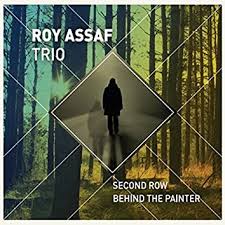
Roy Assaf was born on April 10, 1982 in Beersheba, Israel and studied at Tel Aviv Conservatory. Coming to America he continued his studies at Berklee College of Music in Boston, Massachusetts and then migrated to New York City and while earning his Master of Art at the Manhattan School of Music, he established his reputation as one of the most sought-after young pianists in the New York jazz scene.
After a meeting with legendary bassist and producer John Lee soon found Roy touring around the world and playing the most prestigious festivals, clubs, and concert halls with the Dizzy Gillespie All Stars, a band that included James Moody, Jimmy Heath, Paquito D’Rivera, Roy Hargrove, Lewis Nash, Randy Brecker, Antonio Hart, and other jazz masters.
Before long, Assaf was getting calls from some of the world’s most influential contemporary jazz bands that included the Slide Hampton Sextet, The Mingus Big Band, Steve Turre’s bands, Roberta Gambarini Quartet, David Sanborn Group, Claudio Roditi Quartet, and many others.
In 2012, he released his debut album, Respect, on Jazz Legacy Productions accompanied by bassist Reuben Rogers and drummer Greg Hutchinson. The following year he formed a trio with Raviv Markovitz on bass and Jake Goldbas on drums and together they began to establish the unique voice of the Roy Assaf Trio.
Pianist and composer Roy Asssaf, who has released two albums and has won several awards including one from ASCAP, a Eubie Blake and two from DownBeat and others, continues to perform across the globe.
More Posts: bandleader,composer,history,instrumental,jazz,music,piano
Daily Dose Of Jazz…
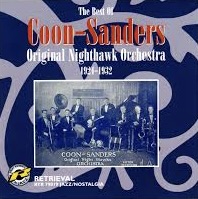
Theodore Gerald Roy, born April 9, 1905 in Du Quoin, Illinois began his musical career playing cornet before switching to piano. He first played in the Coon-Sanders Original Nighthawk Orchestra, and then with Jean Goldkette and Frankie Trumbauer early in his career.
While in Boston, Massachusetts in 1933 he played with Bobby Hackett and Pee Wee Russell, then led his own band around the state in 1934. Following this, he worked in various dance bands in New York City in the late 1930s and early 1940s.
Serving in the Army from 1943 to 1945, Teddy went on to play with Max Kaminsky and the new version of the Original Dixieland Jazz Band with Eddie Edwards and Wild Bill Davison. From 1946 to 1959, he played mostly freelance in New York City and on Long Island, New York. Among those he played with were Russell, Kaminsky, Miff Mole, and Wingy Manone. He also did solo work in the 1950s.
Pianist Teddy Roy died on August 31, 1966 in New York City.
More Posts: bandleader,history,instrumental,jazz,music,piano