


Daily Dose Of Jazz…
Gene Schroeder was born on February 5, 1915 in Madison, Wisconsin to a pianist mother and a father who was a trumpeter. He studied at the Wisconsin School of Music, and when he was 11 he was playing now and then with his father’s band, and doubling on clarinet in his high school orchestra a few years later.
After a year at the University of Wisconsin Music School, Schroeder moved to Milwaukee, Wisconsin. He led his own band and played with local musicians including Wild Bill Davison. His next move was to New York City in 1939 and was briefly with the Wes Westerfield Trio, then headed a combo. Gene went on to spend a year apiece as a member of the groups of Joe Marsala and Marty Marsala.
By the summer of 1942, Schroeder was working again with Wild Bill Davison then beginning in 1943 at Nick’s with Miff Mole. After becoming Eddie Condon’s regular pianist, he played at the opening of the club Condon’s in 12 1945. He was with Condon most of the time from then on up to 1962 appearing on many recordings. During his long association with Condon’s Chicago jazz bands his talent was continually overshadowed, most likely due to his being a subtle player.
He had a three year stint with the Dukes of Dixieland from 1961 to 1964 and then worked in the late ’60s with Tony Parenti. Despite his busy activity, he only led one recording session in his career, four songs cut in 1944 for the Black & White label with a trio.
Pianist Gene Schroeder died at the age of 60 on February 16, 1975 in his hometown of Madison.

More Posts: bandleader,history,instrumental,jazz,music,piano
Daily Dose Of Jazz…
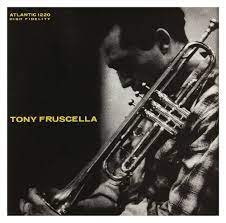
Tony Fruscella was born February 4, 1927 in Orangeburg, New York and grew up in Greenwich Village, Manhattan, New York. He played in an Army band early in his career. He worked as a sideman in the 1950s for Charlie Barnet, Lester Young, Gerry Mulligan, and Stan Getz.
He played with Don Joseph later in the 1950s, but by the early 1960s his problems with drug abuse and alcoholism prevented him from performing. Fruscella released one album, I’ll Be Seeing You in 1955, as a leader during his lifetime. It was recorded with Allen Eager and Danny Bank for Atlantic Records.
He married singer Morgana King, however it ended in divorce after nine years. Trumpeter Tony Fruscella died on August 14, 1969 at 42 years old.
More Posts: bandleader,history,instrumental,jazz,music,trumpet
Daily Dose Of Jazz…
Claude Ranger was born in Montréal, Canada on February 3, 1941 and studied drums briefly with several teachers and arranging with Frank Mella. Beginning his career with Montréal show bands, he was a leading figure among the city’s jazz musicians by the mid-1960s.
A sideman to Lee Gagnon, Pierre Leduc, and Ron Proby among others, Claude led the bands heard on the CBC’s Jazz en Liberté. He was a member of Aquarius Rising with Brian Barley, Michel Donato and Daniel Lessard from 1969 to 1971. Moving to Toronto, Canada he lived there for fifteen years beginning in 1972. It was here that Claude was a member of the Moe Koffman Quintet and accompanied Canadian and U.S. musicians when they came through the city, such as, Lenny Breau, George Coleman, Larry Coryell, Sonny Greenwich, James Moody, Doug Riley, Don Thompson, and Phil Woods.
His own bands appeared at the Music Gallery, Jazz City, the Festival International de Jazz de Montréal (FIJM) and the Ottawa International Jazz Festival. A Ranger quintet was a finalist in the 1986 FIJM, receiving a special jury citation for his drumming. Relocating to Vancouver, Canada he served as a mainstay of the du Maurier International Jazz Festival, again as an accompanist to Canadian and U.S. musicians and as a leader of his own groups.
West Coast musicians Ron Samworth, Clyde Reed, Bruce Freedman and drummer Dylan vander Schyff also influenced Claude’s career. He was considered a jazz musician and drummer with natural swing, in the bebop-based tradition of Max Roach. Displaying great stamina, he sometimes worked against the grain of jazz in Canada. His ensembles ranged from a trio to the 15 and 19-piece Jade Orchestra that debuted at the 1990 Vancouver festival.
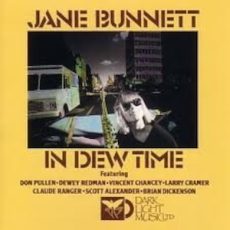
Ranger played a role in Canada similar to the one created by Art Blakey in the US – that of a veteran musician whose bands served as an important platform for the development of younger players. His discography included recordings by Allen, Barley, Breau, Gagnon, Greenwich, Koffman, Riley, Thompson, Jane Bunnett, P.J. Perry, Herb Spanier, Michael Stuart, and U.S. musicians Dave Liebman, and Michael Munoz.
Drummer, composer, arranger, and teacher Claude Ranger continues to pursue his career in music.
More Posts: arranger,bandleader,composer,drums,educator,history,instrumental,jazz,music
Daily Dose Of Jazz…
Louis Keppard was born February 2, 1888 in New Orleans, Louisiana and was the older brother of cornetist Freddie Keppard. The guitarist played in the Cherry Blossom Band before leading his own group, the Magnolia Band, which included King Oliver and Honore Dutrey among its members.
He played with Papa Celestin’s Tuxedo Brass Band, Manuel Perez, and followed that residency with the Olympia Orchestra alongside Freddie. In 1917 he moved briefly to Chicago, Illinois but returned soon after. Playing in several New Orleans brass bands, Louis performed as an alto hornist and guitarist from the 1920s through the 1950s, including in the Gibson Brass Band and the Young Excelsior Brass Band.
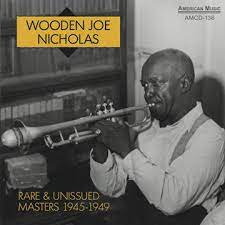
Keppard’s style of “shuffle rhythms” was an influence on Danny Barker. He recorded with Wooden Joe Nicholas in 1949, and retired from music some time after 1962.
Guitarist, tubist and alto hornist Louis Keppard, who led a band but never recorded as a leader, died in his hometown sixteen days after his 98th birthday on February 18, 1986.
More Posts: alto horn,guitar,history,instrumental,jazz,music,tuba
Daily Dose Of Jazz…
Reuben McFall was born on February 1, 1931 in Los Angeles, California to a musician father and grew up in the Belvedere neighborhood of East Los Angeles, long established as a Mexican-American enclave.
McFall attended Westlake College of Music in Hollywood, California, one of the first institutions in the county to offer a diploma in jazz. The school was founded in 1945 and ran until 1961.
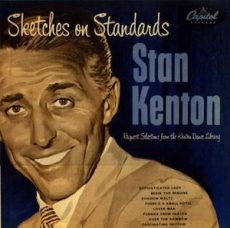
As a sideman he performed with Freddie Slack, Vido Musso, Floyd Ray, Glen Henry, Lalo Guerrero. From 1946 to 1955 he recorded albums with Roy Porter and His Orchestra, Gerry Mulligan, Stan Kenton, Woody Herman, Shorty Rogers, Gerald Wilson and Teddi King.
Trumpeter, composer and jazz arranger Reuben McFall, who was also known as Ruben and Rubin and Ruban, is 93 years old.
More Posts: history,instrumental,jazz,music,trumpet