

Daily Dose Of Jazz…
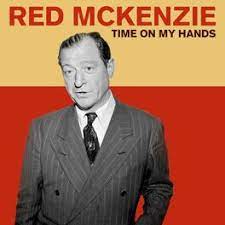
William ‘Red’ McKenzie was born on October 14, 1899 in St. Louis, Missouri. In 1923, he founded the Mound City Blue Blowers with Jack Bland and Dick Slevin. Later they were joined by guitarist Eddie Lang. The quartet also used the name Red McKenzie and the Candy Kids.
In 1929, the Blue Blowers recorded the songs One Hour and Hello Lola with Glenn Miller, Pee Wee Russell and Coleman Hawkins. They also recorded with Bunny Berigan, Jimmy Dorsey, and Muggsy Spanier. McKenzie sang with the Paul Whiteman orchestra and in the 1930s led the Spirits of Rhythm and the Farley-Riley band.
In 1931, he sang on Time on My Hands, Just Friends, and I’m Sorry Dear. McKenzie played in the Town Hall concerts of Eddie Condon, but retired in the 1940s.
On February 7, 1948 jazz vocalist and musician Red McKenzie, who played a comb-and-paper as an instrument, transitioned in New York City.

More Posts: comb & paper,history,instrumental,jazz,music,vocal
Daily Dose Of Jazz…
Raymond Matthews Brown Jr. was born August 13, 1949 in New York City, New York to Ella Fitzgerald’s half-sister Frances. Ella and her then husband, Ray Brown, adopted the baby and raised him as their own. During his childhood Nat King Cole, Louis Armstrong, Frank Sinatra and many others were regular visitors during his childhood.
After moving to California when he was 10, Ray discovered a passion for the drums and for singing. He attended Beverly Hills High School where he sang with school groups which toured local festivals and hospitals. His father arranged for him to study with jazz percussionists Bill Douglass and Chuck Flores. Despite his jazz roots he admits that his interest in performing rock music was an act of rebellion.
Moving to Seattle in 1971 he studied with drummer Bill Coleman Sr. and during this time he began writing songs in addition to playing drums and piano. By the late 1980s Brown was touring the Pacific Northwest, Canada, Alaska, Japan, Korea and Guam performing for the U.S. Department of Defense.
Ray recorded his debut album Slow Down for Love in 2001 on SRI Jazz, reaching the top 50 of the Gavin Report. He released his sophomore album, Committed From The Heart, two years later and he wrote and arranged all the songs on both albums. He also debuted on the Las Vegas Strip at the Riviera hotel and casino.
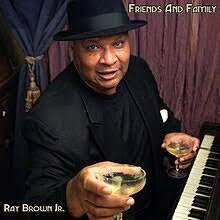
In 2007 he released the album Stand by Me, the following year a duets album Friends and Family, that included Jane Monheit, Melba Moore, James Moody, Maria Muldaur, Dr. John, Dionne Warwick, Freda Payne, Sophie B. Hawkins, Paul Williams, Dr. Lonnie Smith, Dave Somerville, Kim Hoyer, and Sally Kellerman.
He lent instrumental performances on some of the album tracks with artists David “Fathead” Newman and Terry Gibbs. He attended ceremonies honoring his mother, appearing in a BBC documentary about his mother, and the U.S. postage stamp.
Jazz and blues singer Ray Brown Jr., whose mother’s 1964 single Ringo Beat was inspired by his interest in rock music, continues to perform, tour, and record.
Daily Dose Of Jazz…
Linda Presgrave was born in St. Louis, Missouri on October 12, 1951. During her hometown years she performed as a leader with her group, After Six Jazz, at the finest jazz venues in St. Louis. At the same time she worked with the Sessions Big Band, the Modern Vintage Jazz Quartet and the Kim Portnoy Jazz Orchestra. As a former professional French Horn player, she performed regularly at the Muny, Fox and Riverport theaters in orchestral settings behind top entertainers, world class ballet ensembles and national theatrical productions.
Relocating to New York City in 1998 she left a very active music career in her native city for the vibrant jazz scene of a new city. Since moving Linda has released four compact discs on the Metropolitan Records label. She continues on a mission to bring attention to compositions by inspirational jazz artists who happen to be women.
Linda has performed on prestigious jazz festival stages in America and a few in Europe. When not performing with her own group she sits in the piano chair of Carol Sudhalter’s Astoria Big Band and also with a new group, Ladies Day, led by MJ Territo that features music and lyrics by women.
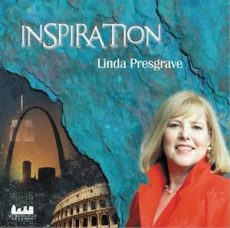
Linda Pianist, composer and arranger Linda Presgrave continues to perform, record and tour.
More Posts: bandleader,history,instrumental,jazz,music,piano
Daily Dose Of Jazz…
Loys Choquart was born on October 11, 1920 in Geneva, Switzerland. Leading his own ensemble by age 17, and at 19 had a position at Radio Geneva, remaining a broadcaster with the station for decades.
He first recorded with his ensemble the New Rhythm Kings in 1942, then with a new ensemble, the Dixie Dandies, in 1943 which included Henri Chaix and Wallace Bishop as sidemen.
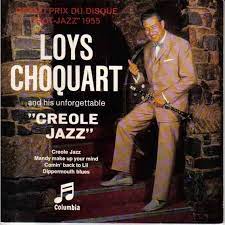
According to jazz historian Rainer E. Lotz, by the end of World War II “he was considered the best Swiss saxophone and clarinet soloist”, playing in both Dixieland and swing idioms. His Creole Jazz ensemble won the Prix Jazz Hot in 1955 on the basis of recordings made in 1952.
He also led a larger ensemble with an orchestra, which included pianist and vibraphonist André Zumbach. During his later life he toured extensively throughout western Europe and owned a club in Geneva called La Tour. Unfortunately there are no recordings of his playing online.
Reedist, bandleader and broadcaster Loys Choquart transitioned on December 10, 1989 in Puplinge, Switzerland.

More Posts: bandleader,broadcaster,history,instrumental,jazz,music,reeds
Daily Dose Of Jazz…
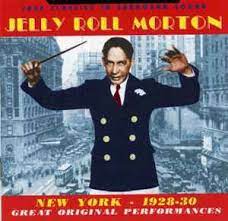
Lee L. Blair was born on October 10, 1903 in Savannah, Georgia and was a left-handed autodidact on banjo, aside from a few lessons taken from Mike Pingitore, the banjoist for Paul Whiteman. He played and recorded in New York City, New York with Thomas Morris’s Seven Hot Babies in 1926, then played with Charlie Skeete in 1926-28, before playing and recording with Jelly Roll Morton’s Red Hot Peppers in 1928-30.
In the Thirties he went on to play with Billy Kato, then played and recorded with Luis Russell and Louis Armstrong from 1935 to the end of the decade. He worked part-time in music through the 1940s, then joined Wilbur De Paris’s New New Orleans Jazz Band in the 1950s at Jimmy Ryan’s Club on West 52nd Street in New York City.
The summer of 1957 had him touring Africa with the DeParis band for the State Department. During the 1960s he played less, concentrating on raising chickens on his farm in Belmore, Long Island, but appeared at the 1964 World’s Fair in a trio with Danny Barker and Eddie Gibbs. He freelanced around New York with Hank Duncan and others until his death.
He never recorded as a leader, but appears on record with Morris, Morton, Russell, Armstrong, and De Paris, as well as with Dick Cary, Pee Wee Erwin, and Leonard Gaskin among others. He is honored in the jazz section of the Georgia Music Hall of Fame in Macon, GA.
Banjoist and guitarist Lee Blair, who never recorded as a leader, transitioned on October 15, 1966 in New York City.