

Daily Dose Of Jazz…
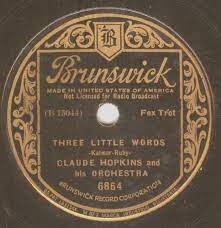
Pete Edward Jacobs was born on May 7, 1899 in Asbury Park, New Jersey. He played in the Musical Aces, then joined the band of Claude Hopkins from 1926 to 1928. He left Hopkins to play with Charlie Skeete in 1928, then returned to play with Hopkins from 1928 until 1938.
During this ten-year tenure in Hopkins’s orchestra, Pete recorded extensively with the group on Brunswick Records, particularly during the period 1927 to 1932. Additionally, he appeared with the band in the short films Barbershop Blues and By Request.
He fell ill in 1938 and had to quit the group, and never returned to active performance. Drummer Pete Jacobs transitioned in 1952.

More Posts: drums,history,instrumental,jazz,music
Daily Dose Of Jazz…
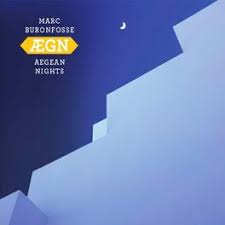
Marc Buronfosse was born on May 6, 1963 in Paris, France. His musical training commenced with classical guitar studies at the age of ten, then he began lessons on the upright bass in 1982 with Thierry Barbé while achieving studies in sound engineering and musicology. After receiving a prize at the Conservatoire de Paris XII, he started playing more and more jazz, working with bass players such as Cesarius Alvim, Charlie Haden, Reggie Workman and Henri Texier. He also worked with symphonic orchestras such as the Opéra de Paris and chamber music orchestras on a tour in Japan with the Solistes de Versailles.
1991 saw him obtaining a grant from the French Ministry of Culture and attending for one year in New York at The New School of Music. During this time he worked regularly with Gary Peacock, Marc Johnson and Mark Dresser. He also met and played with Jimmy Cobb, Steve Kühn, John Abercrombie, Lew Soloff, Jim Hall, Tim Berne, Dave Liebman, and Billy Harper and numerous others.
Returning to Paris he plays with Stéphane Guillaume Quartet + Brass Project, René Aubry Septet, Michel Elmalem Quartet, and Gueorgui Kornazov “Horizons” Quintet. As an educator he teaches jazz at the Conservatoire National de Région of Paris. Bassist Marc Buronfosse presently leads a quartet with musicians Benjamin Moussay, Jean Charles Richard and Antoine Banville.
More Posts: bandleader,bass,guitar,history,instrumental,jazz,music,vocal
Daily Dose Of Jazz…
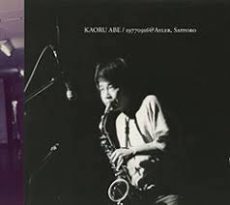
Kaoru Abe 阿部 薫 was born on May 5, 1949 in Kawasaki, Kanagawa, Japan. Self-taught at a young age, at 17 he dropped out of highschool in 1967 to focus on perfecting his playing. The following year he played his first performance at a jazz spot named Oreo.
He generally performed solo but played with notables Motoharu Yoshizawa, Takehisa Kosugi, Yosuke Yamashita, Derek Bailey, and Milford Graves. In 1970, Laoru met guitarist Masayuki Takayanagi and recorded with him.
Abe was prolific, appearing almost every day to jazz spots and concerts. His library consists almost entirely of archival and live recordings, however he has done studio recordings.
His later years saw Kaoru playing different instruments like the bass clarinet throughout his career. By 1976 for two years he was mostly explorative with the harmonica. He was portrayed in Kōji Wakamatsu’s film Endless Waltz by novelist and punk rock singer Kō Machida.
Avant-garde alto saxophonist Kaoru Abe transitioned on September 9, 1978 from Bromisoval overdose causing an acute gastric perforation.
More Posts: bandleader,history,instrumental,jazz,music,saxophone

The Jazz Voyager
This Jazz Voyager is on his way to NOLA to investigate for you a new spot for jazz that I’ve never been to called Chickie Wah Wah. This intimate club is a revered local place for live jazz, roots and funk music while serving up creative sandwiches.
This week I’ll be listening to native trumpeter, pianist and composer Terence Blanchard featuring the E~Collective and the Turtle Island Quartet. They will be performing two shows at 8:00 and 10:00pm. He started his career in 1982 as a member of the Lionel Hampton Orchestra, then The Jazz Messengers. He has composed more than forty film scores and performed on more than fifty. So we’ll be celebrating Cinco de Mayo and Jazz Fest on the same night.
Located in Mid~City, it’s just a short ride from the French Quarter to 2828 Canal Street, New Orleans, Louisiana 70119. One can always get more information at https://chickiewahwah.com/.
More Posts: adventure,album,club,festival,genius,jazz,museum,music,preserving,restaurant,travel,trumpet
Daily Dose Of Jazz…
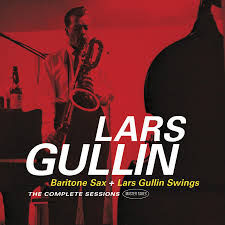
Lars Gunnar Victor Gullin was born May 4, 1928 in Visby, Sweden. A child prodigy on the accordion, by age thirteen, he played clarinet in a military band and later learned the alto saxophone. After moving to Stockholm, Sweden in 1947 he became a professional musician as a pianist. Planning on a classical career he studied privately with classical pianist Sven Brandel.
He filled the baritone chair in Seymour Österwall’s band in 1949 by chance, it was enough for him to decide that it was an instrument with possibilities. He was influenced by baritone saxophonist Gerry Mulligan for the first time on the Birth of the Cool recordings. He worked as a member of Arne Domnérus’s septet for two years from 1951.
Gullin began working with visiting American musicians, recording with James Moody, Zoot Sims and Clifford Brown. Most importantly, he first performed with Lee Konitz in 1951, an association which was to be repeated several times in future years.
In 1953 formed his own group, probably the only regular group he was to lead. It was short-lived, breaking up later that year after Lars was responsible for causing the group to be involved in an automobile accident, although no one was seriously hurt. The next year, 1954, he won the best newcomer award in the American DownBeat magazine. Later his albums were leased to Atlantic Records in the United States and toured several European countries with Chet Baker in 1955.
The remainder of his career was blighted by his own narcotics problems and sometimes he survived on artists’ grants from the Swedish government. During most of 1959 he was active in Italy, he played with Chet Baker again and with the jazz alto saxophonist Flavio Ambrosetti, making radio broadcasts with him in Lausanne, Switzerland.
He recorded with Archie Shepp in 1963. One of his last major statements was his Aeros aromatic atomica suite recorded in 1973. A recording jointly led by Lee Konitz and pianist Lars Sjösten, Dedicated to Lee … Play the Music of Lars Gullin was recorded in 1983 and issued by Dragon Records. Baritone saxophonist Lars Gullin transitioned from a heart attack on May 17, 1976, brought on by his long-term addiction to methadone.
More Posts: bandleader,clarinet,history,instrumental,jazz,music,piano,saxophone