

Daily Dose Of Jazz…
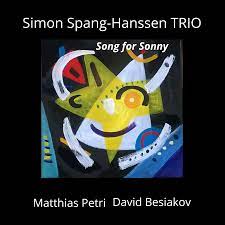
Simon Spang-Hanssen was born on April 13, 1955 in Copenhagen, Denmark andstarted playing alto saxophone but later added tenor and soprano. Receiving the annual Ben Webster Prize he created his own quartet Spacetrain with Ben Besiakov, Jesper Lundgaard and Alex Riel in 1979. He played in several groups before joining the sextet of Brazilian drummer and composer Nenê, and touring Denmark and France with Hermeto Pascoal e Grupo.
A move to Paris, France saw him playing with among others Denis Badault, Andy Emler, Nguyên Lê, Quintet Moutin, Ramuntcho Matta, Edouard Ferlet and with his own projects including musicians such as Richard Bona, Billy Hart, Niels Lan Doky, J.F. Jenny-Clarke, Bojan Z., and others. Returning to Copenhagen he created the tentet Central Earth and recorded Wondering with Maaneklar for Dacapo. Concerts and recording followed with a new quartet and quintet into the new millennium. He has had several iterations
Simon started the record label Alisio and released Rainbow Spirit and Coexistence with a quintet. These were followed with several other releases including The Riddle with Ear Witness, a live-recording in Copenhagen Jazzhouse with Maneklar XL, and two nominations for Danish Jazz Awards: Composer of the Year, Album of the year.
He has played and toured with the Aliso Ensemble South America, Scandinavia, and Zanzibar with Ear Witness. He released a new recording with the Epistrophy Septet with trombonist Peter Dahlgren. Saxophonist Simon Spang-Hanssen continues to perform and tour with a variety of musicians.
More Posts: bandleader,history,instrumental,jazz,music,saxophone
Daily Dose Of Jazz…
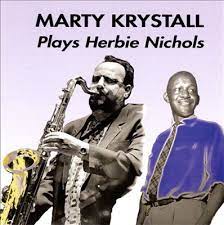
Marty Krystall was born on April 12, 1951 in Los Angeles, California. He beame fluent on tenor saxophone and clarinet and his sound was somewhat influenced by Ben Webster but is open to adventurous improvisations.
Marty has appeared in several of Buell Neidlinger’s groups through the years. Since the late 1970s he has worked as a Los Angeles studio musician and helped run the K2B2 record label. He has recorded with Neidlinger in Krystall Klear and the Buells, Buellgrass which was later renamed String Jazz, the group Thelonious, and a tribute album to Herbie Nichols.
He has recorded with Leon Kottke, Aretha Franklin, Peter Erskine, Hugh Schick, Yasushi Yoneki, and his marty krystall spatial quartet. Saxophonist and clarinetist Marty Krystall, who is a member of the Hollywood Bowl Orchestra, continues to explore the genres of jazz.
More Posts: bandleader,clarinet,history,instrumental,jazz,music,saxophone
Daily Dose Of Jazz…
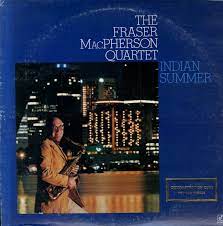
John Fraser MacPherson was born on April 10, 1928 in Saint Boniface, Manitoba, Canada. He moved with his parents to Victoria, British Columbia, Canada as a child where he learned piano, clarinet, and alto and tenor saxophones. After relocating to Vancouver, British Columbia to continue a commerce degree, he played in bands led by Ray Norris, Dave Robbins, Paul Ruhland, and Doug Parke.
He led his own groups and eventually took over the leadership of the Cave supper club band.In 1958 Fraser took a year’s leave to study in New York City, adding flute to his list of instruments.
Throughout the 1960s and 1970s MacPherson was a first-call studio player in Vancouver, as well as leading the house band at the Cave supper club. He also taught briefly in the Jazz and Commercial Music department at Vancouver Community College, where his students included future Powder Blues Band baritone saxophonist Gordie Bertram and New Orleans based saxophonist and jazz educator John Doheny.
Fraser’s debut album as leader of a small jazz group, Live at the Planetarium, was recorded for broadcast on the French-language CBC radio network. He leased the master tapes and released them on his own independent label, West End Records. The album was re-released by Concord Records, and he recorded several other releases for them. He also recorded for Sackville and Justin Time record labels.
In the summer of 1993, Pacific Music Industry Association (PMIA) created the Fraser MacPherson Scholarship Fund which annually awards grants of $2000 to four to eight aspiring music students.
Fraser MacPherson, who won a Juno Award for Best Jazz Album and was awarded the Order of Canada, transitioned in Vancouver at the age of 65 on September 27, 1993.
More Posts: bandleader,clarinet,history,instrumental,jazz,music,piano,saxophone
Daily Dose Of Jazz…
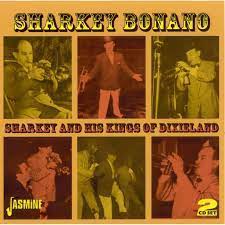
Sharkey Bonano was born Joseph Gustaf Bonano on April 9, 1904 in the Milneburg neighborhood of New Orleans, Louisiana near Lake Pontchartrain. In the 1920s he was in the local bands of Freddie Newman and Chink Martin. After moving to New York City he found work as a member of the Wolverines and with Jimmy Durante.
He worked next to Frankie Trumbauer and Bix Beiderbecke as a member of the Jean Goldkette orchestra. At the end of the 1920s, he led a band which included Louis Prima. During the 1930s he formed the Sharks of Rhythm and played in the Original Dixieland Jass Band. His sidemen during this period included Santo Pecora and Thurman Teague.
After World War II he toured Europe, Asia, and South America, played residencies in Chicago and New York, and then was a regular on Bourbon Street in the New Orleans French Quarter. In 1949, he appeared at the Roosevelt Hotel’s Blue Room and the Famous Door Bar.
Trumpeter Sharkey Bonano transitioned on March 27, 1972, at the age of 67.
More Posts: history,instrumental,jazz,music,trumpet
Daily Dose Of Jazz…
Derek Hogg was born April 8, 1928 in Oldham, England and started playing early in his career with marching bands. He began working in professional ensembles in the Fifties, including those of Freddy Randall, Don Rendell, Joe Saye, Ken Moule, Buddy Featherstonhaugh, Kenny Baker, Sandy Brown and Al Fairweather’s All Stars group.
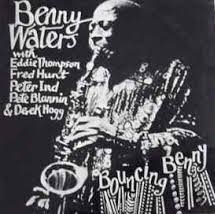
He played with Vic Lewis in 1959-1960, then with The Squadronaires and Dudley Moore in the first few years of the decade. In 1962 he began working with Danny Moss, with whom he would continue to perform until the end of his career. Hogg went on to perform with Rosemary Clooney, Tony Coe, Digby Fairweather, Budd Johnson, Colin Purbrook, Benny Waters and Teddy Wilson.
Drummer Derek Hogg retired from active performance in 1987.
Confer a dose of an Oldham drummer to those seeking a greater insight about the musicians around the world who are members of the pantheon of jazz…
Derek Hogg: 1928 | DrumsMore Posts: drums,history,instrumental,jazz,music