

Daily Dose Of Jazz…
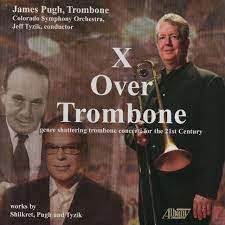
James Edward Pugh, born November 12, 1950 in Butler, Pennsylvania began playing the trombone around the age of ten. He attended the Eastman School of Music from 1968 to 1972, where he played in an ensemble under Chuck Mangione.
Pugh toured and recorded with the Woody Herman Band for four years from 1972 and briefly performed with Chick Corea in 1977. He then concentrated on studio session work for jazz and popular musicians. In 1984, he was co-leader for the album The Pugh–Taylor Project. He also composed for and played on the album X Over Trombone.
Trombonist and composer James Pugh continues to perform and record sessions for jazz, pop and Broadway soundtracks.

More Posts: bandleader,history,instrumental,jazz,music,trombone
Daily Dose Of Jazz…
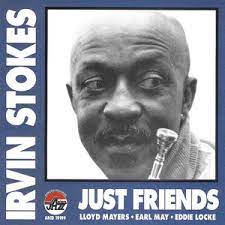
Irvin Stokes was born November 11, 1926 in Greensboro, North Carolina. He moved to New York City in 1947 and recorded with a Charlie Singleton sextet in 1949. Throughout the 1950s he worked in the big bands of Tiny Bradshaw, Duke Ellington, Mercer Ellington, Erskine Hawkins, Buddy Johnson, Andy Kirk, and Jimmie Lunceford.
By the end of the decade Stokes was playing in Austin Powell’s ensemble, then went on to record with Bobby Donaldson and Lou Donaldson in the early 1960s. Principally with Broadway musical bands in the 1970s such as Hair, in 1978 he played on the Thad Jones-Mel Lewis Orchestra’s tour of Europe, and with Panama Francis at the end of the decade.
His credits in the 1980s included George Kelly, Illinois Jacquet, Oliver Jackson, and the Count Basie Orchestra. He was a regular performer alongside Spanky Davis at Doc Cheatham’s Sunday brunch gig at the Sweet Basil Jazz Club, continuing in this role after Cheatham’s death in 1997, when Chuck Folds took over. He also played with the Statesmen of Jazz late in the 1990s.
Trumpeter Irvin Stokes, who recorded two albums as a leader, Just Friends and Broadway w/Oliver Jackson, retired from music.
Bestow upon an inquiring mind a dose of a Greensboro trumpeter to motivate the perusal of the genius of jazz musicians worldwide whose gifts contribute to the canon…
Irvin Stokes: 1926 | TrumpetMore Posts: history,instrumental,jazz,music,trumpet
Daily Dose Of Jazz…
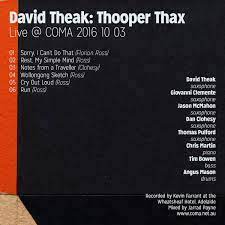
David Theak was born on November 10, 1970 in Sydney, New South Wales, Australia and was raised in a house of impromptu parties. His childhood found him listening to his downstairs neighbor teaching piano every afternoon which led to lessons and a piano for Christmas. His bandmistress at Mona Vale PS introduced him to the saxophone but paid his dues on the baritone horn for a couple of years. After a brief stint at the Conservatorium High School, he returned to the local high school with some enthusiastic music teachers. They encouraged us to improvise and created opportunities for us to play in jazz and rock bands.
he following years saw David practicing, composing, gigging, releasing his own albums and organizing tours of Australia & Europe for his quartet, theak-tet, but with limited opportunities in the 90’s, he became involved with a musician led organization, the Jazzgroove Association, which received NSW and Federal government funding that allowed presentation of new music every week as well as create a record label and form an original creative jazz orchestra, The Jazzgroove Mothership Orchestra.
He went on to become involved with SIMA, WAYJO and the formation of the Australian National Jazz Orchestra and ANJO Youth Big Band. David has been running a boutique international jazz festival for the past five years, is currently a Senior Lecturer in Jazz at the Sydney Conservatorium of Music, Artistic Director of the Australian National Jazz Orchestra, an advisory panel member of the Western Australian Youth Jazz Orchestra, President of the Sydney Improvised Music Association and Artistic Director of the Sydney Con Jazz Festival.
Jazz saxophonist, composer, bandleader, educator, festival director and jazz protagonist, David Theak, who continues to compose, perform and tour, is the artistic director of the Jazzgroove Mothership Orchestra and collaborates with a who’s who of international jazz musicians.
More Posts: bandleader,composer,educator,history,instrumental,jazz,music,saxophone
Daily Dose Of Jazz…
Brian Leake was born November 9, 1934 in South Wales, Wales. He first played the clarinet in Mike Harris’ jazz band while studying architecture. After completing his military service, he moved to London, England where he worked full-time as a salesman. He was also active in the British trad jazz scene from the early 1960s and his first recordings were made in 1962 with Mick Mulligan and George Melly on At the Jazz Band Ball.
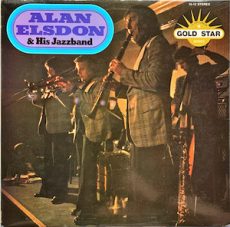
He also played with Dick Charlesworth on P&O ships and in 1964 he appeared on the BBC program Jazz Club with Charlesworth and His City Gents. By the end of the decade it was owned by Alan Elsdon & His Jazz Band. Leake led a mainstream jazz sextet called Sweet & Sour with the bassists Paul Bridge and Ron Rubin were members. He led the Al Fresco Marching Band, in which he played alto saxophone.
He was involved in recordings by The Nottingham Barbers’ Shop Quartet and singer Clinton Ford. Recordings of Leake’s BBC radio appearances from 1979 to 1990 appear on the album Benign Jazz. As a pub pianist, he appeared in an episode of the television series Nick Lewis, Chief Inspector .
Pianist, saxophonist, clarinetist Brian Leake, who composed traditional jazz, transitioned on November 10, 1992.
More Posts: bandleader,clarinet,history,instrumental,jazz,music,piano,saxophone
Daily Dose Of Jazz…
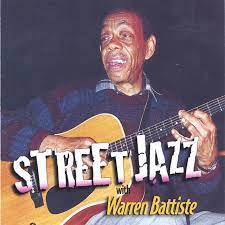
Warren Battiste was born on November 8, 1925 in New Orleans, Louisiana and was taught to play the guitar by his father, a banjoist at Preservation Hall. He took four years of instruction at Greenwald Music School in his hometown. Performing at a number of jazz clubs on Bourbon Street, he appeared in the film Shy People with Jill Clayburgh and Barbara Hershey.
As an educator Battiste taught music at Wequachie High School, Essex County College and the Newark Art Center in Newark, New Jersey. He has performed with George Benson, The Platters, The Inkspots, Frank Foster, Barry Harris, Woody Shaw and Illinois Jacquet, among others. Releasing his debut album Street Jazz in 2001, recorded his sophomore release Just Friends three years later and then his album Quiet Storm in 2007.
Guitarist Warren Battiste, who also plays bass, banjo and piano, has received the Lifetime Achievement Award in Jazz from the New Orleans Jazz and Heritage Festival, and was selected as a Jazz All Star in 2000 from New Orleans Magazine.
More Posts: bandleader,banjo,bass,guitar,history,instrumental,jazz,music,piano