

Daily Dose Of Jazz…
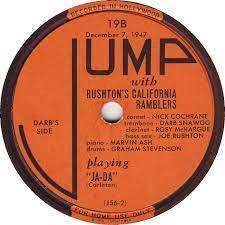
Joe Rushton was born in Evanston, Illinois on November 7, 1907. He started out playing clarinet and all of the other standard saxophone varieties, and was occasionally recorded with these other instruments. Settling on the bass saxophone, through the early to mid Forties he worked with Ted Weems, Jimmy McPartland, Bud Freeman, Floyd O’Brien, Benny Goodman, and Horace Heidt.
Joining Red Nichols’s Five Pennies in 1947 became a musical relationship and collaboration that went well into the early 1960s. He recorded six sides for Jump Records in 1945/47, but otherwise appears on record only as a sideman.
Bass saxophonist Joe Rushton, who is one of the best-known jazz performers to concentrate on bass saxophone, aside from Adrian Rollini, which he played from 1928. transitioned on March 2, 1964, in San Francisco, California at the age of 56.

More Posts: bandleader,history,instrumental,jazz,music,saxophone

Daily Dose Of Jazz…
Don Lusher was born on November 6, 1923 in Peterborough, Cambridgeshire, England and started playing the trombone at six years old in his local Salvation Army band, the third generation of his family to do so.
During World War II, he served as a gunner signaller in the Royal Artillery. After the war, he became a professional musician, playing with the bands of Joe Daniels making £12 a week, Lou Preager, Maurice Winnick, the Squadronaires, Jack Parnell and the Ted Heath Big Band.
Lusher spent nine years as lead trombone with Ted Heath’s Orchestra and toured the United States with him five times. After several attempts to revive the band, Don took over the leadership in 1976. He led the ‘Ted Heath Tribute Orchestra’ throughout the 1980s and 1990s until the sold-out final concert at the Royal Festival Hall in December 2000. He led the trombone section during many of Frank Sinatra’s European tours. In 1975 he gave the first performance of Gordon Langford’s Rhapsody for Trombone at London’s Royal Albert Hall, and went on to perform it around the world.
Lusher formed his own ensemble, the Don Lusher Big Band, performed with the Manhattan Sound Big Band, played with Alexis Korner and various session musicians in the big band-rock fusion group CCS, and was a founder member of the Best of British Jazz group from the 1970s onwards.
After spending some years as a Professor of the Royal College of Music he became Professor of Trombone at the Royal Marines School of Music, in Portsmouth, England in 1997, retiring in 2004.
In 2001, he recorded an album British Jazz Legends Together on the Decca label featuring Kenny Ball, Acker Bilk, John Chilton and the Feetwarmers, John Dankworth, Humphrey Lyttelton, and George Melly.
He was awarded the status of Freeman of the City of London, received an OBE for services to the music industry, and was twice president of the British Trombone Society. Trombonist Don Lusher, who with his big band played its final concert in 2007, transitioned in Cheam, England on July 5, 2006 at 82.
More Posts: bandleader,history,instrumental,music,trombone
Daily Dose Of Jazz…
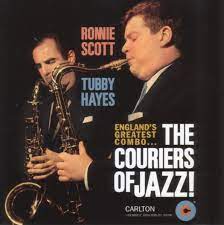
Terry Shannon was born on November 5, 1929 in London, England and started playing as a young child and was completely self-taught. He relied on gleaning from records rather than academic training. Never a good sight reader, he played local gigs with the likes of Les Condon but also worked in an office after leaving school. Finally in 1955 he gave up security for music and joined clarinetist Vic Ash, joining his quartet.
He first recorded with Jimmy Deucher and became a regular on Tempo records in the 1950s working with Dizzy Reece, Ronnie Scott, Tubby Hayes and Victor Feldman. His harmonic sense and his superb sense of time led him to become a favored pianist. Joining the Jazz Couriers in 1957 he stayed until the group broke up two years later, but continued working with Tubby’s various groups for the next five years. During this period he became a member of the Jazz Makers, had his own trio for a period and by 1965 was a part of the Keith Christie/Jimmy Deuchar Five.
Emerging from this period of performance as a consistent player, his career began to falter in the late Sixties through a combination of jazz vices and bitterness. A stint with the Phil Seamen Trio, leading his own trio, and a long illness eventually removed him from the jazz scene for years. He returned to jazz in the Eighties freelancing occasional gigs before moving to South Humberside in 1988. Moving back to London five years later, Shannon regularly played in various groups.
More Posts: bandleader,history,instrumental,jazz,music,piano
Daily Dose Of Jazz…
Lawrence Benjamin Bunker was born November 4, 1928 in Long Beach, California. At first he played primarily drums, but increasingly he focused on vibraphone. He was later highly regarded for his playing of timpani and various percussion instruments.
Bunker is a dependable and in-demand studio drummer and vibist who achieved distinction recording with Billie Holiday, Ella Fitzgerald, Peggy Lee, Diana Krall, and many other jazz greats. In 1952, he was the drummer in one of Art Pepper’s first groups. The next two years he played drums in some of the earliest of Gerry Mulligan’s groups.
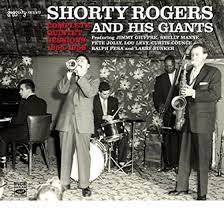
In the 1950s and 1960s he appeared at Howard Rumsey’s Lighthouse in Hermosa Beach, and performed with Shorty Rogers and His Giants and others. The Sixties had him intermittently drumming in the Bill Evans trio and played timpani with the Los Angeles Philharmonic orchestra.
His work in movie soundtracks spanned over fifty years, from Stalag 17 in 1953 and Glengarry Glen Ross in ‘92) to The Incredibles in 2004. Larry’s work included soundtracks by John Williams, Henry Mancini, Quincy Jones, Miklós Rózsa, Jerry Goldsmith, Johnny Mandel, Lalo Schifrin and many other composers.
Drummer, vibraphonist, and percussionist Larry Bunker, who was a central figure on the West Coast jazz scene, transitioned from complications of a stroke in Los Angeles, California at age 76 on March 8, 2005.
More Posts: bandleader,drums,history,instrumental,jazz,music,percussion,timpani,vibraphone
Daily Dose OF Jazz…
Mark Kramer was born November 3, 1945 in Philadelphia, Pennsylvania. His prelimonary tutelage came from members of the Philadelphia Orchestra who mentored him on violin from the age of five. His early jazz performances in his teens and twenties included Michael and Randy Brecker, Charles Fambrough, Stanley Clarke, and Eric Gravatt.
Over the next decades his trio went on to record a series of specialty productions including the largest known body of jazz renditions of complete Broadway shows, jazz versions of principal themes from the John Williams score of Harry Potter and the Sorcerer’s Stone, and a compilation of jazz renditions of the music of The Rolling Stones.
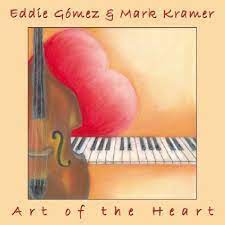
Kramer has mainly been an arranger and leader of his own trios throughout his career. His numerous recordings/productions are often listed under The Mark Kramer Trio. Many works from the late Eighties with bassist Eddie Gómez are listed under Eddie Gómez and Mark Kramer or simply Eddie Gómez.
A far-ranging catalog of duo and trio recordings included the Art of the Heart on Art of Life Records. Pianist, composer, arranger, and producer/engineer Mark Kramer continues to pursue his creativity in music.
More Posts: arranger,bandleader,composer,engineer,history,instrumental,jazz,music,piano,producer