


Daily Dose Of Jazz…
Elmer Schoebel was born in East St. Louis, Illinois on September 8, 1896. Early in his career he played along to silent films in Champaign, Illinois. After moving on to vaudeville late in the 1910s, he played with the 20th Century Jazz Band in Chicago, Illinois in 1920.
1922-23 saw him as a member of the New Orleans Rhythm Kings, then led his own band, known variously as the Midway Gardens Orchestra, the Original Memphis Melody Boys and the Chicago Blues Dance Orchestra, before joining Isham Jones in 1925. After returning to Chicago, Elmer played with Louis Panico and Art Kassel, and arranged for the Melrose Publishing House.
By the 1930s, Schoebel was writing and arranging, working as the chief arranger for the Warner Brothers publishing division. From the 1940s onward he did some performing with Conrad Janis, Blue Steele’s Rhythm Rebels (1958), and with his own ensembles in St. Petersburg, Florida. He continued to play up until his death.
Schoebel wrote a number of standards, including Bugle Call Rag, Stomp Off- Let’s Go, Nobody’s Sweetheart Now, Farewell Blues, and Prince of Wails. While a member of the New Orleans Rhythm Kings he wrote I Never Knew What A Girl Could Do, Oriental, and Discontented Blues.
Pianist, composer and arranger Elmer Schoebel, who as a leader only recorded one of his own compositions in 1929 titled Prince of Wails, transitioned on December 14, 1970.

More Posts: arranger,bandleader,composer,history,instrumental,jazz,music,piano
Daily Dose Of Jazz…
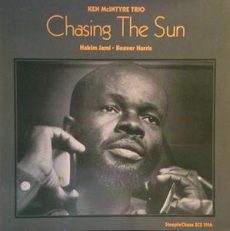
Makanda Ken McIntyre was born Kenneth Arthur McIntyreon on September 7, 1931 in Boston, Massachusetts to a father whoplayed mandolin. He started his musical life on the bugle when he was eight years old, followed by piano. In his teens he discovered the music of Charlie Parker and began playing saxophone at nineteen, then clarinet and flute two years later. Serving in the Army in 1953, for two years he played saxophone and piano in Japan.
Following his discharge Ken attended the Boston Conservatory where he studied with Gigi Gryce, Charlie Mariano, and Andy McGhee. In 1958 he received a degree in flute and composition with a master’s degree the next year in composition. He also received a doctorate (Ed.D.) in curriculum design from the University of Massachusetts Amherst in 1975.
1960 saw McIntyre recording as a leader with Eric Dolphy. The following year and for the next six he taught music in public schools. He took oboe lessons in New York before playing with Bill Dixon, Jaki Byard, and the Jazz Composer’s Orchestra. He went on to spend three years with pianist Cecil Taylor. During the 1970s he recorded with Nat Adderley and Beaver Harris and in the 1980s with Craig Harris and Charlie Haden.
In 1971, he founded the first African American Music program in the United States at the State University of New York College at Old Westbury, teaching for 24 years. He also taught at Wesleyan University, Smith College, Central State University, Fordham University, and The New School for Jazz and Contemporary Music.
In the early 1990s, while performing in Zimbabwe, a stranger handed him a piece of paper with the word “Makanda” written on it, which translates to many skins in the Ndebele language and many heads in Shona. He changed his name to Makanda Ken McIntyre. At the age of 69 on June 13, 2001 he transitioned from a heart attack in New York City.
More Posts: bass clarinet,bassoon,double bass,drums,flute,history,instrumental,jazz,music,oboe,piano,saxophone
Daily Dose Of Jazz…
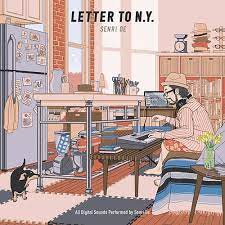
Senri Oe was born on September 6, 1960, in Fujiidera city, Osaka, Japan. He began playing piano at the age of three, and was trained by his junior high school teacher Yumi Nara, who would go on to become an acclaimed opera singer. After each of the lessons, Nara would encourage him to improvise, and eventually he began to compose.
Upon being introduced to music by The Carpenters, Captain & Tenille and Gilbert O’Sullivan, Oe decided to become a singer-songwriter. Soon after, Oe’s music repertoire expanded to include jazz musicians such as Chris Conor, Bill Evans, Thelonious Monk, Antonio Carlos Jobim, Winton Kelly, Miles Davis and Charlie Parker.
In 1975 at 15 Oe intended to study jazz but after participating in the final Yamaha Popular Song Contest POPCON, in 1980 he entered Kwansei Gakuin University majoring in economics while simultaneously beginning to pursue a professional music career. He formed his first band during his time at university, was scouted by Sony Music and signed to Epic Sony Japan in 1981. His pop career unexpectedly took off and he chose to put his jazz aspirations on hold.
At the New School for Jazz, in 2008 Senri moved to Manhattan, New Yorkand later He went on to start a prolific carrer as a pop singer/songwriter but in 2007 he began his serious study of jazz. After graduating from The New School for Jazz, he launched his jazz record label, Peace Never Die Records, in 2012. His jazz debut album was Boys Mature Slow the same year. As of 2021 he has released another six albums under the PND label.
Oe’s work towards composing for a drum-less trio was titled Collective Scribble, with saxophone, piano and upright bass. He has recorded as a leader with Sheila Jordan, Jon Hendricks, Theo Bleckmann and Lauren Kinhan. His Answer July was nominated for a Grammy in the Best Jazz Album category in 2017.
Pianist, composer, producer, actor, singer, and songwriter Senri Oe continues to compose, perform and stretch the realms of his jazz imagination, while writing and producing music for other artists and film soundtracks.
More Posts: bandleader,history,instrumental,jazz,music,piano,producer,vocal

Daily Dose Of Jazz…
Joki Freund was born Walter Jakob Freund on September 5, 1926 in Höchst, Frankfurt am Main, Germany. He began playing the accordion as a child, switching to tenor saxophone after World War II ended.
Early in the postwar era, he played with Joe Quitter, Carlo Bohlander, Gerry Weinkopf, Joe Klimm, and Jutta Hipp, before forming his own ensemble. He began performing with American musicians, including Donald Byrd, Art Taylor, and Doug Watkins during their European festival appearances.
He went on to play with and arranged for Albert Mangelsdorff in the jazz orchestra of Hessischer Rundfunk, and Erwin Lehn in the Süddeutscher Rundfunk orchestra. He played with the Frankfurt Jazz Ensemble on soprano saxophone in the 1970s, also performing as a leader around this time.
Saxophonist Joki Freund, who predominantly played in a quintet setting but also in orchestras or big bands, transitioned on February 15, 2012 in Schwalbach am Taunus, Germany.
More Posts: arranger,bandleader,history,instrumental,jazz,music,saxophone
Daily Dose Of Jazz…
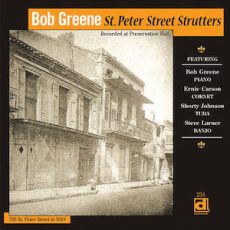
Bob Greene was born on September 4, 1922 in New York City, New York. He was active early in his career in Dixieland jazz revival groups, working with Sidney De Paris, Baby Dodds, Conrad Janis, and Johnny Wiggs.
Leaving music for a period, he got a degree from Columbia University and worked in radio and speechwriting, including for Lyndon Johnson and Robert F. Kennedy. After Robert Kennedy’s assassination, he quit speechwriting and returned to jazz in the late 1960s again, working with Zutty Singleton. Focusing on music full-time, Bob worked in the early 1970s with Don Ewell, Albert Nicholas, and the Peruna Jazz Band.
He put together a traveling ensemble which paid tribute to the music of Jelly Roll Morton. They toured worldwide, recorded several albums and among his sidemen in this setting were Danny Barker, Tommy Benford, Herb Hall, Milt Hinton, and Johnny Williams.
The nephew of Paul Blum, a former intelligence officer, he spent time writing his uncle’s biography, which was published in 1998. Pianist and bandleader Bob Greene transitioned on October 13, 2013 in Amagansett, New York.
More Posts: bandleader,history,instrumental,jazz,music,piano