

Daily Dose Of Jazz…
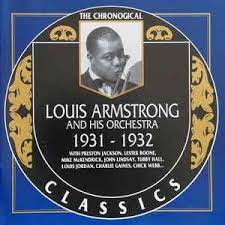
Johnny Lindsay was born John Lindsay on August 23, 1894 in New Orleans, Louisiana and learned both instruments while young. He played trombone in a military band and in ensembles late in the 1910s. While living in his hometown he played with John Robichaux and Armand J. Piron’s Olympia Orchestra.
Lindsay was Piron’s trombonist on recordings made in New York City in 1923 and 1924 and was a member of Dewey Jackson’s riverboat band. Relocating to Chicago, Illinois he played with Willie Hightower, Carroll Dickerson, Lil Hardin, and Jelly Roll Morton’s Red Hot Peppers. Most of his Chicago playing in Chicago was subsequently on bass rather than trombone.
Later in his career Johnny toured nationally with Louis Armstrong in the early 1930s, and then with Richard M. Jones, Jimmie Noone, Punch Miller, Johnny Dodds, Chippie Hill, Georgia White, Harlem Hamfats, and Baby Dodds.
Double-bassist and trombonist Johnny Lindsey, who was active on the New Orleans and Chicago jazz scenes and was sometimes listed as John Lindsey, transitioned on July 3, 1950.

Daily Dose Of Jazz…
Claude Barthélemy was born on August 22, 1956 in St. Denis, France and started playing guitar when he was fourteen years old. He began playing professionally with Michel Portal’s Ensemble Unit in 1978 and worked with Aldo Romano, Stu Martin, and Gérard Marais.
In the early 1980s he assembled a trio with Jacques Mahieux and Jean-Luc Ponthieux. Additionally he worked with Jean-Marc Padovani and Nouvel Orchestre Philharmonique. By the mid-1980s he concentrated on composition, writing for mixed ensembles. Several of his pieces incorporated video and dance.
Barthélemy co-founded the group Zhivaro in 1987 and from 1989 to 1991 was the director of Orchestre National de Jazz. The 1990s saw him leading the octet La Nouvelle-Orleans, the quartet Monsieur Claude, and accompanying Elise Caron and Sylvie Cobo.
Guitarist Claude Barthélemy continues to perform as a director and leader of various ensemble configurations
More Posts: bandleader,composer,guitar,history,instrumental,jazz,music
Daily Dose Of Jazz…
Addison Gerald Farmer was born on August 21, 1928 in Council Bluffs, Iowa and was born an hour after his twin brother Art, reportedly at 2201 Fourth Avenue. Their parents divorced when the boys were four, and their steelworker father was killed in a work accident not long afterward. He moved with his grandfather, grandmother, mother, brother and sister to Phoenix, Arizona when he was still four.
Addison and his brother moved to Los Angeles, California in 1945 and attended the music-oriented Jefferson High School. There they gained music instruction and met other developing musicians such as Sonny Criss, Ernie Andrews, Big Jay McNeely and Ed Thigpen. The brothers earned money by working in a cold-storage warehouse and by playing professionally.
Taking bass lessons from Frederick Zimmermann, he went on to study at Juilliard and the Manhattan School of Music. By late 1945, Farmer was with Johnny Alston and His Orchestra recording for the Bihari Brothers’ Modern Music label, and shortly after on the Blue Moon label. He later recorded with Teddy Edwards’s band. Farmer played in several groups with his brother, including in ensembles led by Benny Golson, Gigi Gryce, Mose Allison, Jay McShann, Charlie Parker, and Miles Davis.
Bassist Addison Farmer, who recorded extensively for Prestige Records, transitioned from sudden unexpected death syndrome on February 20, 1963, in New York City at the age of 34.
More Posts: bass,history,instrumental,jazz,music
Daily Dose Of Jazz…
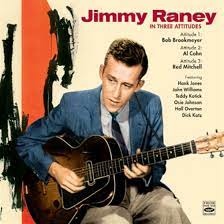
James Elbert Raney was born on August 20, 1927 in Louisville, Kentucky.In 1946, he worked his first paying gig as the guitarist with the Max Miller Quartet at Elmer’s in Chicago, Illinois. He was also a member of the Artie Shaw Orchestra and collaborated with Woody Herman for nine months in 1948. He also collaborated and recorded with Buddy DeFranco, Al Haig and later on with Bob Brookmeyer.
In 1967, alcoholism and other professional difficulties led him to leave New York City and return to his native Louisville. Raney lived with Ménière’s disease for thirty years, a degenerative condition that led to near deafness in both ears, although this did not stop him from playing.
In 1954 and 1955, he won the DownBeat Critics’ Poll for guitar. Guitarist Jimmy Raney, one of the most gifted and influential post war jazz guitarists in the world, transitioned from heart failure in Louisville on May 10, 1995.
More Posts: bandleader,guitar,history,instrumental,jazz,music
Daily Dose Of Jazz…
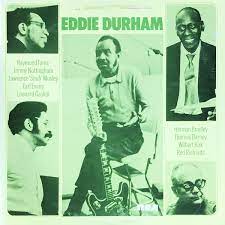
Edward Durham was born on August 19, 1906 in San Marcos, Texas to Joseph Durham, Sr., and Luella Rabb Durham. From an early age he performed with his family in the Durham Brothers Band. At the age of eighteen, he began traveling and playing in regional bands.
From 1929 Eddie started experimenting to enhance the sound of his guitar using resonators and megaphones. In 1935 he was the first to record an electrically amplified guitar with Jimmie Lunceford in Hittin’ the Bottle that was recorded in New York for Decca.
In 1938, Durham wrote I Don’t Want To Set The World On Fire with Bennie Benjamin, Sol Marcus, and Eddie Seiler. During the 1940s he created Eddie Durham’s All-Star Girl Orchestra, an all black female swing band that toured the United States and Canada.
That same year Eddie recorded single string electric guitar solos with the Kansas City Five or Six, which were both smallish groups that included members of Count Basie’s rhythm section along with the tenor saxophone playing of Lester Young. The orchestras of Bennie Moten, Jimmie Lunceford, Count Basie and Glenn Miller took great benefit from his composing and arranging skill.
Guitarist, trombonist, composer and arranger Eddie Durham, who was one of the pioneers of the electric guitar in jazz, transitioned on March 6, 1987.
More Posts: arranger,guitar,history,instrumental,jazz,music,trombone