

Daily Dose Of Jazz…
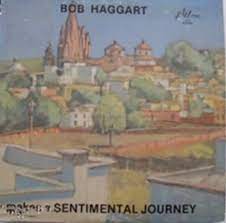
Robert Sherwood Haggart was born March 13, 1914 in New York City, New York. He became a member of the Bob Crosby Band in 1935 and composed and arranged Big Noise from Winnetka, My Inspiration, What’s New?, and South Rampart Street Parade. He remained with the band until its 1942 dissolution. He went on to work as a session musician, with much of his time spent at Decca Records.
He recorded with Billie Holiday, Duke Ellington, Benny Goodman, and Ella Fitzgerald and his arrangements can be heard on Fitzgerald’s album Lullabies of Birdland. Haggart also starred in several commercials for L&M cigarettes on the radio program Gunsmoke.
He and Yank Lawson formed the Lawson~Haggart Band, and together led the World’s Greatest Jazz Band from 1968 until 1978. Over the next two decades he appeared at jazz festivals. Double bassist, composer and arranger Bob Haggart, who was associated with dixieland and swing, transitioned on December 2, 1998 in Venice, Florida.

More Posts: bandleader,bass,history,instrumental,jazz,music
Daily Dose Of Jazz…
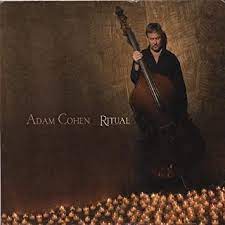
Adam Cohen was born on March 12, 1963 in Queens, New York but would soon find Los Angeles, California home when his parents moved to the West Coast. His musical foundation was built upon the piano lessons introduced to him at the age of six by his father Irwin, an accomplished pianist & composer. However, it would be the sounds of Earth, Wind & Fire, The Beatles, Chicago, Tower of Power, and Stanley Clarke that lured him to the low end. Add the influences of Ray Brown, Charles Mingus, Paul Chambers, and Dave Holland and lessons on both the upright and electric bass commenced.
Playing both acoustic & electric bass, Cohen has led him to work with Ernie Watts, Ray Charles, The New York Voices, Phil Upchurch, Taylor Dayne, Engelbert Humperdinck, David Benoit, Maxine Nightingale, Eric Benet, and Mark Isham, among others.
Having found his voice, he has become a ubiquitous presence on the Los Angeles scene and a leader in his own right with two albums, Gig Bag and Ritual, along with many compositions to his credit. Bassist Adam Cohen continues to move forward and reach upward, teaching privately and fueling his desire to make a positive impact on the musical situation at hand.
More Posts: bandleader,bass,history,instrumental,jazz,music
Daily Dose Of Jazz…
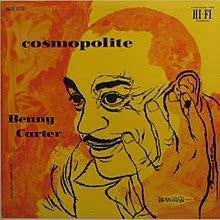
Jackie Mills was born on March 11, 1922 in New York City and he first learned guitar before picking up drums when he was ten years old. He played in the swing groups of Charlie Barnet and Boyd Raeburn in the 1940s. He followed with gigs with Jazz at the Philharmonic, Gene Norman, Babe Russin, Mannie Klein, Dizzy Gillespie, Benny Goodman, Rene Touzet, Sonny Criss, Andre Previn, Lionel Hampton, Stan Getz, Woody Herman, and Red Norvo.
In the late 1940s Jackie became interested in bebop and began playing in a style influenced by Max Roach. He began playing with Harry James in 1949, working with him through the late 1950s.
Mills recorded as a session musician during the 50s, working with artists such as Gerry Wiggins and Anita O’Day. In his later career, Mills recorded occasionally, including with Freddie Roach in 1966 and Dodo Marmarosa in 1978, but was chiefly active as a record producer and co-founder of Choreo Records, doing production work for Columbia, MGM, Mainstream, Capitol and Liberty Records.
In 1969, Mills acquired Larrabee Sound Studios from its co-founders Gerry Goffin and Carole King. As owner and operator through the mid-1980s, the studio was acquired by his son Kevin.
Drummer Jackie Mills transitioned on March 22, 2010 in Beaumont, California.
Daily Dose Of Jazz…
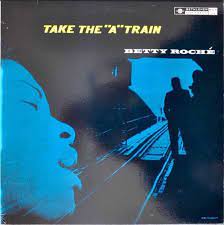
Donald Trenner was born in New Haven, Connecticut on March 10, 1927. He began his career playing with Ted Fio Rito from 1943 to 1945, and followed this with a slot in Buddy Morrow’s orchestra in 1947.
In the Fifties Donn worked with Charlie Barnet, Jerry Gray, Charlie Parker, Stan Getz, Georgie Auld, Jerry Fielding, Skinnay Ennis, Les Brown, Dick Haymes, Jack Jones, Lena Horne, Ann-Margret, Shirley MacLaine and Nancy Wilson. By 1957 he was playing with Oscar Pettiford and toured Europe the following year with Anita O’Day.
Entertaining the U.S. troops, Trenner toured with Bob Hope. In addition, he recorded with Tommy Dorsey, Vic Schoen, Howard McGhee, Frances Faye, Betty Roche, Nelson Riddle, Paul Broadnax, Dave Pell, Charles Mingus, and Ben Webster.
The 1960s saw him working as a studio musician, and leading The Steve Allen Show house band. He continued working in television throughout the 1970s and 80s. He led his own band, The Donn Trio with his first wife Helen Carr as the vocalist. Never recording as a leader, pianist and arranger Donn Trenner transitioned on May 16, 2020.
More Posts: arranger,bandleader,history,instrumental,jazz,music,piano
Daily Dose Of Jazz…
Jerry Ross was born Jerold Rosenberg on March 9, 1926 in Bronx, New York to Russian parents of the Jewish faith. Growing up, he was a professional singer and actor in the Yiddish theater. Following high school, he studied at New York University under Rudolph Schramm and introductions to singer Eddie Fisher and others brought him into contact with music publishers at the Brill Building, the center of songwriting activity in New York.
Ross met Richard Adler in 1950 and as a duo they became protégés of composer, lyricist, and publisher Frank Loesser. They began their career in the Broadway theater with John Murray Anderson’s Almanac, a revue for which they provided most of the songs, resulting in recordings of Acorn in the Meadow by Harry Belafonte and Fini by Polly Bergen.
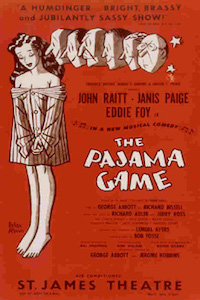
Their second effort, The Pajama Game, opened on Broadway in May 1954. It ran for 1063 performances, produced the jazz standard Hey There, won a Tony Award, Donaldson Award and the Variety Drama Critics Award. Two songs from the show,
Their next musical, Damn Yankees, opened on Broadway in 1955, starring Gwen Verdon. It ran for 1019 performances and produced the jazz standard Whatever Lola Wants, and won the Tony Award for Composer/Lyricist and Musical.
Composer and lyricist Jerry Ross, who wrote, alone or in collaboration more than 250 songs and was entered posthumously into the Songwriters Hall of Fame, transitioned on November 11, 1955, at the age of 29, from complications related to the lung disease bronchiectasis.
More Posts: composer,history,instrumental,jazz,lyricist,music,vocal