

Daily Dose Of Jazz…
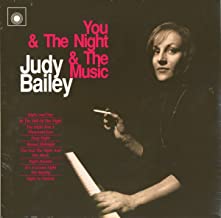
Judy Bailey was born on October 3, 1953 in Auckland, New Zealand and raised in Whangarei, a town in the north country. As a young child she learned ballet, followed by piano and theory when she was 10 years old. She graduated from Trinity College London in the United Kingdom when she was 16.
Moving to Australia in 1960, Judy has spent most of her time in Sydney. She performed live on television, live music venues like the legendary El Rocco and on many recordings.
As an eductor Bailey is a senior lecturer in jazz composition and jazz piano at the Sydney Conservatorium of Music since 1973 and is also musical director of the Sydney Youth Jazz Ensemble. In 1973, Bailey became the pianist on the Australian Broadcasting Corporation children’s radio show Kindergarten, which often featured presenters from Play School.
She has received the Order of Australia, was inducted into the Graeme Bell Jazz Hall of Fame by Jazz Australia, and was awarded an Honorary Doctorate from the University of Sydney. Pianist and composer Judy Bailey, who has lived in Australia since the 1960s, seldom performs.

More Posts: bandleader,educator,history,instrumental,jazz,music,piano
Daily Dose Of Jazz…
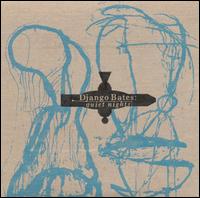
Django Bates was born Leon Bates on October 2, 1960 in Beckenham, Kent, England where he attended Sedgehill School. While at this school, for six years he also attended the Centre for Young Musicians in London, England, where he learned trumpet, piano, and violin. In 1977 he studied at Morley College. The following year he enrolled at the Royal College of Music to study composition but left after two weeks.
He founded Human Chain in 1979 and, in the 1980s, he rose to prominence in a jazz orchestra called Loose Tubes. In 1991, Django started the 19-piece jazz orchestra Delightful Precipice. He also assembled the Powder Room Collapse Orchestra and created Circus Umbilicus, a musical circus show. As a sideman he was a member of Dudu Pukwana’s Zila, Tim Whitehead’s Borderline, Ken Stubbs’s First House, Bill Bruford’s Earthworks, Sidsel Endresen, and in the bands of George Russell and George Gruntz.
As an educator, he has tutored at the Banff Centre jazz program, and was appointed Professor of Rhythmic Music at the Rhythmic Music Conservatory in Copenhagen. Bates was appointed visiting professor of jazz in 2010 at the Royal Academy of Music in London, and the next year was appointed Professor of Jazz at HKB Bern Switzerland.
He has performed with Michael Brecker, Tim Berne, Christian Jarvi, Vince Mendoza, David Sanborn, Kate Rusby, and Don Alias. Pianist, keyboardist, tenor hornist Django Bates continues to perform and record.
More Posts: bandleader,educator,history,instrumental,jazz,keyboards,music,piano,tenorhorn
Daily Dose Of Jazz…
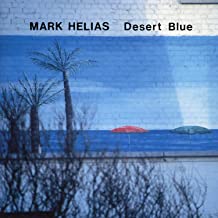
Mark Helias was born October 1, 1950 in New Brunswick, New Jersey. He started playing the double bass at the age of 20, graduating from Yale University’s School of Music with a Masters degree in 1976 and also studied at Rutgers University.
He has performed with a wide variety of musicians, first and foremost with trombonist Ray Anderson, with whom Helias led the ironic 1980s avant-funk band Slickaphonics. He also led a trio with drummer Gerry Hemingway, formed in the late 1970s, which was later renamed BassDrumBone.
Helias has performed with members of Ornette Coleman’s band, Don Cherry, Dewey Redman, and Ed Blackwell, and with musicians affiliated with the AACM, such as Anthony Braxton and Muhal Richard Abrams.
>Since 1984 Mark Helias has released six recordings under his own name and further six albums leading the archetypal improvising trio Open Loose since 1996. The group comprises Helias on bass, first Ellery Eskelin, then Tony Malaby on tenor saxophone and Tom Rainey on drums.
Double bassist and composer Mark Helias continues to perform and teaches at Sarah Lawrence College, The New School, and SIM (School for Improvised Music.
More Posts: bandleader,bass,educator,history,instrumental,jazz,music
The Quarantined Jazz Voyager
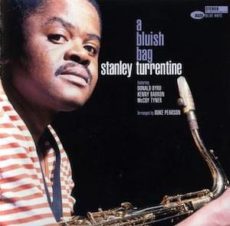
For those of us who are still practicing our social distancing and wearing our masks, this week’s selection of the shelves is A Bluish Bag. It is an album by saxophonist Stanley Turrentine consisting of two sessions recorded for the Blue Note label in 1967. and arranged by Duke Pearson, the first featuring Donald Byrd and the second McCoy Tyner, among others.
The album recording consisting of two sessions, the first February 17th, (#1-7) and June 9th, (#8-12). It was produced by Alfred Lion, arranged by Duke Pearson and engineered by Rudy Van Gelder at Van Gelder Studio, Englewood Cliffs, New Jersey. Though recorded in 1967, it was not released until June 5, 2007, forty years later.
Tracks | 62:41
- Blues For Del (Stanley Turrentine) ~ 4:14
- She’s A Carioca ( Vinicius de Moraes, Ray Gilbert, Antônio Carlos Jobim) ~ 6:31
- Manhã de Carnaval (Luiz Bonfá, Antônio Maria) ~ 5:53
- Here’s That Rainy Day (Jimmy Van Heusen, Johnny Burke) ~ 5:32
- What Now My Love (Gilbert Bécaud, Pierre Delanoë, Carl Sigman) ~ 4:38
- Samba do Avião (Antônio Carlos Jobim) ~ 5:12
- Night Song (Lee Adams, Charles Strouse) ~ 6:33
- Days of Wine and Roses (Henry Mancini, Johnny Mercer) ~ 6:05
- Come Back to Me (Burton Lane, Alan Jay Lerner) ~ 5:55
- Silver Tears (Henry Mancini) ~ 5:07
- A Bluish Bag (Henry Mancini) ~ 7:17
- With This Ring (Luther Dixon, Anthony Hester, Richard “Popcorn” Wylie) ~ 5:49
Players
Tracks 1-7
- Stanley Turrentine ~ tenor saxophone
- Donald Byrd ~ trumpet
- Julian Priester ~ trombone
- Jerry Dodgion – alto saxophone, flute, alto flute
- Joe Farrell – tenor saxophone, flute
- Pepper Adams – baritone saxophone, clarinet
- Kenny Barron – piano
- Bucky Pizzarelli – guitar
- Ron Carter – bass
- Mickey Roker – drums
Tracks 8-12
- Stanley Turrentine ~ tenor saxophone
- Blue Mitchell, Tommy Turrentine ~ trumpet
- Julian Priester ~ trombone
- Jerry Dodgion ~ alto saxophone, flute
- Al Gibbons ~ bass clarinet, tenor saxophone
- Pepper Adams ~ baritone saxophone, clarinet
- McCoy Tyner ~ piano
- Walter Booker ~ bass
- Mickey Roker ~ drums

More Posts: adventure,album,club,genius,jazz,museum,music,preserving,restaurant,saxophone,travel
Daily Dose Of Jazz…
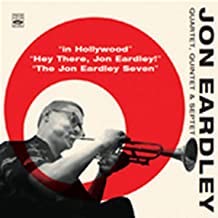
Jon Eardley was born on September 30, 1928 in Altoona, Pennsylvania and first started on trumpet at the age of 11. His father played in Paul Whiteman’s orchestra. From 1946 to 1949 he played in an Air Force band in Washington, D.C., then led with his own quartet in D.C. from 1950 to 1953.
Moving to New York City in 1953 and the following year saw him playing with Phil Woods, then with Gerry Mulligan for three years, and with Hal McIntyre (1956). Following this he returned to his hometown and played there until 1963, when he moved to Belgium.
In 1969 he moved to Cologne, Germany, playing there with Harald Banter and Chet Baker. Working through the 1980s, the last years before death he played in the WDR Big Band Cologne, Germany.
He recorded with Gerry Mulligan, Teo Macero, J. R. Monterose, Airto Moreira, Charlie Parker, Manfred Schoof, and Zoot Sims. Trumpeter Jon Eardley, who recorded four albums as a leader and ten albums as a sideman, passed away on April 1, 1991 in Lambermont, near Verviers, Belgium.

More Posts: bandleader,history,instrumental,jazz,music,trumpet