

Daily Dose Of Jazz…
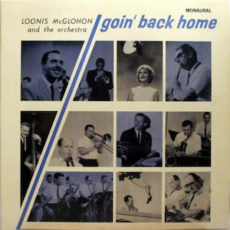
Loonis McGlohon was born on September 29, 1921 in Ayden, North Carolina, and graduated from East Carolina University. After a spell in the Air Force during World War II, he played with the Jimmy Dorsey and Jack Teagarden orchestras and became involved with broadcasting in Charlotte, North Carolina, working as music director for radio and television.
An accompanist to many well-known singers that included Judy Garland, Mabel Mercer and Eileen Farrell. He co-hosted the Peabody Award-winning NPR radio series American Popular Song with his friend and collaborator, Alec Wilder. He also composed and wrote lyrics for several songs with Wilder.
For his hometown of Charlotte he wrote the music for The Hornet’s Nest, and in 1980, Frank Sinatra recorded two of his songs with Alec Wilder, South to a Warmer Place and A Long Night on the album She Shot Me Down. He received a commission to write a piece in celebration of North Carolina’s 400th birthday, which resulted in North Carolina Is My Home. a symphonic work. McGlohon was inducted into the North Carolina Music Hall of Fame in 1999.
NationsBank Performance Place in Charlotte’s Spirit Square was named Loonis McGlohon Theatre in 1998, and the following year he was inducted into the North CArolina Music Hall of Fame. A 2004 biography, Loonis! Celebrating a Lyrical Life by Jerry Shinn was published posthumously by the East Carolina University Foundation in 2004. Pianist and songwriter Loonis McGlohon passed away at the age of 80 following a long-term battle with lymphoma on January 26, 2002.

More Posts: bandleader,history,instrumental,jazz,music,piano,songwriter
Daily Dose Of Jazz…
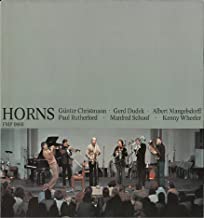
Gerhard Rochus “Gerd” Dudek was born September 28, 1938 in Wrocław, Poland. He studied clarinet privately and attended music school in the 1950s before joining a big band led by his brother Ossi until 1958.
During the early 1960s, Dudek played in the Berliner Jazz Quintet, in Karl Blume’s group and in Kurt Edelhagen’s orchestra until 1965. He then became interested in free music and joined Manfred Schoof’s quintet. He took part in the first sessions of The Globe Unity Orchestra in 1966, and played with them at various times into the 1980s.
He also worked with many other European free musicians and composers, including Alexander von Schlippenbach, Loek Dikker and The Waterland Ensemble And European Jazz Quintet.
He is best known for his work with Manfred Schoof, Wolfgang Dauner, Lala Kovacev, the Globe Unity Orchestra, Berlin Contemporary Jazz Orchestra, Albert Mangelsdorff, Don Cherry and George Russell. Tenor and soprano saxophonist, clarinetist and flautist Gerd Dudek continues to be involved in music.
More Posts: clarinet,flute,history,instrumental,jazz,music,saxophone
Daily Dose Of Jazz…
Archie “Skip” Hall was born in Portsmouth, Virginia on September 27, 1909 and studied piano under his father. From the age of eight he lived in New York City and in the late 1920s he relocated to Cleveland, Ohio where he led his own band for most of the 1930s.
He worked as an arranger on contract and arranged for Jay McShann from 1940 to 1944 and during World War II played with Don Redman. In 1943 he entered military service and played in a band while stationed in England. Around 1945 Skip worked with Hot Lips Page and then joined the Sy Oliver band, who was his brother-in-law. Following this he worked with Wynonie Harris, Thelma Houston, and Jimmy Rushing before joining Buddy Tate’s group in 1948.
Hall went on to work with Tate for twenty years both as a performer and arranger. He also played in the 1950s and 1960s with Dicky Wells, Emmett Berry, and George James, as well as solo and with his own small groups. Arranger, pianist, and organist Skip Hall, who never recorded as a leader, passed away in November 1980 in Ottawa, Canada.
More Posts: arranger,bandleader,history,instrumental,jazz,music,piano
Daily Dose Of Jazz…
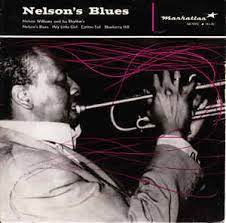
Nelson “Cadillac” Williams was born on September 26, 1917 in Montgomery, Alabama and began playing piano at age 13, however, he settled on the trumpet soon afterwards. It has been speculated that while still a teenager he may have played with blues pianist/singer Cow Cow Davenport.
In the 1930s, he played in the territory bands Trianon Crackerjacks and Brown Skin Models, and acted as musical director for the Dixie Rhythm Girls. Around 1940, he left Alabama for Philadelphia, Pennsylvania where he played with Tiny Bradshaw’s band before joining the U.S. Army during World War II.
After the war, Billy Eckstine hired Williams, before working with John Kirby and pianist Billy Kyle. In 1949, he began the first of several stints with Duke Ellington, who bestowed upon him the nickname “Cadillac”.
In 1951, he left Ellington’s employ and moving to Paris, France he led his own bands and recorded for French labels. He returned to Ellington in 1956, and played with him again in 1969 on a tour of Europe. Trumpeter Nelson “Cadillac” Williams settled in the Netherlands and passed away in 1973 in Voorburg.
More Posts: bandleader,history,instrumental,jazz,music,trumpet
Daily Dose Of Jazz…
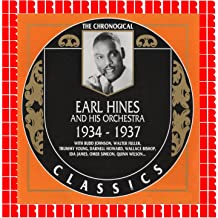
Charlie Allen was born in Jackson, Mississippi on September 25, 1908 and grew up in Chicago, Illinois. He began playing in the early 1920s just out of high school and through the decade worked as a member of the bands of Hugh Swift, Dave Peyton, Doc Cook, Clifford King, and Johnny Long.
Allen worked with Earl Hines from 1931 to 1934, then did a short stint in Duke Ellington’s orchestra in 1935, though he never recorded any solos with Ellington. He played with Fletcher Butler in 1936 and then returned to play with Hines again in 1937.
He played in various groups in Chicago in the 1940s and 1950s. Later in his life he became a music educator, worked in the Chicago Musicians’ Union, and designed custom trumpet mouthpieces, used by Cat Anderson, among others.
Trumpeter Charlie Allen passed away on November 19, 1972 in Chicago.
More Posts: history,instrumental,jazz,music,trumpet