


Daily Dose Of Jazz…
Bob Bates was born on September 1, 1923 in Pocatello, Idaho. His mother was an organist and his brothers Norman and Jim were also bassists. As a youth he played tuba, trumpet, and trombone. From 1944 to 1948 he studied classical bass and played with Sonny Dunham around 1946–47 and with Jack Fina in the late Forties.
The 1950s saw Bob playing in the Two Beaux & a Peep Trio before becoming the bassist in the Dave Brubeck Quartet between 1953 and 1955. In addition, he recorded with Paul Desmond in 1954, and Dave Pell in 1956. It was during this time that he stopped playing and performing. Bassist Bob Bates passed away on September 13, 1981 in San Francisco, California at the age of 58.

More Posts: bass,history,instrumental,jazz,music
Daily Dose Of Jazz…
Lauderic Caton was born on August 31, 1910 in Arima, Trinidad and Tobago was the fourth son and last of the eight children. An autodidact on guitar, which he played professionally from the age of 17, however, he was also proficient on saxophone, double bass, and banjo.
After spending time in Guadeloupe and Martinique, he moved to Europe in 1938, playing in Paris, France with guitarist Oscar Alemán. Soon he was in Brussels, Belgium playing with Ram Ramirez, Jean Omer, Harry Pohl, and Jamaican Joe Smith. While in Antwerp, Belgium he played with Gus Clark and Tommy Brookins.
Influenced by Lonnie Johnson and Charlie Christian, he first began using an amplifier in 1940. Lauderic played in England with Don Marino Barreto and saxophonist Louis Stephenson, with whom he became a frequent collaborator. Together they led a house band at Jig’s Club.
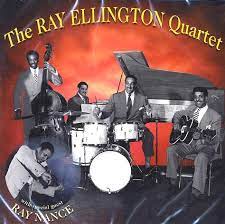
He has worked with Cyril Blake, Johnny Claes, Bertie King, Harry Parry, Dick Katz, and Coleridge Goode. Late in the 1940s Caton played with Ray Ellington and Ray Nance, playing under the pseudonym “Lawrence Rix” for legal reasons. Later in his life he also taught and built custom amplifiers.
Leaving music at the end of the 1950s, he was the musical arranger for Walking on Air. Guitarist Lauderic Caton, who was an early proponent of the use of electric guitar in Britain, particularly in jazz, passed away in London, England on February 19, 1999. He is buried in Port of Spain, Trinidad.

More Posts: history,istrumental,music

Daily Dose Of Jazz…
Horst Konrad “Conny” Jackel was born on August 30, 1931 in Offenbach am Main, Germany. Initially working as a steel construction fitter, he attended the conservatory in 1951 and from 1952 played in the clubs of the US Army in France, the Netherlands and Germany.
In 1955 he became a member of the Helmut Brandt Combo, contributing to its success. In 1959 he went on to perform the equally demanding arrangements of the Media Band of Harald Banter in Cologne. 1961 saw Jackel moving to the Erwin Lehn Orchestra in Stuttgart, where he performed with Miles Davis, Chet Baker, Dizzy Gillespie and Frank Sinatra.
From 1964 to 1969 he was a member of the Hessischer Rundfunk Jazz Ensemble led by Albert Mangelsdorff, then became first trumpet of the orchestra in 1967 under Willy Berking and the HR Big Band under Heinz Schönberger. He would go on to perform with Joki Freund, Rudi Sehring, Attila Zoller, Charly Antolini and the Sugar Foot Stompers among other traditional bands.
Suffering from cancer, he lost his lower jaw to amputation forcing him to give up the trumpet. Occasionally he was active as a drummer with The Bookreaders. After a long illness as a result of an operation, trumpeter and flugelhornist Conny Jackel, whose motto was “No beer – no music!”, passed away on April 28, 2008 in Bad Nauheim, Germany.
Daily Dose Of Jazz…
Gilbert Rovère was born on August 29, 1939, Toulon, France and attended the Conservatory of Nice studying the double bass. He becme one of the most in-demand musicians in France in the Sixties.
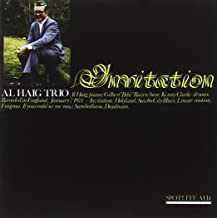
He appeared and/or recorded with Bud Powell, Dexter Gordon, René Thomas, Jean-Luc Ponty, Barney Wilen, Al Haig, and Steve Grossman among others. For several years during his career Rovère was a member of the Martial Solal Trio with Daniel Humair.
Bibi was hired by Duke Ellington to play a Paris recording session with the orchestra and Alice Babs in 1963. He also hired him the following year to play with one of Duke’s small groups on the Italian Riviera.
Bassist Gilbert ‘Bibi’ Rovère, who received the Prix Django Reinhardt award in 1967, passed away from cancer in southern France on March 13, 2007 in Gorbio, France. He was 67.
Daily Dose Of Jazz…
George F. Clarke was born on August 28, 1911 in Memphis, Tennessee. He attended Manassas High School, where he was Jimmie Lunceford’s pupil before joining the orchestra and playing with Lunceford until 1933.
Relocating to Buffalo, New York, there he played with Guy Jackson, Lil Armstrong and Stuff Smith in 1935. He and Smith worked together again on tour in 1939-1940 and in the recording studio. Returning to Buffalo, Clarke led an ensemble at a local club from 1942 to 1954.
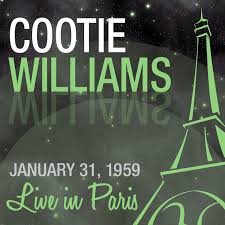
Following this he moved to New York City and worked with Wild Bill Davis and Jonah Jones, and toured internationally in Europe in 1959 with Cootie Williams and Africa with Cozy Cole in 1962. He was occasionally active through the ‘60s in New York City. Tenor saxophonist George Clarke passed away in September 1985 in the Bronx, New York.
More Posts: history,instrumental,jazz,music,saxophone