


Daily Dose Of Jazz…
Melton S. Mustafa was born on November 23, 1947 in Miami, Florida, the younger brother of Jesse Jones, Jr. He started playing the trumpet in junior high school and as a teenager played in a five-piece R&B/calypso band led by his brother. As a young adult in the Sixties, he studied at Berklee College of Music and Mississippi Valley State College before graduating from Florida A&M with a degree in music education.
During this period he started played behind Sam and Dave, Betty Wright, Lattimore, the Marvelettes and Joe Simon. His love for jazz never waning, his visibility on the Miami jazz scene increased when Melton joined hard bopper multi-instrumentalist Ira Sullivan. By the 80s he was playing with the Duke Ellington Orchestra led by mercer Ellington, Jaco Pastorius, James Williams, Bobby Watson and John Hicks and Mingus Dynasty among others.
Mustafa joined the Count Basie Orchestra in 1984 and stayed for eight years. In 1992 he formed his own big band and a couple years later signed with Contemporary/Fantasy releasing his debut album Boiling Point. He followed up with his sophomore project St. Louis Blues in 1997. Never far from jazz standards and ballads his quintet recorded his latest CD titled The Softer Side, Scenes from Miami Vol. 1 featuring Duffy Jackson on drums, Dennis Marks on bass and Jim Gasior on piano.
He produces his Annual Melton Mustafa Jazz Festival at the university that has welcomed Jon Faddis, Abraham Laboriel, Benny Golson, Dr. Nathan Davis, Dr. Grover Washington Jr., Dr. James Moody, Idris Muhammad, George Cables, Wallace Roney, Patrice Rushen, Geri Allen, Jimmy Owens, Billy Cobham, Herbie Mann, Dr. Billy Taylor, Clark Terry, Curtis Fuller, Nestor Torres, Winard Harper, Najee, Randy Brecker, and others.
As an educator he is the Director of Jazz Studies at Florida Memorial University, teaching Music Theory, Jazz Composition and other jazz related courses. The hard bop, post bop, soul and swing trumpeter, composer, arranger and producer and educator Melton Mustafa continues to perform, record and tour.

Put A Dose In Your Pocket
More Posts: trumpet
Daily Dose Of Jazz…
Mark Shim was born on November 21, 1973 in Kingston, Jamaica but raised in Canada from the age of eight months to five years. Then his family moved to Richmond, Virginia. He started playing tenor saxophonist in the seventh grade through high school. Graduating in 1991 he attended Virginia Commonwealth University and William Patterson College.
1994 saw Shim moving to Brooklyn, New York where he played and recorded with Hamiet Bluiett in Harlem. He then played with Elvin Jones, Mose Allison, Betty Carter, Greg Osby and the Mingus Big Band.
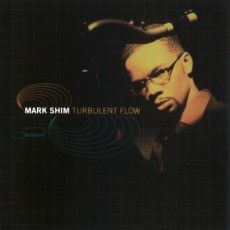
He recorded his debut album Mind Over Matter for Blue Note Records in 1998, with his sophomore project New Directions with Stefon Harris, Jason Moran and Greg Osby and Turbulent Flow released in 2000. Tenor saxophonist Mark Shim continues to perform, record and tour.
Give A Gift Of Jazz – Share
More Posts: saxophone

Daily Dose Of Jazz…
Vincent Herring was born November 19, 1964 in Hopkinsville, Kentucky. His formal musical education began at age 11, when he started playing saxophone in school bands and studying privately at Dean Frederick’s School Of Music in Vallejo, California. At age 16, he entered California State University at Chico on a music scholarship.
A year later, Vincent auditioned for a spot in the United States Military Academy Band Jazz Knights playing lead alto saxophone. He made the move to West Point, served one enlisted tour, which turned out to be a steppingstone to the New York jazz scene.
He first began touring Europe and the United States with Lionel Hampton’s big band. Since that turning point in his career Herring has recorded and performed over 200 sessions as a sideman working with Nat Adderley, Art Blakey and the Jazz Messengers, the Horace Silver Quintet, Jack DeJohnette’s Special Edition, Larry Coryell, Cedar Walton, Freddie Hubbard, Dizzy Gillespie, the Mingus Big Band, Nancy Wilson, the Roy Hargrove Big Band, Arthur Taylor, Dr. Billy Taylor, Carla Bley and the Phil Woods Sax Machine.
Vincent has been a special guest soloist with Wynton Marsalis and Lincoln Center as well as with Jon Faddis and the Carnegie Hall Big Band. As a leader he has recorded fifteen albums and taken bands to Japan and Europe, has appeared in nearly every major jazz festival in the world. Wearing his educator hat he gives clinics throughout Europe and the United States. He is currently performing with the Cannonball Legacy Band, which plays in jazz festivals, jazz clubs and occasionally small towns for benefit concerts.
Dose A Day – Blues Away
Daily Dose Of Jazz…
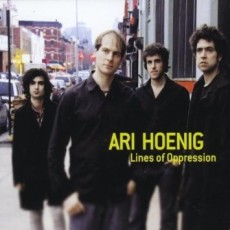
Ari Hoenig was born November 13, 1973 in Philadelphia, Pennsylvania to a vocalist father and violinist mother. He was exposed to classical and other music at an early age, playing piano and violin. He went on to explore rock and metal drums as a teenager before settling into jazz.
Hoenig attended Pennsylvania Governor’s School of the Arts in summer of 1990, followed by attending the University of North Texas College of Music for three years and was a member of the highly regarded One O’Clock Lab Band.
Relocating to New York he began playing with Shirley Scott and went on to record with Mike Stern, Kenny Werner, Richard Bona, Dave Liebman, Chris Potter, Joshua Redman, Tigran Hamasyan, Ethan Iverson, Mark Turner, Fred Hersch, Snarky Puppy, Kurt Rosenwinkel, Pat Martino, Wynton Marsalis, Pat Metheny and many others.
Ari has performed at the Dominican Republic Jazz Festival alongside Gonzalo Rubalcaba and Chucho Valdes, and has appeared with his Punk Bop Band with Jonathan Kreisberg and Gilad Hekselman. Drummer, composer and educator Ari Hoenig continues to record, perform and tour.
Inspire A Young Mind
More Posts: drums
Daily Dose Of Jazz…
Lynn Baker was born Malcolm Lynn Baker on November 9, 1955 in Salem, Oregon. When he was seven he started taking piano lessons and by the fifth grade was in band class and in sixth grade his mother bought him a tenor saxophone but didn’t practice much until he got in junior high. It was there that he soon took first chair and held it throughout his high school years.
By 1973 Baker was attending Oregon College of Education but in his sophomore year transferred to the University of Oregon seeking a better jazz program without success. However it offered him the opportunity to play with a young John Zorn, which would have a powerful impact on his music aesthetic. Eventually he would transfer to Western Oregon University, Mt. Hood Community College and finally transferring back to and graduating from Oregon College of Education.
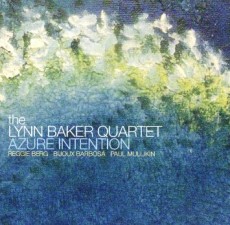
He joined a local Top 40 band led by Ricky Santos for a while, then moved to Eugene, Oregon and joined the Experimental Jazz Ensemble followed by gigs playing with dance bands and a rock/Latin fusion band. An award winning composer, performer and educator Lynn released his debut album Azure Intention in 2010 on the Origin Records label. His sophomore project LectroCoustic followed three years later.
As an educator Baker has taught at Indian University and Carleton College and is currently the director of jazz studies and Commercial Music Program at the Lamont School of Music, University of Denver, directs the Lamont Jazz Orchestra, coaches combos and teaches jazz improvisation and composition, jazz history and jazz technique. Tenor saxophonist Lynn Baker continues to perform in between his teaching duties.
Put A Dose In Your Pocket
More Posts: saxophone