

Daily Dose Of Jazz…
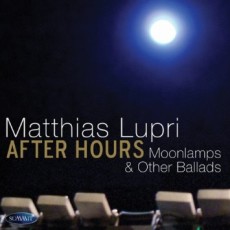
Matthias Albrecht Lupri was born October 29, 1964 in Germany but grew up in Manhattan, Kansas and Alberta, Canada. Initially he played the drums as a teenager in blues, rock and country music bands. In his early twenty’s he studied music at Mount Royal College, where he heard Gary Burton’s recordings and became interested in jazz vibraphone music.
Matthias practiced the instrument for the next five years while on the road with rock bands as a drummer. He then enrolled at the Berklee College of Music and studied with Gary Burton himself. Since graduation he has released several records that have charted in radio’s Top 40 GAVIN, CMJ and Chart Magazine Canada, and was heard on the TV show Alias.
Lupri was named as a rising artist on vibraphone in the Down Beat critics poll for the 2nd time in 2005. He has recorded with Greg Osby, Chris Potter, Kurt Rosenwinkel, Mark Turner, Donny McCaslin, Myron Walden, Greg Hutchinson, Antonio Sanchez, Reuben Rogers, Ian Froman, George Garzone, Jeff Ballard, Rick Margitza, Cuong Vu, Sebastiaan de Krom and Boris Wiedenfeld among other. He continues to perform and tour throughout Canada and the United States.

Dose A Day – Blues Away
More Posts: vibraphone
Daily Dose Of Jazz…
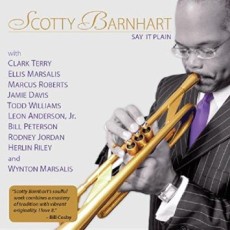
Scotty Barnhart was born William Barnhart on October 27, 1964 in Atlanta, Georgia. Receiving his education in music from Florida A&M University, he joined the Count Basie Orchestra in 1992. The following year he became a featured soloist with the band and just ten years later he was appointed as the new director of the orchestra. It was with the Basie Orchestra that he became a two-time Grammy winner.
His solo disc on Unity Records is titled Say It Plain reached #3 on the jazz charts and features Clark Terry, Ellis and Wynton Marsalis, Marcus Roberts, Jamie Davis and Etienne Charles. Barnhart has recorded with Marcus Roberts, Tony Bennett, Diana Krall, Ray Charles and Tito Puente, to name a few.
He is active as an educator, clinician and author, he has written The World of Jazz Trumpet – A Comprehensive History and Practical Philosophy. He is a professor in the College of Music at Florida State University. In between his teaching duties, touring with the Basie Orchestra and lecturing at colleges and universities around the world, trumpeter Scotty Barnhart performs and tours leading his quintet-sextet.
Take A Dose On The Road
More Posts: trumpet
Daily Dose Of Jazz…
J. C. Moses was born in Pittsburgh, Pennsylvania on October 18, 1936 and was related to pianist Jimmy Golden and trumpeter Clifford Thornton. Somewhat of a mystery figure in jazz history, he was a very versatile and for a time greatly in-demand drummer who played in settings ranging from mainstream to free jazz.
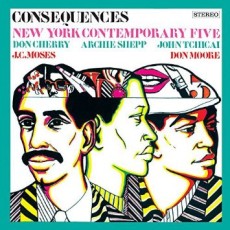
Moses first gained the attention of the jazz world in the early 1960s, when he recorded with Clifford Jordan, Kenny Dorham and Eric Dolphy. As a member of the New York Contemporary Five with Archie Shepp, John Tchicai and Don Cherry, he toured Scandinavia in 1963 and recorded in Denmark. Returning to New York the following year, J. C. recorded with Bud Powell on the album The Return of Bud Powell, was with the New York Art Quartet, then was with an early version of Charles Lloyd’s Quartet and spent two years with Rahsaan Roland Kirk.
During this period drummer J. C. Moses also worked with Archie Shepp, Andrew Hill and Sam Rivers. By 1969 he played regularly in Copenhagen as the house drummer at the Montmartre Club. However, erratic health forced him to cut back on his activities in the early 1970s and he returned to Pittsburgh. Unfortunately he never led his own record date but he would occasionally played with Nathan Davis and Eric Kloss before his untimely death in 1977.
Give The Gift Of Knowledge
More Posts: drums
Daily Dose Of Jazz…
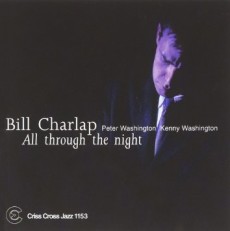
Bill Charlap was born William Morrison Charlap on October 15, 1966 in New York City surrounded by a musical family. His mother was a singer, his father a Broadway composer and his distant cousin was pianist Dick Hyman. He began playing piano at age three and later studied classical music but he has remained most interested in jazz.
Charlap and his mother recorded two duet albums, Love Is Here To Stay and Something To Remember. He’ recorded seven albums as a leader or co-leader for the Blue Note label, including two Grammy nominated CDs: Somewhere, featuring the music of Leonard Bernstein and The Bill Charlap Trio, Live At The Village Vanguard. For Venus Records, the Japanese label, he has recorded two albums as a leader, as well as eight albums as a member of the New York Trio.
He has worked with Gerry Mulligan, Benny Carter, Tony Bennett, Phil Woods, Scott Hamilton Harry Allen, Ruby Braff, Brian Lynch, Warren Vache and numerous others. By the mid-90s, Bill became the musical director of Midnight in the Garden of Good and Evil, A Celebration of Johnny Mercer, part of New York’s JVC Jazz Festival. In 1995 he joined the Phil Woods Quintet.
In 2008, he became part of The Blue Note 7, honoring the 70th anniversary of the label and playing the music of various artists from the label. He has recorded Double Portrait, a piano duets album with his wife Renee Rosnes. Pianist Bill Charlap regularly plays with his trio comprised of bassist Peter Washington and drummer Kenny Washington.
Give A Gift Of Jazz – Share
More Posts: piano
Daily Dose Of Jazz…
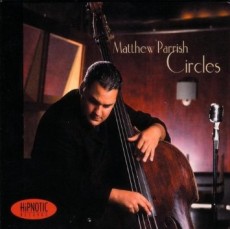
Matthew Parrish was born on October 14, 1969 in central California into a family that loved music that listened to jazz, rock and classical music. He started playing trumpet in middle school but switched to bass just prior to an audition at Rutgers Mason Gross School of the Arts. Accepted into the music program as a n acoustic bass student in jazz studies.
Matthew’s career began in Philadelphia during his teens and early twenties playing with Shirley Scott, Mickey Roker, Bobby Durham, Cecil Payne, Johnny Cole, Harry “Sweets” Edison, Jimmy Oliver, Danny turner and fellow youngsters Orrin Evans and Byron Landham. He went on to tour with Al Grey and performing with Clark Terry, Marion McPartland, Dr. Lonnie Smith, Lou Donaldson, Joe Cohn, Savion Glover and Bill Charlap.
He has continued to pursue his career playing and/or recording in the bands of Greg Osby, Jon Jang, James Newton, Stefon Harris, and Regina Carter. A gifted composer and arranger Parrish has recorded his own compositions on his debut album Circles on the Hipnotic Records label as well as on the recordings by David Leonhardt, Denise Montana, Ben Schacher and Carter.
With several milestones under his belt having performed with Dee Dee Bridgewater, Wynton Marsalis, James Williams, Paquito D’Rivera and Etta Jones to name a few more, he currently tours around the world with Freddy Cole, Houston Person and Vana Gierio. With his own band he gives concerts in Philadelphia, featuring Amazonian performers and is no stranger to the club scene in New York, Boston and DC. As an educator he teaches and mentors young children through adult age in assemblies, master classes and lectures throughout the United States.
Inspire A Young Mind
More Posts: bass