

Daily Dose Of Jazz…
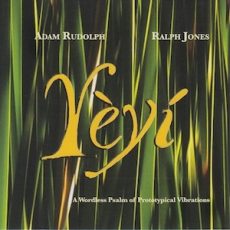
Adam Rudolph was born September 12, 1955 in Chicago, Illinois and grew up on the South Side among jazz and blues musicians. In 1988 he met Yusef Lateef, and the two would collaborate and perform together for the next 25 years.
In 1992 Rudolph helped found the band Adam Rudolph’s Moving Pictures, a group of improvisers He has been the artistic director of and composer for Hu: Vibrational with Hamid Drake, Vashti International Percussion Ensemble and Go: Organic Orchestra. He has performed as half of the Wildflowers Duo with Butoh dance innovator Oguri.
Rudolph has released several albums as leader and has also recorded with musicians Sam Rivers, Omar Sosa, Wadada Leo Smith, Pharoah Sanders, Bill Laswell, Herbie Hancock, Foday Musa Suso, and Shadowfax
Composer and percussionist Adam Rudolph continues performing in the post-bop and world fusion medium.

More Posts: bandleader,history,instrumental,jazz,music,percussion
Daily Dose Of Jazz…
Mark Jay Levine was born on October 4, 1938 in Concord, New Hampshire and began playing the piano at the age of five, trombone in his early teens. Attending Boston University, graduating with a degree in music in 1960, he also studied privately with Jaki Byard, Hall Overton and Herb Pomeroy.
Moving to New York City in the Sixties he freelanced and then played with musicians Houston Person, Mongo Santamaría, and Willie Bobo from 1971 to 1974. Levine then moved to San Francisco, California and played with Woody Shaw for two years. His debut album was made as a leader for Catalyst Records in 1976.
He went on to play with the Blue Mitchell/Harold Land Quintet, Joe Henderson, Stan Getz, Bobby Hutcherson, Luis Gasca, and Cal Tjader. From 1980 to 1983, he concentrated on valve trombone, but then returned to playing mainly the piano. He then led his own bands, and recorded for Concord as a leader in 1983 and 1985. From 1992 Mark was part of Henderson’s big band. He created a new trio in 1996 and recorded it for his own, eponymous label. His Latin jazz group, Que Calor, was formed in 1997.
He put on his educator hat in 1970, teaching in addition to private lessons at Diablo Valley College, Mills College, Antioch University in San Francisco, San Francisco Conservatory of Music, Sonoma State University, and the JazzSchool in Berkeley. Levine wrote two method books: The Jazz Piano Book, and The Jazz Theory Book.
Pianist, trombonist, composer, author and educator Mark Levine, whose album Isla was nominated for a Grammy Award for Best Latin Jazz Album, died of pneumonia on January 27, 2022 at the age of 83.
Get a dose of the musicians and vocalists who were members of a global society integral in the making and preservation of jazz for over a hundred and twenty-five years…
Mark Levine: 1938~2022 | Clarinet, Composer, Educator, Director, Producer
More Posts: author,bandleader,composer,educator,history,instrumental,jazz,music,piano,trombone
Daily Dose Of Jazz…
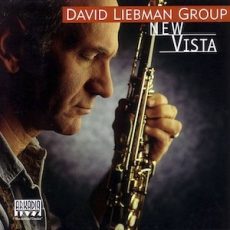
David Liebman was born September 4, 1946 into a Jewish family in Brooklyn, New York. As a child he contracted polio and began classical piano lessons at the age of nine and saxophone by twelve. His interest in jazz came when he saw John Coltrane perform live in New York City clubs aand throughout high school and college, Liebman pursued his jazz interest by studying with Joe Allard, Lennie Tristano, and Charles Lloyd. Upon graduation from New York University he began to seriously devote himself to the full-time pursuit of being a jazz artist.
In the early 1970s, he organized the cooperative, Free Life Communication, which became an integral part of the New York loft jazz scene. He landed a place with Elvin Jones’ band then an apprenticeship with Miles Davis from 1970 to 1974. Liebman explored his own music with the groups Open Sky Trio and Lookout Farm.In 1977 he toured the world with pianist Chick Corea, followed by his own quintet over three years.
David has worked with George Mraz, Al Foster, Ron McClure and Billy Hart, Vic Juris, Tony Marino, Bobby Avey, Matt Vashlishan and Alex Ritz, Joachim Kühn, Daniel Humair, Paolo Fresu, Jon Christensen, Bobo Stenson among others. He played with several European orchestras, and his artistic output is straight-ahead classic jazz, chamber music, fusion and avant garde.
As an educator he has published instructional DVDs, has taught at universities and clinics, and has regularly received grantees to study with him funded by the NEA, the Canadian Arts Council, as well as Arts Councils of numerous European countries. In 1989, he was the artistic director of the International Association of Schools of Jazz.
Saxophonist, flautist and jazz educator David Liebman, who received a NEA Jazz Masters lifetime achievement award, continues to perform and record.
More Posts: bandleader,educator,flute,history,instrumental,jazz,music,saxophone
Daily Dose Of Jazz…
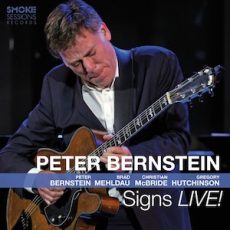
Peter Andrew Bernstein was born on September 3, 1967 in New York City, He began playing piano when he was eight but switched to guitar when he was thirteen, learning the instrument primarily by ear. He studied jazz at Rutgers University with Ted Dunbar, and Kenny Barron.
While a student at the New School in New York City, he met guitarist Jim Hall, who offered him a job performing at the JVC Jazz Festival in 1990. He then appeared on albums with Jesse Davis, Lou Donaldson, Larry Goldings, Michael Hashim, Geoff Keezer, and Melvin Rhyne. He released his first album as a leader with pianist Brad Mehldau.
He has worked with Jimmy Cobb, Tom Harrell, Diana Krall, Lee Konitz, Eric Alexander, Joshua Redman, Dr. Lonnie Smith, and Walt Weiskopf. In 2008, Bernstein became part of The Blue Note 7, a septet formed that year in honor of the 70th anniversary of Blue Note Records. The group recorded the album Mosaic.
Guitarist Peter Bernstein continues to perform, record and tour.
More Posts: bandleader,guitar,history,instrumental,jazz,music
Daily Dose Of Jazz…
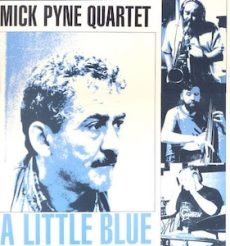
Mick Pyne was born Michael John Pyne on September 2, 1940 in Thornton-le-Dale, England He learned piano from the age of three; then learned violin, and began playing cornet when he was 13.
Around 1957 he and his brother Chris formed their own band before Mick moved to London, England in 1959. He played briefly with Tony Kinsey in 1962, then played U.S. Army bases in France. In addition he worked with Alexis Korner, from 1962 to 1963.
Returning to London at the end of 1963, Pyne worked in the Sixties with John Stevens, Phil Seamen, and extensively with Tubby Hayes, He toured Europe with Stan Getz, Roland Kirk, Lee Konitz, Hank Mobley, and Joe Williams.
In the 1970s he worked with Hayes again as well as with Ronnie Scott, Humphrey Lyttelton, Jon Eardley and Cecil Payne. In the 1980s Pyne’s associations included Georgie Fame, Adelaide Hall, Keith Smith and Charlie Watts.
Pianist Mick Pyne died on May 23, 1995 in London.
More Posts: history,instrumental,jazz,music,piano