

Requisites
Kelly Blue ~ Wynton Kelly Trio and Sextet | By Eddie Carter
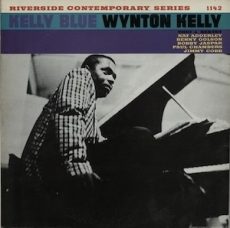
This morning’s record from the library is Kelly Blue (Riverside Contemporary Series RLP 12-298/RLP 1142) by The Wynton Kelly Trio and Sextet. It hit the stores in 1959 and was his second release as a leader on the label after Piano a year earlier. Wynton Kelly was an accomplished hard-bop pianist and accompanist who collaborated with many elite musicians and vocalists over his career, appearing on some of the most unforgettable jazz albums ever recorded. Here, he’s working with a superb supporting cast: Nat Adderley on cornet, Bobby Jaspar on flute, Benny Golson on tenor sax (tracks: A1, B2), Paul Chambers on bass, and Jimmy Cobb on drums. My copy is the 1982 Original Jazz Classics U.S. Stereo reissue (Riverside OJC-033).
Side One opens with the title tune, Kelly Blue, by Wynton Kelly. Bobby, Paul, and Jimmy introduce this mid-tempo blues with a three-instrument dialogue. The remaining ensemble joins in as the melody unfolds. Wynton begins the opening solo with a relaxing reading. Bobby exhibits some exciting twists and turns next. In the following presentation, Nat raises the temperature slightly with precise articulation. Benny delivers a gorgeous statement with a rich, warm tone as smooth as a sled on new snow before the close. Softly, As In a Morning Sunrise by Sigmund Romberg and Oscar Hammerstein II begins with the trio introducing the melody. Kelly sets the solos in motion with a performance that cooks. Chambers’s bass compliments him with a concise solo that is to the point ahead of the climax.
Green Dolphin Street by Bronislaw Kaper and Ned Washington is one of the prettiest jazz standards in The Great American Songbook. The trio gives this old favorite a lively sprucing up on the opening chorus, highlighting Wynton’s ability to captivate the listener in an impeccable performance until the closing ensemble returns. Side Two starts with Ann Ronell’s classic Willow Weep For Me. Chambers gets the nod and brings the song to life in a bluesy, slow-tempo introduction, and then Kelly and Cobb come in to complete the dreamy theme. The pianist opens with an effortlessly elegant solo. Paul expands on that feeling with reflective beauty next. Wynton has another memorable moment, leading to the finale.
Wynton Kelly’s Keep It Moving is an uptempo-blowing session that swings out of the gate with the front line returning for their second and final appearance. Wynton cuts loose on the opening solo vigorously. Benny takes his turn next and keeps the groove going, and then Nat turns in a captivating reading. Bobby makes the following point with a spirited statement. Paul has the last word with an excellent improvisation preceding the song’s conclusion. The trio wraps the album with Wynton Kelly’s Old Clothes. Kelly is up first after a leisurely melody with a light-hearted opening statement. Chambers makes his presence felt in the following reading. Cobb speaks with the leader in a concise conversation before the melody’s restatement.
Orrin Keepnews produced the session, and Jack Higgins was the recording engineer. The album’s sound quality is excellent, transporting the musicians to your listening room as if they were playing before you. Wynton Kelly was also a talented composer, and the level of good spirits demonstrated by him and his colleagues here is incredibly endearing. Kelly Blue is an album characterized by the pianist’s contagious enthusiasm, with everyone in top form. The music will also keep you hooked from start to finish. On your next record-shopping trip, I invite you to check out Kelly Blue by The Wynton Kelly Trio and Sextet. It’s not just a great album; it’s an excellent introduction to his music and a must-listen for any jazz enthusiast!
~ Piano (Riverside RLP 12-254) – Source: Discogs.com
~ On Green Dolphin Street, Willow Weep For Me – Source: JazzStandards.com
~ Softly, As In a Morning Sunrise – Source: Wikipedia.org
© 2024 by Edward Thomas Carter

More Posts: choice,classic,collectible,collector,history,instrumental,jazz,music,piano

Daily Dose Of Jazz…
Andy LaVerne was born on December 4, 1947 in New York City, and studied at Juilliard School of Music, Berklee College, and the New England Conservatory. He also took private lessons from jazz pianist Bill Evans.
LaVerne has worked with Frank Sinatra, Stan Getz, Woody Herman, Dizzy Gillespie, Chick Corea, Lionel Hampton, Michael Brecker and Elvin Jones. As a leader he has recorded more than 50 albums including a duo with saxophonist Jerry Bergonzi.
An educator, Andy has released a series of instructional videos, Guide to Modern Jazz Piano, Vols. 1 &, 2, and Jazz Piano Standards, and In Concert with guitarist John Abercrombie.
He has authored several books that has included his own compositions as well as the Handbook of Chord Substitutions, Tons of Runs, Bill Evans Compositions 19 Solo Piano Arrangements, and is the pianist on The Chick Corea Play-Along Collection. He is a frequent contributor to several jazz, music and piano publications.
Besides receiving being a recipient of several fellowships and awards, holding numerous clinics, masterclasses and performances worldwide, pianist Andy LaVerne currently is Professor of Jazz Piano at The Hartt School on the campus of the University of Hartford in Connecticut and on the faculty of the Aebersold Summer Jazz Workshops.

More Posts: author,educator,history,instrumental,jazz,music,piano
Daily Dose Of Jazz…
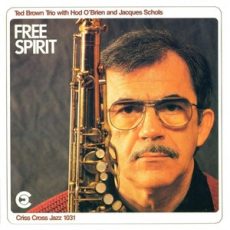
Theodore G. Brown was born into a musical family on December 1, 1927 in Rochester, New York. He learned banjo and violin from his father who also taught him to read music at six, and clarinet and tenor sax from his uncle. After playing in army bands from 1945 to 1947 and then in Hollywood, California for the following year, he moved to New York City.
He worked with Lennie Tristano and fellow pupils and associates Lee Konitz and Warne Marsh for two years beginning in 1955. During that time Ted recorded a session for Vanguard, worked with Ronnie Ball, and played a date in Hollywood with Warne Marsh.
>Returning to New York City he worked extensively in clubs. Brown recorded with Konitz in 1959, and again in 1976, while leading his own group in the late Seventies. He also worked and recorded with Art Pepper and Hod O’Brien.
Cool jazz tenor saxophonist Ted Brown, who recorded as a leader or co-leader thirteen albums and as a sideman was a part of five albums with Tristano, Marsh and Konitz, is 97 years old.
More Posts: bandleader,history,instrumental,jazz,music,saxophone

Daily Dose Of Jazz…
Justin Wood was born on November 18, 1975 in rural Northern Maine and began playing saxophone in fifth grade growing up. During high school, he co-led a jazz trio with trombonist Philip Yaeger and brother Tyler on piano, and played gigs ranging from local restaurants to agricultural conventions.
After attending Harvard University, Justin moved to New York City in 1999 and worked as a union organizer and explored the city’s music scene. He began performing in the city in 2001, and has performed with diverse musical groups in venues including Birdland, the Brooklyn Academy of Music, NJ Performing Arts Center, the Knitting Factory, and the Garage.
Rather than pursuing a conservatory education, he has learned from and been inspired by his peers. Through private lessons with top creative musicians such as Bill McHenry and Michel Gentile he has developed his own voice.
Currently, alto saxophonist and flautist Justin Wood continues to participate in diverse musical projects. He co-leads Spoke, an eclectic quartet with trombonist Andy Hunter, bassist Dan Loomis, and drummer Danny Fischer.
More Posts: bandleader,flute,history,instrumental,jazz,music,saxophone
Daily Dose Of Jazz…
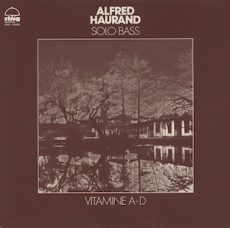
Ali Haurand was born Alfred Josef Antonius Haurand on November 15, 1943 in Viersen, Germany. After an apprenticeship as a confectioner and a business manager, he studied from 1966 to 1973 at the Folkwang School and the Rhineland Music Academy. He initially played with his own trio and from 1967 in the trio and quintet of pianist George Maycock. In 1968 he also toured with Philly Joe Jones, Jacques Pelzer, René Thomas and Jan Huydts.
He performed with Ben Webster, Don Byas, John Handy, Bobby Jones and Wilton Gaynair. This was followed by his own groups, Third Eye, the European Jazz Quintet with Leszek Zadlo, Gerd Dudek, Alan Skidmore and Pierre Courbois. Together with Alan Skidmore and Tony Oxley, they formed the trio SOH. Haurand played with his long-time companions, the saxophonist Gerd Dudek and the pianist Rob van den Broeck, in the formation The Trio.
Since 1982, the European Jazz Ensemble, which he formed out of the European Jazz Quintet with varying lineups that included Allan Botschinsky, Stan Sulzmann, Joachim Kühn and Daniel Humair. In the 2000s, he took part in several jazz and poetry projects.
For decades he was a presenter and consultant to the WDR television jazz editorial team, and for twelve years he was artistic director of the Düsseldorf Jazz Rally. From 1987 he was the founder, director and organizer of the Viersen Jazz Festival until 2014. For over 20 years he organized the jazz concerts in the Süchtelner Weberhaus.
Double bassist and bandleader Ali Haurand, who was also a television presenter, music producer and festival manager, died on May 28, 2018.
More Posts: bandleader,bass,history,instrumental,jazz,music