


Daily Dose Of Jazz…
Nguyên Lê was born Le Thanh Nguyen on January 14, 1959 in Paris, France of Vietnamese ancestry. He began playing drums at the age of 15, then took up guitar & electric bass. After graduating in Visual Arts he majored in Philosophy, writing a thesis on Exoticism. A self-taught musician, Nguyên started out playing rock, funk, jazz standards, avant-garde jazz, pop, African, Caribbean, and other world music.
Devoting himself to music, in 1983 he created Ultramarine, a multi-ethnic band whose recording DÉ has been considered 1989’s Best World Music album. He went on to record several albums and worked with such musicians as Miroslav Vitous, Trilok Gurtu, J. F. Jenny Clarke, Dewey Redman, Andy Emler, Jon Christensen, Nana Vasconcelos, Glenn Ferris, Kenny Wheeler, John Taylor and numerous others.
He has played with the O. N. J., the French National Jazz Orchestra in which he played with Johnny Griffin, Louis Sclavis, Didier Lockwood, Carla Bley, Steve Swallow, Randy Brecker, Toots Thielemans, Courtney Pine, Steve Lacy, Dee Dee Bridgewater, Gil Evans, Quincy Jones, Randy Brecker, Vince Mendoza, Carla Bley, Per Mathisen, Marc Johnson, Peter Erskine, Trilok Gurtu, Paolo Fresu and Dhafer Youssef and numerous others.
He has released albums as a leader and as a sideman. His 1996 album Tales from Viêt-Nam blends jazz and traditional Vietnamese music. In spring 2011 he released Songs of Freedom, an album with cover versions of pop hits from the 1970s.
Guitarist and composer Nguyên Lê continues to perform, record and compose.

More Posts: bandleader,guitar,history,instrumental,jazz,music,synthesizer

Daily Dose Of Jazz…
Gene Lake was born Oliver Gene Lake, Jr. on January 12, 1966 in St. Louis, Missouri. He began playing drums when he was five years old, and took lessons with Pheeroan akLaff as a high schooler at The High School of Music & Art in New York City. He attended Berklee College of Music, where he worked with Tommy Campbell, and played in local Boston bands in a variety of styles.
Gene played with his father in New York City in 1987 and 1988, then joined Henry Threadgill’s ensemble in 1990. Later in the Nineties, Gene worked with Steve Coleman, Lunar Crush with David Fiuczynski and John Medeski, Marcus Miller, Brandon Ross, David Sanborn, the World Saxophone Quartet, and Joe Zawinul.
He has recorded seven albums as a leader that includes The Oliver Lake Quartet, Dedication, and At This Time and another ten as a sideman. Outside of jazz, Lake also performed and recorded with R&B musicians Maxwell and Me’Shell Ndegeocello.
Drummer Gene Lake, who is the son of saxophonist Oliver Lake, continues to perform and record.
More Posts: bandleader,drums,history,instrumental,jazz,music

Daily Dose Of Jazz…
Pamela Wise was born on January 8, 1956 in Steubenville, Ohio. She began composing and playing piano by ear at age five and started lessosn at nine. After studying the basics she began playing for her church choir, directed by her bassist father. While in high school she formed Ohio Movement, a r&b group performing throughout the Midwest and East Coast. Eight years later she left the band and moved to Cleveland, Ohio with her brother and entered Cuyahoga Community College to further study music.
A move to Detroit, Michigan with her brother led her to play with several r&b groups in the Detroit area, meeting her future husband Wendell Harrison and eventually composing and performing for Freddie Hubbard, Woody Shaw, Leon Thomas and Eddie Harris. In 1989 she formed a group that enlisted James Carter, Dwight Adams, Jaribu Shahid, Ali Muhammad and Andrew Daniels.
Pamela has collaborated with Regina Carter, Akua Dixon Turre, and with Jerry Gonzalez produced her cd Songo Festividad. She went on to release A New Message From The Tribe, Kindred Spirits, Negre Con Leche, and Pamela’s Club projects.
Composer, pianist and music director Pamela Wise continues to perform, record, collaborate and educate.
More Posts: bandleader,history,instrumental,jazz,music
Daily Dose Of Jazz…
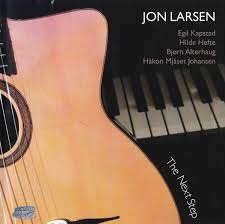
Jon Larsen was born on January 7, 1959 in Bærum, Norway and when he was in his early teens he learned rock and soul songs on an acoustic steel-string guitar. Through friends, he learned about blues, jazz, flamenco, and classical guitar. After he heard Tears by Django Reinhardt on the radio, he decided that this is how he wanted his guitar to sound. At seventeen he formed a string trio and had his first professional job.
The 1970s Jon worked mainly as a painter until 1980 when he started the Hot Club de Norvege with guitarists Per Frydenlund and bassist Svein Aarbostad. They had a hit record when they performed with pop singer Lillebjørn Nilsen. He has worked with Chet Baker, Philip Catherine, Stéphane Grappelli, Warne Marsh, Biréli Lagrène, Babik Reinhardt and Jimmy Rosenberg. He has produced more than 450 jazz records for the label he founded, Hot Club Records.
He has led a group of musicians who played with Zappa and started the label Zonic Entertainment to record musicians who played with him .including Arthur Barrow, Jimmy Carl Black, Bruce Fowler, Bunk Gardner, Tommy Mars, and Don Preston.
A documentary Symphonic Django was released in 2008 about Larsen and guitar virtuoso Jimmy Rosenberg titled Jon & Jimmy, and appeared in the documentary film Fireball: Visitors from Darker Worlds In 2012.
Gypsy jazz guitarist, record producer, painter, and amateur scientific researcher Jon Larsen, who founded the group Hot Club de Norvège and received the Buddy Award for his lifelong contribution to jazz, continues to perform, record and produce.
More Posts: bandleader,guitar,history,instrumental,jazz,music
Daily Dose Of Jazz…
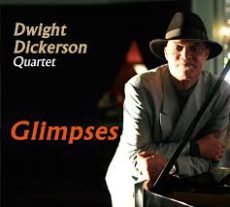
Lowell Dwight Dickerson was born in Los Angeles, California on December 26, 1944 and grew up in the city where his influences were Horace Silver, McCoy Tyner, Kenny Barron, and Bud Powell, among others. He became active on the local jazz scene in the 1960s.
In the early Sevenites he appeared on the Chicago, Illinois tenor titan Gene Ammons’ Free Again album on Prestige, and the latter part of the decade found him being featured on a few LPs by baritone saxophonist Nick Brignola. In the 1980s Dickerson started recording as a leader when he provided his debut album, Sooner or Later, for Discovery. In 1992,
Dickerson recorded Dwight’s Rights which features Red Holloway on tenor sax for the small Night Life label. He has played as a sideman in the 1990s with saxman Rickey Woodard, singer Michael Martin and Albert “Tootie” Heath. The early 2000s saw him featured on singer David Coss’ Simple Life album.
Pianist Dwight Dickerson, who occasionally sings and plays a variety of genres ranging from hard bop, funk and soul jazz, to modal post-bop, continues to perform and record at 80.

More Posts: bandleader,history,instrumental,jazz,keyboard,music,piano