

Daily Dose Of Jazz…
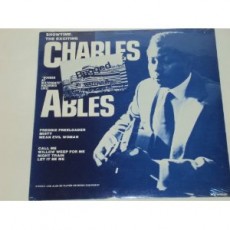
Charles Ables was born on July 23, 1943 in Mississippi and started out on his musical career playing the guitar. He worked with Ray Charles prior to switching to bass to become a member of the Shirley Horn Trio in the early Eighties. He would tour the world and record with her on Steeplechase and then Verve record labels over the next three decades
Ables is heard on guitar as well as bass on several of these, including You Won’t Forget Me, which featured guest contributions from both Miles Davis and Wynton Marsalis, Light Out of Darkness, Horn’s tribute to Ray Charles, I Thought About You, Close Enough For Love, Here’s To Life and the Grammy-winning I Remember Miles.
As well as accompanying Shirley Horn, Charles is heard with the trio on Carmen McRae’s last album in 1990, Sarah – Dedicated to You, in which Horn is featured in her often forgotten role as a pianist. He recorded in similar circumstances with Toot Thielemans on his album For My Lady, with Joe Williams and as a leader.
Bassist and guitarist Charles Ables passed away on October 8, 2001 in Washington, D. C.
Daily Dose Of Jazz…
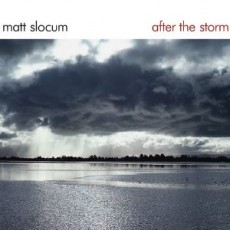
Matt Slocum was born on July 18, 1981 in New Richmond, Wisconsin. From his sophomore year in high school on he studied drums with Phil Hey, while playing in a Ska band. At the University of Southern California Thornton School of Music, Matt studied with Peter Erskine, Alan Pasqua, John Clayton and Joe LaBarbera. After graduating USC, Slocum spent three years in Pasadena but in 2007 he moved near New York City.
Since his move Slocum has toured with vocalist Sarah Gazarek for three years and has played with Shelly Berg, Seamus Blake, Alan Broadbent, Bill Cunliffe, Danny Grissett, Larry Koonse, Lage Lund, Wynton Marsalis, Linda Oh, Dayna Stephens, Gerald Wiggins, Anthony Wilson and the Dallas Symphony Orchestra, among numerous others.
Slocum’s list of influences on composing is impressive citing Billy Strayhorn, Duke Ellington, Wayne Shorter, Tom Harrell, Dave Holland, Debussy and Ravel; and drummers Roy Haynes, Elvin Jones, Max Roach, Kendrick Scott and Marcus Gilmore.
Drummer Matt Slocum is the recipient of a Meet the Composers Foundation grant, and has lead recording sessions for his debut album, Portraits and After The Rain. He continues to perform, record and tour.
More Posts: drums
Daily Dose Of Jazz…
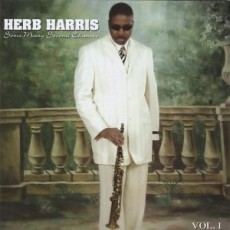
Herb Harris was born in Washington D.C. on July 8, 1968. He began his musical journey on clarinet at age 12. Upon entering high school, he switched to alto saxophone, playing the instrument in the marching band, and then switched to tenor saxophone at age 17.
His interest in jazz peaked when he heard a recording of John Coltrane’s Giant Steps. Early on, he admired the sound and style of Dexter Gordon, followed by Sonny Rollins, Sonny Stitt and Charlie Parker.
Upon graduating high school, Harris spent several years of study at Florida A&M University. It was while attending the university that Harris met and jammed with Marcus Roberts, eventually playing with Roberts, touring the States and Europe and recording with him on Deep in The Shed.
Harris also spent a short period in the Nineties with the Wynton Marsalis Septet with whom he toured the States, Europe, and South America. He has appeared on the soundtrack “Tune In Tomorrow”, was featured in the group of saxophonists dubbed the “Tough Young Tenors” on the album “Alone Together”, was a member of the second edition of the Jazz Futures, and saxophonist Herb Harris embarked on his first tour as a leader in the spring of 2002. He continues to perform, tour, compose and record.
More Posts: saxophone

Daily Dose Of Jazz…
Eje Thelin was born Eilert Ove Thelin on June 9, 1938 in Jönköping, Sweden. He started his own quintet in 1961 and from 1969 to 1972 he was on the faculty of the Music Academy in Graz, Austria. For the rest of the 1970s, he led his own Eje Thelin Group in Sweden.
By the 1980s he expanded into composition, writing commissioned works for large European orchestras, sometimes featuring himself as soloist. In spite of the attention given to the obvious technical side of his playing, Thelin was also known for his warm approach to traditional ballads, a somewhat retro-romanticism that comes through in his later playing.
An innovator, Eje was widely admired among fellow trombonists for his facile technique, rhythmic intensity and was, perhaps, the first jazz trombonist to translate that technique into the so-called “Sheets of Sound” style that characterized much of the music of tenor saxophonist John Coltrane and, in general, free jazz of the late 1960s and 1970s. He would play with Joachim Kuhn and Don Cherry while leading his own groups.
Trombonist Eje Thelin, one of the strongest trombone voices of modal and free jazz to emerge in the European 60s, passed away on May 18, 1990.
More Posts: trombone
Daily Dose Of Jazz…
Bill Watrous was born William Russell Watrous III on June 8, 1939 in Middletown, Connecticut. Introduced to the jazz trombone at an early age by his trombonist father, it was while serving in the Navy that he studied with jazz pianist and composer Herbie Nichols. His first professional performances were in Billy Butterfield’s band.
Bill’s career blossomed in the 1960s, playing and recording with many Maynard Ferguson, Woody Herman, Quincy Jones, Johnny Richards and fellow trombonist Kai Winding. From 1965 – 68 he was a member of the house band on the Merv Griffin Show.
In the Seventies he played with the jazz-fusion group Ten Wheel Drive, formed his own band – The Manhattan Wildlife Refugee Big Band, recorded two albums for Columbia, and relocated to southern California.
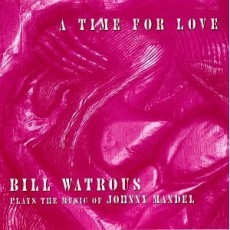
He worked actively since the 1980s as a bandleader, studio musician, and performing at various jazz clubs. He is most known for his rendition of Johnny Mandel’s “A Time For Love”. Bill Watrous continued to perform and record as a solo artist, bandleader and in various small ensembles for a number of different labels until his passing on July 2, 2018 at age 79. He published an instructional manual Trombonisms and was on the faculty of the University of Southern California Thornton School of Music.
More Posts: trombone