

Daily Dose Of Jazz…
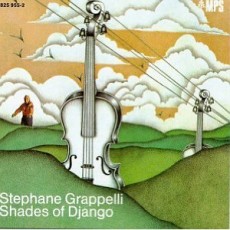
Stéphane Grappelli was born on January 26, 1908 in Paris, France. Losing both his parents he was accepted into Isadora Duncan’s dance school where he discovered his love for French impressionist music. His musical career began playing violin at age 12, attended the Conservatoire de Paris studying music theory and made his living busking on the streets of Paris and Montmartre.
While at the conservatory he worked as a silent film pianist and also playing the saxophone and accordion. Grappelli eventually gained fame in Paris as a violin virtuoso but piano was his other love. His early fame came playing with the Quintette du Hot Club de France with Django Reinhardt though the band disbanded in 1939 due to World War II. In 1940, a little known jazz pianist by the name of George Shearing made his debut as a sideman in Grappelli’s band.
After the war Stephane appeared on hundreds of recordings including sessions with Duke Ellington, Oscar Peterson, Michel Petrucciani, Claude Bolling, Jean-Luc Ponty, Stuff Smith, Toots Thielemans, Gary Burton, Joe Pass, Andre Previn and many, many others.
During the 1960s he played for cocktail hour at the Paris Hilton, recorded the title track of Pink Floyd’s “Wish You Were Here”, made a cameo appearance in “King of the Gypsies”, received the Grammy Lifetime Achievement Award in 1997 and was inducted into the Down Beat Jazz Hall of Fame.
Violinist Stephane Grappelli died in Paris after undergoing a hernia operation on December 1, 1997.
More Posts: violin
Daily Dose Of Jazz…
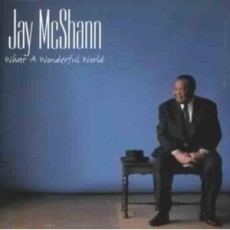
Jay McShann, born James Columbus McShann on January 12, 1916 in Muskogee, Oklahoma began played the piano from the age of 12. His primary education came from Earl “Fatha” Hines late-night radio broadcasts from the Grand Terrace Café. Leaving home he spent time at college and working with bands throughout Oklahoma, Arkansas, Arizona and New Mexico.
In the 1930 Jay moved to Kansas City working with both local groups and his own band with his 1938 band comprised of Charlie Parker, Bernard Anderson, Al Hibbler, Paul Quinichette, Earl Coleman, Ben Webster and Walker Brown, creating a music that would become known as the Kansas City sound.
Nicknamed Hootie, it was during the 1940s that he stood at the forefront of the blues and hard bop jazz musicians mainly from Kansas City. His first recordings were all with Charlie Parker, the first as “The Jay McShann Orchestra” on August 9, 1940. After World War II he began to lead small groups featuring blues shouter Jimmy Witherspoon. Witherspoon started recording with McShann in 1945, and fronting McShann’s band, and had a hit in 1949 with “Ain’t Nobody’s Business”.
Jay McShann was inducted into the Blues Hall of Fame, was nominated twice for a Grammy Award, performed regularly with violinist Claude Williams and continued to recording and touring into the nineties around Kansas City and Toronto, Ontario. The blues and jazz pianist Jay McShann, whose career spanned more than sixty years, passed on December 7, 2006, at St. Luke’s Hospital in Kansas City.
Daily Dose Of Jazz…
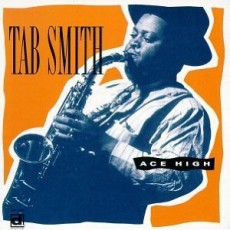
Talmadge (Tab) Smith was born in Kinston, North Carolina on January 11, 1909. He joined his first professional band, the Carolina Stompers, in 1929 and in the 1930s and 1940s he spent several years in the bands of Lucky Millinder and Count Basie as well as spending long periods freelancing both as a player and as an arranger. After WWII he led his own groups, which concentrated on rhythm and blues as jazz turned from swing to bop.
His biggest R & B hit was “Because of You”, recorded for United Records reached #1 on the R & B charts and number 20 on the pop charts, in 1951. His association with United lasted until 1957, put ting out 24 singles and a 10-inch LP for the company sometimes alternating on tenor saxophone.
During the 1950s, Smith was a significant rival to alto saxophone-playing bandleader Earl Bostic, and was also in competition with his own formative influence Johnny Hodges, until Hodges returned to Duke Ellington’s band.
His career never recovered from the closure of United Records. After brief stays at Checker and King Labels, Tab retired from the music business in the early 1960s. He sold real estate, and played piano part-time in a steakhouse.
Alto saxophonist Tab Smith, who concentrated on swing and R&B genres, passed away in St. Louis, Missouri on August 17, 1971.
More Posts: saxophone
Daily Dose Of Jazz…
Bobby Tucker was born Robert Nathaniel Tucker on January 8, 1923 in Morristown, New Jersey. His rise to recognition came On November 12, 1946 when during Billie Holiday’s stay at the Down Beat Club he was drafted to accompany Holiday because Eddie Heywood refused his opportunity. Billie’s stay at the Down Beat was so successful due to Tucker’s playing that she decided to keep him as her accompanist. The partnership lasted until 1949, where Tucker quit due to Holiday’s abusive lover, John Levy (not the bassist) threatening him.
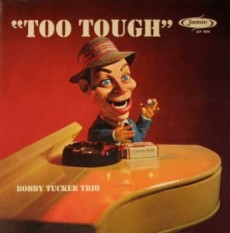
After leaving Holiday, Tucker began playing with Billy Eckstine, a partnership and friendship that last more than forty years. He recorded on multiple sessions with Billy but was featured on the 1960 album “No Cover, No Minimum”, in which he arranged and conducted the orchestra behind Eckstine. That same year Tucker also released his only known album under his own name “Too Tough”.
Bobby was especially sought out as an accompanist for singers among them Johnny Hartman, Lena Horne and Antonio Carlos Jobim. He was a musician’s musician whose quiet yet prolific career renders little biographical information, yet spanned the jazz age from the 40s to the 60s and beyond with his friend Billy Eckstine.
Pianist, arranger and conductor Bobby Tucker passed away of a heart attack on April 12, 2007 in his hometown of Morristown, New Jersey at the age of 85.
Daily Dose Of Jazz…
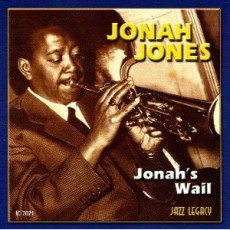
Jonah Jones was born Robert Elliott Jones in Louisville, Kentucky on December 31, 1909. He started playing alto sax at the age of 12 in the Booker T. Washington Community Center band in Louisville before quickly transitioning to trumpet where he excelled immediately. Jones began his career in the 1920s playing on a riverboat named “Island Queen” which plied between Kentucky and Ohio.
By 1928 he joined with Horace Henderson, later worked with Jimmie Lunceford, had an early and successful collaboration with Stuff Smith from 1932-1936, and by the Forties he was working in big bands like Benny Carter’s and Fletcher Henderson. He would spend most of the decade with Cab Calloway’s band that later became a combo.
Starting in the 1950s he had his own quartet and began concentrating on a formula that gained him wider appeal for a decade. The quartet consisted of George “River Rider” Rhodes on piano, John “Broken Down” Browne on bass and “Hard Nuts “Harold Austin on drums. The most mentioned accomplishment of this style is perhaps their version of “On The Street Where You Live”. This effort succeeded and he began to be known to a wider audience. This led to his quartet performing on “An Evening With Fred Astaire” in 1958 and winning a Grammy Award for Best Jazz Performance by a group in 1960.
Jonah went on to become a sensation in France, returned to more “core” jazz work with Earl Hines, played in the pit orchestra for the stage play Porgy and Bess starring Cab Calloway, was inducted into the Big Band and Jazz Hall of Fame in 1999. Trumpeter Jonah Jones passed away on April 29, 2000.