

Daily Dose Of Jazz…
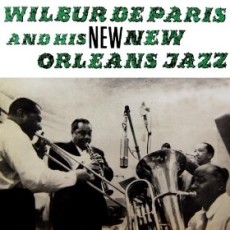
Hayes Alvis was born on May 1, 1907 in Chicago, Illinois. He started his career playing drums but switched to tuba and bass after playing with Jelly Roll Morton in 1927-28. He played tuba and arranged for Earl Hines from 1928 to 1930.
Moving to New York City in 1931 Hayes played with Jimmie Noone in the Mills Blue Rhythm Band from 1931-34 and 1936. A very early double-bass solo can be heard on his 1932 recording “Rhythm Spasm”. He also occasionally played baritone saxophone in this ensemble as well, and was the group’s tour manager. From 1935 to 1938 Alvis played with Duke Ellington, working with fellow bassist/tubist Billy Taylor.
After his stint with Ellington, Alvis played with Benny Carter, Joe Sullivan and Louis Armstrong, replacing Pops Foster. From 1942 to 1945 he played in the Army band led by Sy Oliver. After the war, he played with Dave Martin until 1947, and then took a longstanding run as a house musician at the Cafe Society in New York City.
In the 1950s, he played in various swing and Dixieland revival groups, including Wilbur De Paris’s New Orleans Jazz. In the early seventies he played in a trio with Jay McShann and Tiny Grimes.
Never recording as a leader, bassist, tubist and sideman Alvis Hayes died in New York City on December 30, 1972 at the age of 65.

Daily Dose Of Jazz…
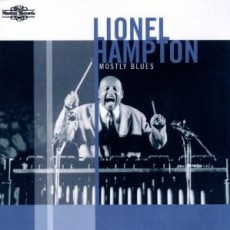
Lionel Leo Hampton was born on April 20, 1908 in Louisville, Kentucky and was raised by his grandmother. The multi-instrumentalist spent his early childhood first in Birmingham, Alabama and then in Kenosha, Wisconsin before his family settled in Chicago by the time he was ten. During his teen years he took up the xylophone, fife and drums. It was drums that kicked started his career in music playing with the Chicago Defender Newsboy’s Band.
Towards the end of the Roaring Twenties Hampton moved to California playing with the Dixieland Blues-Blowers, the Les Hite band and recording with The Quality Serenaders. But it was in 1930 when Louis Armstrong invited Hampton to play vibes during one of his California dates that his career as a vibraphonist and the popularity of the instrument began. But it was later that his star would shine when Johnny Hammond brought Benny Goodman to see Hampton play and invited him to join his group.
Over the course of his lifetime Lionel Hampton led his own orchestras, played with Bing Crosby, Billie Holiday, Teddy Wilson, Gene Krupa, Wes Montgomery, Illinois Jacquet, Dinah Washington Arnett Cobb, Charlie Parker, Quincy Jones, Buddy Rich, Slam Stewart and the list of jazz luminaries is to numerous.
Hampton, a vibraphonist, pianist, percussionist, bandleader and actor was inducted into the Alabama Jazz Hall of Fame in 1992, received the Papal Medal from Pope Paul VI, has toured and performed around the world, had his vibraphone of 15 years placed in the National Museum of American History and the University of Idaho renamed their music school for Hampton, becoming the first university to do so for a jazz musician.
One of the first jazz pioneers of the vibes and a giant whose career spanned over six decades, Lionel Hampton passed away of heart failure at the age of 94 on August 31, 2002.
More Posts: vibraphone
Daily Dose Of Jazz…
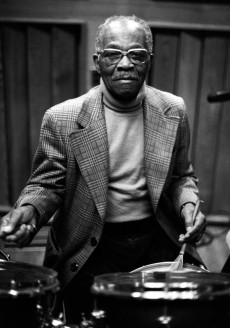
Thomas “Tommy” Benford was born in Charleston, West Virginia on April 19, 1905 the younger brother of tuba player Bill Benford. He studied drums and music at the Jenkins Orphanage in Charleston, South Carolina and went on tour with the school band traveling to Europe in 1914. By 1920 he was working with the Green River Minstrel Show. He returned to Europe in 1932 becoming part of the expatriate community, for the next nine years toured and played with all the great jazz musicians who came to the continent.
He returned to the United States in 1941 and throughout his long career Benford played and recorded with Jelly Roll Morton, Duke Ellington, Fats Waller, Eddie South, Coleman Hawkins Bill Coleman, Joe Turner, Django Reinhardt, Sidney Bechet, Noble Sissle and Willie “The Lion” Smith. He is credited with helping Chick Webb to play drums and shaped early jazz drumming alongside Sid Catlett.
For the last several decades of his life he was a member of the Harlem Blues and Jazz Band and with Bob Greene’s World of Jelly Roll Morton. Jazz drummer Tommy Benford passed away at the age of 88 on March 24, 1994 in Mount Vernon, New York.

More Posts: drums
Daily Dose Of Jazz…
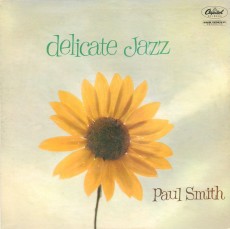
Paul Smith also known as Paul T. Smith was born on April 17, 1922 in San Diego, California. After playing early on with Johnny Richards in 1941 and spending a couple of years in the military, the pianist played with Les Paul from 1946–1947 and Tommy Dorsey from 1947–1949, them moved to L.A. and became a studio musician.
Smith has recorded frequently as a leader both with his trios and as a soloist. As a sideman he worked with Dizzy Gillespie, Anita O’Day, Buddy DeFranco, Louis Bellson, Steve Allen, Sammy Davis Jr., Rosemary Clooney, Stan Kenton Mel Torme and Ella Fitzgerald, the later with whom he was her conductor and pianist from 1956 to 1978.
Throughout his career Smith has worked in television with Bing Crosby, Red Skelton, Dinah Shore, Nat King Cole, Carol Burnett and many more, has toured around the world and has authored a number of educational books and CDs, most of which focus on explaining his particular approach to jazz piano.
Often praised for his brilliant technique and lyrical playing, he has performed in various genres of jazz, most typically bebop but has delved into cool jazz, swing, and traditional pop. Pianist Paul Smith passed away of heart failure at the age 91 in Torrance, California on June 29, 2013.
More Posts: piano
Daily Dose Of Jazz…
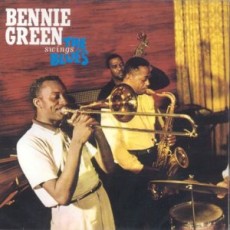
Bennie Green was born on April 16, 1923 in Chicago, Illinois. After playing locally around Chicago, at nineteen he teamed up with the Earl Hines Orchestra alongside Dizzy Gillespie and Charlie Parker from 1942-1948, gained some fame for his work with Charlie Ventura, played with Gene Ammons-Sonny Stitt, Charlie Ventura then joined Earl Hines’ small group in the early Fifties.
Following this last tenure with Hines, Bennie led his own groups for the rest of the decade. In the Sixties he played with sidemen Charlie Rouse, Paul Chambers, Louis Hayes, Sonny Clark, Jimmy Forrest and many others. He recorded as a leader for Decca, Blue Note, Bethlehem, Jazzland, Vee-Jay and Prestige during this same period.
By the end of the 60s, Green worked with Duke Ellington but then moved to Las Vegas where he spent his final years playing in hotel bands emerging only to play the Newport Jazz Festival and New York jam sessions. He was one of the few trombonists of the 1950s who played in a style not influenced by J.J. Johnson. He possessed a witty sound and full tone that was reminiscent of the swing era phrasing with an influence of R&B.
It has been speculated that Green was the first trombonist to consort with beboppers and whose ear enabled him to adopt aspects of their harmonic approach. On March 23, 1977 swing and bop trombonist Bennie Green passed away in San Diego, California at age 53.

More Posts: trombone