

Daily Dose Of Jazz…
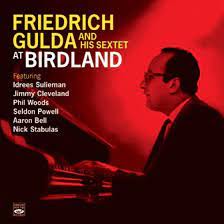
Friedrich Gulda was born on May 16, 1930 in Vienna, Austria and as the son of a teacher began learning to play the piano at age 7 with Felix Pazofsky at the Wiener Volkskonservatorium. In 1942, he entered the Vienna Music Academy, where he studied piano and musical theory under Bruno Seidlhofer and Joseph Marx.
During World War II as teenagers, Gulda and his friend Joe Zawinul were rebellious and would perform forbidden music, including jazz, in violation of the government’s prohibition of playing such music. Winning first prize at the Geneva International Music Competition in 1946, he began to play concerts worldwide, making his Carnegie Hall debut in 1950, and with Jörg Demus and Paul Badura-Skoda, formed what became known as the “Viennese troika”. Friedrich enjoyed a renowned classical career for years before his 1956 engagement at Birdland in New York City and at the Newport Jazz Festival.
In 1966 he organized the International Competition for Modern Jazz in 1966, and established the International Musikforum, a school in Ossiach, Austria two years later, for students who wanted to learn improvisation. From the 1950s on Gulda cultivated a professional interest in jazz, writing songs and free improvisation or open music improvisations. He also recorded as a vocalist under the pseudonym “Albert Golowin”, fooling music critics for years until it was realized that Gulda and Golowin were the same person.
In jazz, he found “the rhythmic drive, the risk, the absolute contrast to the pale, academic approach I had been taught. He also took up playing the baritone saxophone. His 1970 album, As You Like It, includes the standards Round Midnight and What Is This Thing Called Love?, as well as his own classic Blues For H.G. that is dedicated to Hans Georg Brunner-Schwer.
From the late 1960s through the 1980s he continued his straight-ahead swing and bop-based jazz often in European Jazz big bands, which he often organized yearly performances and recordings. He performed and recorded playing clavichord, percussion instruments, and a bass recorder wooden flute with musicians involved in free improvisation, including Cecil Taylor, Barre Phillips, Ursula Anders, John Surman, Albert Mangelsdorff, Stu Martin, and Fritz Pauer. He would go on to collaborate in the coming decades with Herbie Hancock, Joe Zawinul, and Chick Corea.
When the Vienna Music Academy awarded him its Beethoven Ring in recognition of his performances, he accepted it but then later reconsidered and returned it. To promote a concert in 1999, he announced his own death in a press release so that the concert at the Vienna Konzerthaus could serve as a resurrection party.
Pianist and composer Friedrich Gulda, who worked in both the classical and jazz fields, transitioned from heart failure at the age of 69 on January 27, 2000 at his home in Weissenbach, Austria.

More Posts: bandleader,composer,history,instrumental,jazz,music,piano,saxophone
Daily Dose Of Jazz…
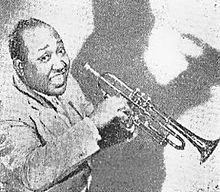
Bobby Martin was born on May 15, 1903. He played trumpet as a child with June Clark and Sonny Greer. By 1925 at the age of 22 he was in New York City playing and recording with Sam Wooding, as well as touring Europe through 1931.
From 1932 to 1936 he played abroad with Willie Lewis, and formed his own band after returning home in 1937. His quartet held an extended gig at the Palace in Greenwich VillageYork with pianist Richard Edwards, drummer Ural Dean, and guitarist Samuel Steede. This era of Martin’s life, as is much of his life, is poorly documented, however, because during a tour of The Netherlands at the Mephisto Club in Rotterdam, his entire book of arrangements was burned in a club fire.
Bobby continued to tour Europe into the early Forties, then held residencies in New York City and New Jersey. He opened his own club briefly in the decade as well.
He married vocalist Thelma Minor, but then left the music industry in 1944. Not much is known of him after this time, however, he never recorded as a leader and transitioned in March 1983.
More Posts: bandleader,history,instrumental,jazz,music,trumpet
Daily Dose Of Jazz…
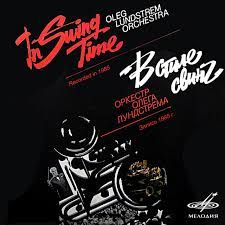
Oleg Leonidovich Lundstrem was born April 2, 1916 into a family of musicians in Chita, Transbaikal Oblast. His family moved to Harbin, China when he was five. By 1935, inspired by Duke Ellington’s Dear Old Southland record which he purchased, he joined forces with eight other young Russian amateur musicians and formed the Oleg Lundstrem Orchestra. The following year the band moved to Shanghai, China where they immediately became popular among the public. The band was an important part of Shanghai’s jazz scene until 1947, along with Buck Clayton Orchestra.
After World War II, in 1947 Oleg returned to the Soviet Union and settled in Kazan, where he worked as a violinist in the opera and ballet theatre, while keeping his jazz orchestra as a side act. 1956 saw the Oleg Lundstrem Orchestra moving to Moscow where he was appointed by the Soviet cultural authorities as the orchestra’s art director and conductor.
His orchestra was recognized by the Guinness Book of Records as the oldest continuously existing jazz band in the world, the official name being The State Oleg Lundstrem Chamber Orchestra of Jazz Music.
Composer and conductor Oleg Lundstrem, also spelled Lundstroem or Lundström, transitioned from natural causes at his home on October 14, 2005 in Korolyov, Moscow Oblast at the age of 89.
More Posts: bandleader,composer,conductor,history,instrumental,jazz,music,violin
Daily Dose Of Jazz…
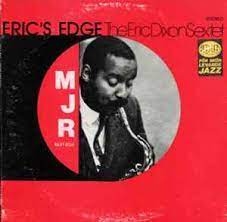
Eric “Big Daddy” Dixon was born on March 28, 1930 in New York City, New York. Although he played bugle as a child,he switched to the tenor saxophone at the age of 12. Following a stint as a musician in the US Army from 1951 to 1953 he played in groups that sometimes included Mal Waldron, with whom he would later record.
In 1954, he played with Cootie Williams and the following year with Johnny Hodges. In 1956, he performed and recorded with Bennie Green and also took up the flute.
The late Fifties had him spending four years in the house band led by Reuben Phillips at the Apollo Theatre in New York. At the end of the decade he toured Europe and recorded with the Cooper Brothers.
He also worked with Paul Gonsalves, Ahmed Abdul-Malik, Oliver Nelson, Quincy Jones, Jack McDuff, Joe Williams, Frank Foster, and Eddie “Lockjaw” Davis, but is probably best known for his tenure in Count Basie’s band, which lasted almost two decades. Dixon continued to play in the ghost band after Basie’s death.
Tenor saxophonist, flautist, composer, and arranger Eric Dixon, who has been credited on as many as 200 recordings, transitioned on October 19, 1989 in New York City.
More Posts: arranger,composer,flute,history,instrumental,jazz,music,saxophone
Daily Dose Of Jazz…
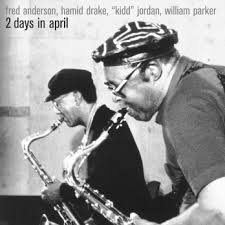
Fred Anderson was born in Monroe, Louisiana on March 22, 1929. When he was ten, his parents separated, and he moved to Evanston, Illinois, where he initially lived with his mother and aunt in a one-room apartment. When Anderson was a teenager, a friend introduced him to the music of Charlie Parker, and he soon decided he wanted to play saxophone, purchasing his first instrument for $45. He listened to Lester Young, Johnny Hodges, Dexter Gordon, Gene Ammons, and Illinois Jacquet, all of whom would influence his playing. He also heard Young and Parker in concert on multiple occasions.
Unlike many musicians at the time, Anderson did not play with dance bands or school ensembles, and instead focused on practicing, taking private lessons, and studying music theory at the Roy Knapp Conservatory in Chicago, Illinois all the while supporting his family by working as a waiter. He also began making an effort to develop a personal sound on his instrument, with the goal of combining Ammons’ big sound with Parker’s speed.
At around this time, he began to develop a series of exercises which he incorporated into his daily practice routine, and which eventually became a book titled Exercises for the Creative Musician.
In the early 1960s, Anderson began listening to and studying the music of Ornette Coleman, and immediately related Coleman’s playing to that of Charlie Parker. Influenced by Coleman, he formed a piano-less band with trumpeter Bill Brimfield, bassist Bill Fletcher, and drummer Vernon Thomas, playing a mixture of bebop standards and Anderson originals. During the decade he would go on to play weekly jam sessions, joined the AACM (Association for the Advancement of Creative Musicians) and remained in the States when many of his AACM colleagues left for Europe seeking better opportuities.
In the Seventies he formed the Fred Anderson Sextet, with trombonist George E. Lewis, reedist Douglas Ewart, bassist Felix Blackmon, drummer Hamid Drake, and vocalist Iqua Colson. By 1977 he and Brimfield visited Europe, where they recorded Accents with the Austrian trio Neighbours, then returned and opened a venue in Chicago that he named the Birdhouse, after Charlie Parker. Unfortunately, Anderson encountered resistance and harassment from officials and people in the neighborhood, who were suspicious of his motives, and he ended up closing the club a year later.
The following decade saw Fred taking over ownership of a bar in Chicago called the Velvet Lounge, and transformed it into a center for the city’s jazz and experimental music scenes, hosting Sunday jam sessions and numerous concerts. The club expanded and relocated in the summer of 2006.
Though he remained an active performer, Anderson rarely recorded for about a decade beginning in the early Eighties. In 1990, however, he received the first Jazz Masters Fellowship from Arts Midwest, and by the mid-1990s, he resumed a more active recording schedule, both as a solo artist, and in collaboration with younger performers. He would go on to perform as a soloist with 30 piece orchestras, mentor young musicians, and his Velvet Lounge has international fame.
Tenor saxophonist Fred Anderson, rooted in the swing, hard bop and free jazz idioms, who continued to record and tour throughout the 2000s and was scheduled to perform the day he died, transitioned on June 24, 2010.
More Posts: bandleader,history,instrumental,jazz,music,saxophone