

Daily Dose Of Jazz…
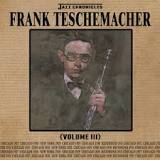
Frank Teschemacher was born on March 13, 1906 in Kansas City, Missouri. A was a member of the Austin High School Gang, a group of young, white musicians from the Chicago, Illinois West Side, they all attended Austin High School during the early 1920s. They rose to prominence as pioneers of the Chicago Style in the 1920s, which was modeled on a faster version of New Orleans jazz.
Strongly influenced by cornetist Bix Beiderbecke, he was mainly self-taught on his instruments, clarinet and saxophone. Early on he also doubled on violin and banjo. He started playing the clarinet professionally in 1925. He began recording under his own name in 1928 and made what are believed to be his final recordings two years later, although there is now reason to believe (via sine wave recording research, aka Smith/Westbrook Method) that he appeared on unidentified recordings as late as 1932.
He first recorded with Red McKenzie and Eddie Condon’s Chicagoans in 1927 for Okeh Records. Two sessions produced Sugar, China Boy, Nobody’s Sweetheart and Liza. The players included Jimmy McPartland, Bud Freeman, and Jim Lanigan, as well as Chicagoans Eddie Condon, Gene Krupa and Joe Sullivan, led by Red McKenzie.
1928 saw him recording with two other Red McKenzie and Eddie Condon groups, the Chicago Rhythm Kings and the Jungle Kings. The same year he made his debut as a leader recording for Brunswick Records. The group recorded under the name Frank Teschmacher’s Chicagoans. Frank’s solo work laid the groundwork for a rich sound and creative approach that is credited with influencing a young Benny Goodman and a style of which Pee Wee Russell. He also made recordings on the saxophone and would later return to the violin during the Great Depression. Although well known in the world of jazz, he did not live to enjoy popular success in the swing era.
Clarinet and alto saxophonist Frank Teschemacher, who was killed in an automobile accident while being driven by Wild Bill Davison, transitioned on March 1, 1932 at the age of 25.

More Posts: clarinet,history,instrumental,jazz,music,saxophone,violin
Daily Dose Of Jazz…
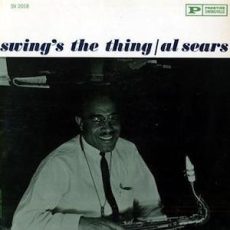
Albert Omega Sears was born February 21, 1910 in Macomb, Illinois. His first major gig came in 1928 when he replaced Johnny Hodges in Chick Webb’s ensemble. The Thirties had him first playing with Elmer Snowden, then led his own groups between 1933 and 1941.
In the early 1940s he joined Andy Kirk and Lionel Hampton before he became a member of Duke Ellington’s Orchestra in 1944, replacing Ben Webster. He remained with Ellington until 1949, when first Jimmy Forrest and then Paul Gonsalves took over his chair. He played with Johnny Hodges in 1951–52 and recorded the tune Castle Rock with him. The tune became a hit but unfortunately was released under Hodges’s name.
Sears was in Alan Freed’s band when Freed did live shows, being introduced as “Big Al Sears”. He played as a studio musician on R&B albums in the 1950s and recorded two albums for Swingville in 1960. He also owned several record labels, including Arock, Serock, and Gator.
Tenor saxophonist and bandleader Al Sears, who recorded four albums as a leader, transitioned on March 23, 1990 in St. Albans, New York at the age of 80.

More Posts: bandleader,history,instrumental,jazz,music,saxophone
Daily Dose Of Jazz…
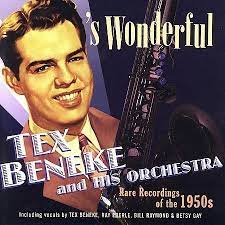
Tex Beneke was born Gordon Lee Beneke on February 12, 1914 in Fort Worth, Texas. He started playing saxophone when he was nine, going from soprano to alto and settling on the tenor saxophone. His first professional work was with bandleader Ben Young in 1935, but it was after a Gene Krupa recommendation when he joined the Glenn Miller Orchestra three years later that his career hit its stride.
Miller immediately made Beneke his primary tenor saxophone soloist and he played all but a few of the tenor solos on all of the records and personal appearances made by the Miller band until it disbanded in 1942. He appeared with Miller and his band in the films Sun Valley Serenade in 1941 and Orchestra Wives in 1942, and both film solos helped propel the singer/saxophonist to the top of the Metronome polls. He went on to perform with the 1941 Metronome All-Star Band led by Benny Goodman. In 1942, Glenn Miller’s orchestra won the first Gold Record ever awarded for Chattanooga Choo Choo.
With the orchestra disbanded due to Miller’s enlistment, Tex briefly joined Horace Heidt before joining the Navy himself, leading a Navy band in Oklahoma. He led two bands in the navy and kept in touch with Miller while they were both serving in the military. By 1945, he felt ready to lead his own orchestra. When Glenn went missing in 1944 he took over the band, shaping it as a ghost band per the desires of the Miller estate, however by 1950, he and the estate parted ways.
Post Miller, Beneke led his own groups but as swing faded from the mainstream so did opportunities. There was a small revival in the late Seventies but he was limited to small labels and competition from Miller alumni and other imitators. He would make the television circuit making appearances on The Tonight Show and Merv Griffin. 1990 saw him have a stroke which sidelined his saxophone playing but he continued to conduct and sing.
On May 30, 2000 saxophonist, vocalist and bandleader Tex Beneke, who received a star on the Hollywood Walk of Fame, transitioned from respiratory failure at a nursing home in Costa Mesa, California, aged 86. His saxophone is currently used by the Arizona Opry.
More Posts: bandleader,history,instrumental,jazz,music,saxophone,vocal
Daily Dose Of Jazz…
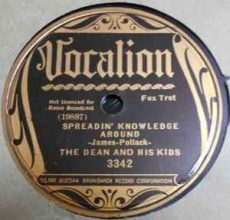
Bruce Willmarth Squires was born on January 21, 1910 in Berkeley, California. From 1935 to 1937 he was a member of the Ben Pollack band. As The Dean and His Kids, they recorded Spreadin’ Knowledge Around/Zoom Zoom Zoom on the Vocalion label in 1936.
Following this Bruce worked with Jimmy Dorsey for a year in 1937, Gene Krupa the following year, Benny Goodman in 1939, and Harry James from 1939 to 1940. From 1940 for the next two years he worked with Freddie Slack and Bob Crosby.
After World War II he was a studio musician and worked in music for the next three decades. Trombonist Bruce Squires, who primarily performed in the swing genre, transitioned on May 8, 1981 in North Hollywood, Los Angeles, California.

More Posts: history,instrumental,jazz,music,trombone
Daily Dose Of Jazz…
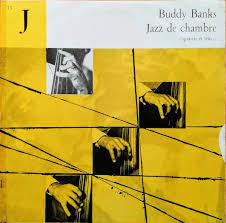
Alvin “Buddy” Banks was born on January 15, 1927 in St. Thomas, Ontario, Canada and grew up in the United States. He became interested in music during high school, starting out on piano before switching to saxophone. During World War II he joined the United States Army Band as a bass player.
Making his first appearance on record was in Vienna, Austria with Thurmond Young, this group also played live at the Colored Club. He played in Paris, France with Gerry Wiggins in 1950, and then with Bill Coleman in Bern, Switzerland, Le Havre, France and Belgium. After problems with his passport in Switzerland, he left for Paris in 1953, where he recorded often with expatriate American jazz musicians as well as local performers.
These include Hazel Scott, Buck Clayton, Lionel Hampton, Mezz Mezzrow, Don Byas, Albert Nicholas, and André Persiany. He toured with Michel Attenoux and with Sidney Bechet through Western and Central Europe in 1954.
Double bassist Buddy Banks transitioned on August 7, 2005 in Las Vegas, Nevada.
More Posts: bass,history,instrumental,jazz,music