


Daily Dose Of Jazz…
Panama Francis was born David Albert Francis on December 21, 1918 in Miami, Florida to a Haitian father and an English property-owning mother in the Bahamas. He began playing the drums even before attending school and initially played in marching bands and local drum and bugle corps.
His first professional playing was in the 1930s as part of George Kelly’s band from 1934 to 1938. He then became a member of the Florida Collegians in 1938. After his move to New York City that year, he worked with Tab Smith, Billy Hicks, and Roy Eldridge before the 1940s. Francis acquired his nickname from Eldridge at a moment when he was wearing a panama hat and Eldridge could not remember his new drummer’s name.
Joining Lucky Millinder’s big band in 1940, he often played at the Savoy Ballroom. After leaving Millinder he was with Willie Bryant’s band in 1946 and then Cab Calloway from 1947 to 1952. He performed in three short films alongside the latter. For much of the 1950s, Panama was a studio musician in New York, accompanying the likes of Bobby Darin, the Four Seasons, the Platters, Dion DiMucci, Neil Sedaka, and Jackie Wilson.
He went on to tour with Dinah Shore, then moved to California where he struggled to find work. The early Seventies saw him touring Japan with Sam “The Man” Taylor, then appeared on film in 1972, in Lady Sings the Blues. Back in New York in 1973, Francis was part of Sy Oliver’s nonet for two years and during this period he played jazz festivals and toured internationally with other bands.
He revived the Savoy Sultans jazz and dance band in 1979, and he appeared regularly at the Rainbow Room in New York City for eight years from 1980. Panama became drummer in the Benny Goodman Quartet for concerts in 1982. He appeared in the 1994 film The Statesmen of Jazz as a member of the Statesmen of Jazz.
Over his career he recorded with Ray Bryant, Eddie Barefield, Arnett Cobb, Earl Hines, Ray Conniff, Eubie Blake, Oscar Brown Jr., Dorothy Donegan, Roy Eldridge, Dizzy Gillespie and numerous others.Drummer Panama Francis, who mainly played swing jazz, transitioned in Orlando, Florida on November 13, 2001 following a stroke at age 82.

More Posts: bandleader,drums,history,instrumental,jazz,music

Daily Dose Of Jazz…
Julian Fuhs was born on November 20, 1891 in Berlin, Germany. After attending the Stern Conservatory he emigrated to the United States in 1910 and got his American citizenship in 1916. Returning to Berlin in 1924 he put together his Follies Band, whose American-influenced jazz and light music was extremely successful.
He made a significant contribution to the establishment of jazz in Germany in the 1920s. Fuhs was the first to use a three-part saxophone section and was considered the German counterpart to Paul Whiteman after his recording of George Gershwin ‘s Rhapsody in Blue. Fuhs was the first to record it in Europe.
In 1931, as a result of the global economic crisis, he was forced to disband his orchestra and earn his living as the owner of a bar. In 1933 he was repeatedly the victim of violent attacks because of his Jewish origins. He emigrated first to Austria, then to Czechoslovakia and France. In 1937 he returned to America, where he worked as a salesman.
Pianist and bandleader Julian Fuhs transitioned in poverty on February 4, 1975 in Miami, Florida.

More Posts: bandleader,history,instrumental,jazz,music,piano
Daily Dose Of Jazz…
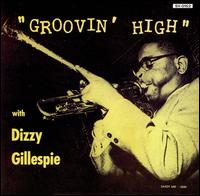
Alton “Slim” Moore was born October 7, 1908 in Selma, Alabama and began on baritone horn before settling on trombone by age 17. He played with local bandleaders and territory bands in his youth, such as Georgia Barlowe, Eddie Lemon, Gonzelle White, and Gene Coy.
Moving to New York City early in the Thirties he played with Jack Butler, Charlie Skeete, and Bobby Neal. Frequently switching ensembles in New York, in 1938 he did a short tour of Cuba with the Leon Gross Orchestra. Toward the end of the decade Moore moved up to play in more high-profile bands such as those of Fats Waller, Coleman Hawkins, Hot Lips Page, and Charlie Johnson. In the 1940s he played with Ella Fitzgerald, Benny Carter, Dizzy Gillespie and Louis Armstrong.
By the 1950s Slim had reduced his outings to part-time playing, after an extended stay in the band of Stafford “Pazuza” Simon. He would go on to play with Fletcher Henderson in 1957, and in the 1960s played in the Prince Hall Symphonic Band in New York as well as other big band revival outfits.
Trombonist Slim Moore, who also played and recorded on euphonium and did some scat singing, transitioned in 1978 in New York City.

More Posts: euphonium,history,instrumental,jazz,music,trombone

Daily Dose Of Jazz…
Jesse Alexandria Stacy was born on August 11, 1904 in Bird’s Point, Missouri, a small town across the Mississippi River from Cairo, Illinois. His first piano teacher was Mabel Irene Bailey, who played piano for silent movies. In 1918 Stacy moved to Cape Girardeau, Missouri. He received his only formal music training with Clyde Brandt, a professor of piano and violin at Southeast Missouri State Teachers College, now Southeast Missouri State University while holding down a job sweeping Clark’s Music Store.
By 1920, Stacy was playing piano in Peg Meyer’s jazz ensemble at Cape Girardeau High School, the Bluebird Confectionery, and the Sweet Shop. Schoolmates called them the Agony Four. By 1921, the band was known as Peg Meyer’s Melody Kings and started touring the Mississippi River on the Majestic and other riverboats.[6]
The early 1920s saw Jess moving to Chicago, Illinois where he performed with Paul Mares, leader of the New Orleans Rhythm Kings, playing Chicago-style jazz. In 1935, Benny Goodman asked him to join his band, then moved to New York City, and spent 1935–39 with the Benny Goodman Orchestra, including a Carnegie Hall concert in 1938, where he played an unplanned piano solo during Sing, Sing, Sing (With a Swing). After leaving the Goodman Orchestra, he joined the Bob Crosby Orchestra and the Bob Crosby Bob-Cats.
Moving to Los Angeles, California in 1950 his career declined to club work and after a drunken woman spilled beer in his lap he announced he was quitting the music business and retired from public performances. He worked as a salesman, warehouseman, postman, and for Max Factor cosmetics before being rediscovered. He played for Nelson Riddle on the soundtrack of The Great Gatsby in 1974, was invited to play at the Newport Jazz Festival in New York and was asked to record twice for Chiaroscuro, in 1974 and 1977, Stacy Still Swings.
After his brief revival in the 1970s, he again retired from music and lived with his third wife, Patricia Peck Stacy, for forty-five years. Pianist Jess Stacy ,who won the DownBeat magazine piano poll in 1940 and was inducted posthumously into the Big Band and Jazz Hall of Fame in 1996, transitioned from congestive heart failure in Los Angeles on January 1, 1995.

More Posts: bandleader,history,instrumental,jazz,music,piano
Daily Dose Of Jazz…
Dan “Slamfoot” Minor was born August 10, 1909 in Dallas, Texas, and played trombone for a local church orchestra in his teens before joining local band the Blue Moon Chasers. In 1927, his first major professional engagement was as a member of Walter Page’s Blue Devils.
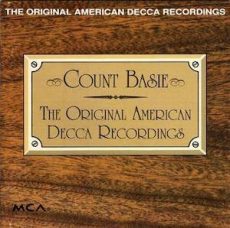
In 1929 Minor joined the Blues Syncopaters led by Ben Smith, and during this period he also worked in bands led by Earl Dykes, Gene Coy, Lloyd Hunter and Alphonse Trent. By 1931 he joined the Bennie Moten band, remaining after Moten’s death in 1935, when its leadership was taken over by Count Basie, and stayed with the Basie orchestra until 1941. During that period he performed at the From Spirituals to Swing concerts in New York City in 1938 and 1939.
However, Dan tended to be overshadowed by other trombonists such as Benny Morton and Vic Dickenson, and rarely took solos. He joined the Buddy Johnson band in 1942, and also played around that time with Cab Calloway. He worked with Mercer Ellington in 1945, and also recorded and played with Lucky Millinder and Willie Bryant.
After the 1940s, through to the 1960s, he continued to perform occasionally on a freelance basis. Trombonist Dan Minor transitioned in New York City on April 11, 1982 at the age of 72.
More Posts: history,instrumental,jazz,music,trombone