

Daily Dose Of Jazz…
Bob Zurke came into the world as Boguslaw Albert Zukowski on January 7, 1912 in Hamtramck, Michigan. By the age of 16 he was already using the name Bob Zurke professionally when he first recorded with a group led by pioneering female jazz bassist Thelma Terry. At that time, Zurke also began to work as a copyist for the Detroit-based booking agency run by Jean Goldkette.
Through the end of 1936, he worked in various Detroit, Michigan clubs, mostly as a band pianist, but he occasionally went on tour with other groups. During this period he developed a long friendship with pianist Marvin Ash, who would later go on to record some of Zurke’s compositions.
1937 saw Bob was hired by bandleader Bob Crosby to fill in for Joe Sullivan, then ailing with tuberculosis and it was here that he gained notice, contributing arrangements to the band’s book and as a featured soloist.
As an arranger his arrangement of Meade Lux Lewis’ Honky Tonk Train Blues, became a hit. In 1938 he was named the winner in the piano category in the DownBeat Reader’s Poll. By 1939 Sullivan was back with the Bob Crosby Orchestra and Zurke subsequently worked with the William Morris Agency to form his own band. They debuted at an RCA Victor recording session that same year as Bob Zurke and his Delta Rhythm Orchestra. His alcohol dependency, alleged drug use and unreliability and volatility led to the group disbanding.
After a period of wandering from job to job Zurke settled in Los Angeles, California in mid-1942 and began an engagement at the Hangover Club in Los Angeles that he held until the end of his days. In 1943, he made one final recording, synchronizing an original piano part to the Walter Lantz cartoon Jungle Jive (in the Swing Symphony series), one of his most difficult and challenging solos.
He published two folios of jazz piano solos and several sheet music editions of single pieces; in addition to that, 14 original compositions from Zurke are known to exist.
Pianist, arranger, composer and bandleader Bob Zurke, who was considered one of the finest boogie~woogie pianists of the time, collapsed at the Hangover Club and was taken to the hospital where he transitioned on February 16, 1944 from complications of pneumonia, aggravated by acute alcohol poisoning. He was 32.

More Posts: arranger,bandleader,composer,history,instrumental,jazz,music,piano
Daily Dose Of Jazz…
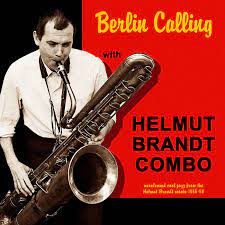
Helmut Brandt was born in Berlin Germany on January 1, 1931 and began singing in a church choir as a boy. He played violin from age ten before learning saxophone and guitar at a conservatory.
He began playing professionally in 1950 initially as a tenor saxophonist and clarinetist. Brandt switched to baritone in 1954 and led his own group.Through the end of the 1950s he worked in a Berlin radio dance band, and played in the orchestras of Lubo D’Orio and Kurt Widmann.
Baritone saxophonist Helmut Brandt, whose Mainstream Orchestra was popular in Berlin in the 1970s, transitioned from a heart attack on July 26, 2001.
More Posts: saxophone
Daily Dose Of Jazz…
Cutty Cutshall was born Robert Dewees Cutshall on December 29, 1911 in Huntingdon County, Pennsylvania. Early in his career he played in Pittsburgh, Pennsylvania, making his first major tour in 1934 with Charley Dornberger. He joined Jan Savitt’s orchestra in 1938, then played with Benny Goodman in the early 1940s.
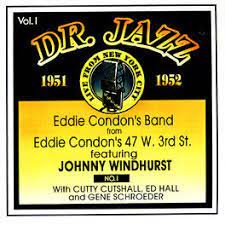
Later in the decade he worked frequently with Billy Butterfield and did some freelance work in New York City. He started working with Eddie Condon in 1949, an association which lasted over a decade. Cutshall’s credits include work with Peanuts Hucko, Bob Crosby, Ella Fitzgerald, and Louis Armstrong.
While touring with Condon in Toronto, trombonist Cutty Cutshall suffered a heart attack in his hotel room and transitioned on August 16, 1968.

More Posts: history,instrumental,jazz,music,trombone
Daily Dose Of Jazz…
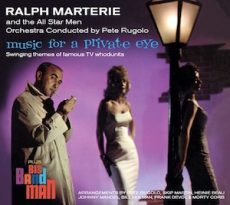
Ralph Marterie was born in Acerra near Naples, Italy on December 24 1914 and first played professionally at age 14 in Chicago, Illinois. In the 1940s, he played trumpet for various bands. During World War II he got his first job as a bandleader courtesy of the US Navy. He was then hired by the ABC Radio network and the reputation built from these broadcasts led to a recording contract in 1949 with Mercury Records.
In 1953 Ralph recorded a version of Bill Haley’s Crazy, Man, Crazy, which reached No. 13 on the Billboard jockey chart and No. 11 on Cashbox that year. His recordings of Pretend and Caravan made the Top 10 and the latter sold over one million copies and was awarded a gold disc. His highest success in the U.S. charts was a cover of Skokiaan in 1954. He had other hits with Tricky, Shish-Kebab, Dancing Trumpet, Dry Marterie, and Carla.
Trumpeter and big band leader Ralph Marterie transitioned on October 10, 1978 in Dayton, Ohio.
More Posts: bandleader,history,instrumental,jazz,music,trumpet
Daily Dose Of Jazz…
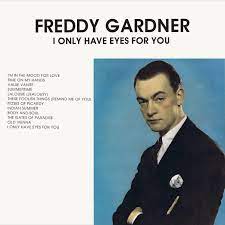
Frederick James Gardner was born on December 23, 1910 in London, England and took up the saxophone at 15 to help alleviate asthma. After minimal coaching he formed the semi-professional New Colorado Band in 1928, and a year later, while working as an office clerk, entered the band in a contest at Chelsea Town Hall and won. He was spotted by the founding editor of Melody Maker magazine who was distributing the prizes, and a year later secured his first professional position.
In 1933, Gardner was taken under the wing of Ray Noble and recorded with the New Mayfair Orchestra. He played in London clubs when working with Sidney Lipton’s Orchestra and at the Mayfair Hotel with Bert Firman’s band and with Billy Bissett. He became a prolific session musician, doubling on all the reeds, although his main instrument was alto saxophone.
He recorded with Benny Carter, Ray Noble, Valaida Snow, Jay Wilbur Buck Washington, and John W. Bubbles. From 1936 to 1937 Freddy arranged and performed on the radio, led small groups and his Swing Orchestra, which included Ted Heath.
During World War II, he was part of the official dance band for the RNPS called the Blue Mariners led by George Crow. He was regularly given special leave to continue his recording and broadcasting. Some recordings were made under the band name Freddie Gardner and his Mess Mates. Folowing the war he continued with extensive freelance work, including as a soloist with the Peter Yorke Concert Orchestra.
Saxophonist Freddy Gardner was taken ill while mending one of his son’s bicycles in the garden of his Brooke Street home in London. An hour later at St. Mary’s Hospital in London he transitioned from a stroke on July 26, 1950 at the age of 39.
More Posts: arranger,bandleader,history,instrumental,jazz,music,saxophone