

Daily Dose Of Jazz…
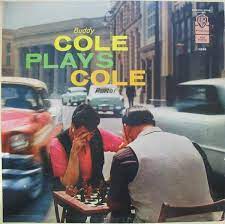
Buddy Cole was born Edwin LeMar Cole on December 15, 1916 in Irving, Illinois. He started his musical career in the theater, playing between movies and by age 19 he was recruited to be part of the Gil Evans band.
Moving to Hollywood, California in the second half of the 1930s, Buddy played in dance bands, including those led by Alvino Rey and Frankie Trumbauer. From the 1940s, his main work was as a studio musician, utilizing piano, electric organ, celeste, harpsichord and Novachord.
Cole worked with Henry Mancini, who used his Hammond organ for the soundtrack to the TV series Mr. Lucky. He also played most of the piano parts in the 1951 film Young Man with a Horn, subbing for Hoagy Carmichael, who appeared on screen. He also wrote the music for the television game show Truth or Consequences.
He performed on Bing Crosby’s hits In a Little Spanish Town and Ol’ Man River, and on the albums Some Fine Old Chestnuts and New Tricks. Buddy also played on Rosemary Clooney’s radio program and some recordings from the show were released on the album Swing Around Rosie.
Pianist, organist, orchestra leader, and composer Buddy Cole, who recorded several organ albums as a leader for Warner Brothers, Columbia, Alshi and Doric, passed away on November 5, 1964 in Hollywood, California.

More Posts: bandleader,composer,history,instrumental,jazz,music,organ,piano
Daily Dose Of Jazz…
Sonny Greer was born William Alexander Greer on December 13, c. 1895 in Long Branch, New Jersey. He played with Elmer Snowden’s band and the Howard Theatre Orchestra in Washington, D.C., before joining Duke Ellington. Meeting him in 1919, he was Ellington’s first drummer, playing with his quintet, the Washingtonians. He then moved with Ellington into the Cotton Club.
As a result of his job as a designer with the Leedy Drum Company of Indiana, Greer was able to build up a huge drum kit worth over a then-considerable $3,000, including chimes, a gong, timpani, and vibes.
A heavy drinker, as well as a pool-hall hustler when he needed to retrieve his drums from the pawnbroker, in 1950, Ellington responded to his drinking and occasional unreliability by taking a second drummer, Butch Ballard, with them on a tour of Scandinavia. This enraged Greer, and the consequent argument led to their permanent estrangement.
Sonny continued to play, mainly as a freelance drummer, working with musicians such as Johnny Hodges, Red Allen, J. C. Higginbotham, Tyree Glenn, and was there for the iconic 1958 Art Kane black-and-white photograph A Great Day In Harlem. He was part of a tribute to Ellington in 1974, which achieved great success throughout the United States.
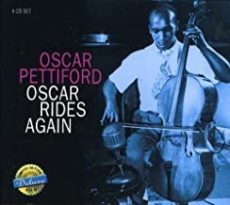
Never recording as a leader, he was quite active as a sideman recording with not only seven albums with Duke but another twelve albums with Johnny Hodges, Bernard Addison, Louis Armstrong, Earl Hines, Lionel Hampton, Lonnie Johnson, Brooks Kerr, Oscar Pettiford, Rex Stewart, Victoria Spivey, and Josh White.
Drummer Sonny Greer , best known for his work with Duke Ellington, passed away of a heart attack on March 23, 1982 in Lenox Hill, on the upper East side of Manhattan.
More Posts: bandleader,drums,history,instrumental,jazz,music
Daily Dose Of Jazz…
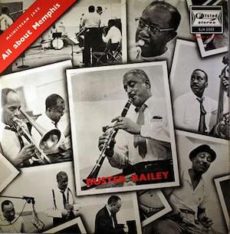
Herman Autrey was born into a musical family on December 4, 1904 in Evergreen, Alabama. He played alto horn before taking up trumpet as a teenager and performed locally in Pittsburgh, Pennsylvania and Florida. After Florida, he went on to work in Washington, DC, Philadelphia, Pennsylvania and New York City, where he played with Charlie Johnson in 1933.
He became well known through Fats Waller, who hired him in 1934 after signing a contract with Victor Records. He played with the drummer Harry Dial, guitarist Al Casey, and reedist Gene Sedric. Autrey went on to record extensively with Waller, Fletcher Henderson, and Claude Hopkins.
Into the 1940s Herman worked as a sideman with Stuff Smith, Sammy Price, and Una Mae Carlisle and his ensembles sometimes included pianist Herbie Nichols. By the early 1950s he was hurt in a car crash, sidelining his career for a year. He played with Saints & Sinners in the 1960s, including on their 1968/69 tours of Europe. In 1969, he played with Buzzy Drootin’s Jazz Family, which included Benny Morton, Herb Hall, pianist Sonny Drootin, and bassist Eddie Gibbs.
In the Seventies, he began to lose his playing capacity and spent more time as a vocalist. Trumpeter Herman Autrey passed away on June 14, 1980 in New York, at the age of 75.
More Posts: alto horn,history,instrumental,jazz,music,trumpet,vocal
Daily Dose Of Jazz…
Clifton “Skeeter” Best was born on November 20, 1914 in Kinston, North Carolina. Playing in Philadelphia, Pennsylvania from 1935 to 1940, he recorded with Slim Marshall and Erskine Hawkins. By 1940, he was a member of Earl Hines’s orchestra, playing with him until he joined the U.S. Navy in 1942.
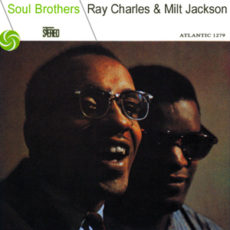
After the war, he played with Bill Johnson, toured East Asia with Oscar Pettiford, and formed his own trio in the 1950s. He did a critically acclaimed session with Ray Charles and Milt Jackson in 1957 called Soul Brothers.
In 1958, he recorded with Mercer Ellington and taught in New York City. He also recorded with Harry Belafonte, Etta Jones, Nellie Lutcher, Milt Hinton, Osie Johnson, Paul Quinichette, Jimmy Rushing, Sonny Stitt, Charles Thompson, and Lucky Thompson.
Guitarist Skeeter Best passed away on May 27, 1985 in New York City.
More Posts: bandleader,guitar,history,instrumental,jazz,music
Daily Dose Of Jazz…
John Henry Windhurst came into this world on November 5, 1926 in New York City, New York and was a self taught trumpeter. At the age of 15 he played his first public performance at Nick’s, and made his professional debut during the spring of 1944 at one of Eddie Condon’s concerts at the Town Hall, both venues in New York City. By eighteen he replaced Bunk Johnson in Sidney Bechet’s band for a Savoy Cafe gig in Boston, Massachusett, which launched his career as a trumpeter.
Going on to play with Art Hodes and James P. Johnson at the Jazz at Town Hall concert in 1946, Johnny then moved to the midwest and after a brief stint in the Chicago, Illinois jazz scene he returned to the Savoy Cafe as a member of Edmond Hall’s band. Eventually he moved west to experience the west coast jazz scene in California. However, his inability to read music forced him to decline gigs with Benny Goodman and Woody Herman, emphasizing his preference for informal jamming.
Over the years, he played with Louis Armstrong, Nappy Lamare, Eddie Condon. Ruby Braff,George Wettling, Jack Teagarden and Barbara Lea. He also led his own band, Riverboat Five, through Columbus, Ohio and Boston for several years, opting to play colleges and small venues instead of the most popular east coast venues and nightclubs.He also did some off-Broadway work with Conrad Janis in the musical Joy Ride.
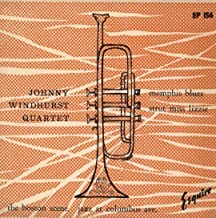
Windhurst only made one recording with his swing quartet called Jazz at Columbus Avenue, for the Transition label in 1956. On the record label Jazzology, George Buck released The Imaginative Johnny Windhurst which showcased his unique trumpet style. The LP was recorded at a showcase in Massachusetts, where the decision to record it was made on the spot just as the show began. The spontaneous set flaunts his innovative playing on timeless numbers such as Back In Your Own Backyard, Strut Miss Lizzie and Lover Come Back to Me.
He eventually moved upstate to Poughkeepsie, New York with his mother, where he finished his career in a dixieland band at Frivolous Sal’s Last Chance Saloon. Trumpeter Johnny Windhurst passed away from a heart attack at the age of 54 on October 2, 1981 in Dutchess County, New York.
More Posts: bandleader,history,instrumental,jazz,music,trumpet