

Daily Dose Of Jazz…
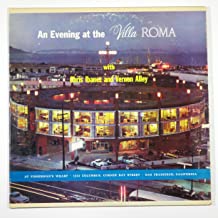
Vernon Alley was born on May 26, 1915 in Winnemucca, Nevada and played football in high school and college. His brother Eddie was a drummer and they played together often. He played with Wes People in 1937 and with the interracial Saunders King band until the end of the decade. He briefly led his own band in 1940.
Around 1940, while in Lionel Hampton’s band, Alley switched from double bass to electric upright bass, one of the first musicians to do so. In 1942 he moved to Count Basie’s ensemble, where he played only for a few months and appeared in the film Reveille with Beverly.
Enlisting in the Navy as a musician in 1942, after training at Camp Robert Smalls, he was assigned as part of a 45-piece regimental band to the Navy’s PreFlight School located at St. Mary’s College, in Moraga, California. Others who served in this band included Ernie and Marshal Royal, Jackie Kelso, Wilbert Baranco, Earl Watkins, and Buddy Collette.
After returning to civilian life, Alley put together an ensemble in San Francisco, California. He continued to play there and was an active member on local radio and in civic arts into the 1990s. Bassist Vernon Alley passed away on October 3, 2004 having become the most distinguished jazz musician in San Francisco history.

More Posts: bass,instrumental,jazz,music
Daily Dose Of Jazz…
Kitty Kallen, born Katie Kallen on May 25, 1921 in Philadelphia, Pennsylvania, was one of seven children. As a child, she won an amateur contest by imitating popular singers. Returning home with her prize camera, her father punished her for stealing it. Only when neighbors subsequently visited to congratulate her did her father realize she had actually won it.
As a young girl, she sang on The Children’s Hour, a radio program sponsored by Horn & Hardart, an automat chain. As a preteen, Kallen had a radio program on Philadelphia’s WCAU and sang with the big bands of Jan Savitt in 1936, Artie Shaw in 1938, and Jack Teagarden in 1939. At twenty she sang the vocals for Moonlight Becomes You with Bobby Sherwood and His Orchestra at the second ever session for what was then still called Liberty Records but would soon be renamed Capitol Records. It was her only session for the label.
She joined the Jimmy Dorsey band when she was twenty-one replacing Helen O’Connell. Her recording with Dorsey, They’re Either Too Young or Too Old, was a favorite of American servicemen. She followed this with Dorsey’s #1 hit Besame Mucho. Singing duets with Bob Eberly, when he left to go into the service in 1943, she joined Harry James’s band.
With James she went on to have many hits in the top twenty with two hitting #1. In 1954 she was voted the most popular female singer in Billboard and Variety polls. She followed up with the song, In the Chapel in the Moonlight, which was another million seller. Kittty performed live at numerous prominent venues, as well as popular television shows like the Tonight Show, American Banstand and The Big Beat.
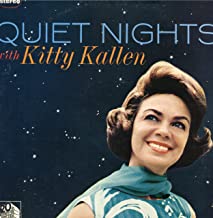
Her final album was Quiet Nights, a bossa nova–flavored release for 20th Century Fox Records. Subsequently, she retired owing to a lung ailment. On February 8, 1960, Kallen received a star on the Hollywood Walk of Fame A compilation of her hits on various labels remains available on the Sony CD set The Kitty Kallen Story. Vocalist Kitty Kallen passed away on January 7, 2016.
More Posts: history,instrumental,jazz,music,vocal
Daily Dose Of Jazz…
Herbert “Kat” Cowans, also spelled Cowens, was born May 24, 1904 in Texas. Working as a shoeshine boy as a child, his first professional engagement as a drummer was with the Satisfied Five, a local Texas ensemble. After moving to Wichita Falls, Texas he played in Frenchy’s New Orleans Jazz Band, then worked with Charlie Dixon. Quitting Dixon’s ensemble to finish high school while still in his teens, he went on to play in theater orchestras early in the 1920s.
Moving to New York City, Cowans played with Cleo Mitchell in the Shake Your Feet revue. Following this, he did work with the Kansas City Blackbirds, Jimmy Cooper’s Black and White Revue, and Eubie Blake in addition to leading his own band.
In the 1930s Herbert played with Fats Waller and Stuff Smith, before joining Eddie Heywood’s band for recordings behind Billie Holiday in 1941. He worked with Garvin Bushell in 1942, then played in the pit orchestra for the Broadway show The Pirate.
Cowans led a USO band in 1943, touring military bases worldwide, then led small ensembles for several decades thereafter. He also worked with Louis Metcalfe in 1963. He worked with USO again in East Asia in the 1970s, then retired to Dallas, Texas. Drummer Herbert Cowans passed away on January 23, 1993.
More Posts: bandleader,drums,history,instrumental,jazz,music
Daily Dose Of Jazz…
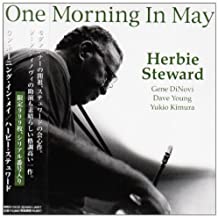
Herbert Bickford Steward was born May 7, 1926 in Los Angeles, California.
He recorded six albums as a leader and worked as a sideman with Serge Chaloff, Zoot SimsAl Cohn and Stan Kenton.
Saxophonist Herbie Steward, widely known for being one of the tenor saxophone players in Four Brothers, part of Woody Herman’s Second Herd, passed away on August 9, 2003 in Clearlake, California.
More Posts: bandleader,history,instrumental,jazz,music,saxophone
Daily Dose Of Jazz…
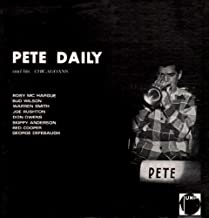
Pete Daily was born on May 5, 1911 in Portland, Indiana. He started his career in Chicago, Illinois in 1930 playing with various bands in and around the city. He was the leader of Pete Daily and his Chicagoans in the 1940s and 50s and recorded for Capitol Records as Dixie by Daily and Pete Daily’s Dixieland Band. They also recorded on the Jump and Decca labels in the 1950s.
In 1942, he moved to the West Coast and, after service in World War II, formed the Chicagoans. He played long engagements at several Hollywood night clubs in the 1950s such as Sardis, The Royal Room, and the Astors in Studio City. He continued to play during the 1970s until a stroke in 1979 forced him to retire.
During the filming of Pete Kelly’s Blues, actor Jack Webb, the cornet-playing star of the film, repeatedly went to the nightclub where Daily performed to study his mannerisms for his role in the film. The band which recorded the soundtrack appeared at Dixieland festivals supported by Pete Daily’s band.
His driving style on the cornet endeared him to generations of Dixieland Jazz enthusiasts. Cornetist and valve trombonist Pete Daily, who played swing and dixieland, passed away on August 23, 1981.
More Posts: bandleader,cornet,history,instrumental,jazz,music,valve trombone