

Daily Dose Of Jazz…
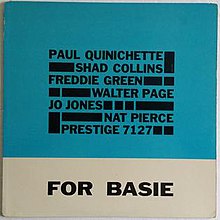
Walter Sylvester Page was born on February 9, 1900 in Gallatin, Missouri on to parents Edward and Blanche Page. Showing a love for music as a child, in 1910 with his mother moved to Kansas City, Missouri and exposed him to folksongs and spirituals, a critical foundation for developing his love of music. He gained his first musical experience as a bass drum and bass horn player in the brass bands of his neighborhood. Under the direction of Major N. Clark Smith, he took up the string bass in his time at Lincoln High School. During that time he also drew inspiration from bassist Wellman Braud, who he had the opportunity to see when he came to town with John Wycliffe.
After completing high school, he went on to study to become a music teacher at the University of Kansas at Lawrence. In college,Walter completed a three-year course in music in one year, in addition to taking a three-year course on gas engines. Between the years 1918 and 1923, he moonlighted as a tuba, bass saxophone, and string bass player with the Bennie Moten Orchestra. In 1923 he left Moten and began an engagement with Billy King’s Road Show, and with Jimmy Rushing and Count Basie, toured the Theater Owners’ Booking Association (TOBA) circuit across the United States.
Walter Page and the Blue Devils was a territory band founded in 1925, based out of the Oklahoma City~Wichita, Kansas area that included Basie, Rushing, Buster Smith, Lester Young, and Hot Lips Page. By 1929 the Blue Devils faced defections of key players, booking problems and musicians’ union conflict, he relinquished control to James Simpson and joined Moten’s band in 1931, staying until 1934. After his second stint with Moten, he moved to St. Louis, Missouri to play with the Jeter-Pillars band. Following the death of Moten in 1935, however, Basie took over the former Moten Band, which Page rejoined.
Staying with the Count Basie Orchestra from 1935 to 1942, Walter was an integral part of what came to be called the “All-American Rhythm Section. Together with drummer Jo Jones, guitarist Freddie Green, and pianist Basie, the rhythm section pioneered the “Basie Sound”, a style in which Page, as bass player, clearly established the beat, allowing his band mates to complement more freely. Until this point, the rhythm of a jazz band was traditionally felt in the pianist’s left hand and the kick of the bass drum on all four beats. In a sense, the classic Basie rhythm section were liberators.
After his first departure from the Count Basie Orchestra, Walter worked with various small groups around Kansas City. He returned to the Basie Band in 1946 for three more years. Bassist and multi-instrumentalist Walter Page, best known for his groundbreaking work with Walter Page’s Blue Devils and the Count Basie Orchestra, passed away of kidney ailment and pneumonia at Bellevue Hospital on December 20, 1957 in New York City.

More Posts: bandleader,bass,bass horn,bass saxophone,drums,history,instrumental,jazz,music,tuba
Daily Dose Of Jazz…
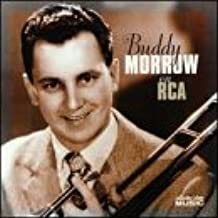
Buddy Morrow was born Muni Zudekoff on February 8, 1919 in New Haven, Connecticut. Receiving a scholarship at age 16, he studied trombone with Ernest Horatio Clarke at Juilliard from October to December 1936. During the next year he began playing trombone with Sharkey Bonano’s Sharks of Rhythm, an Eddie Condon group. He then worked with Eddy Duchin, Vincent Lopez, and Artie Shaw.
In 1938 Muni became known as Buddy Morrow when he joined the Tommy Dorsey band. The following year he performed with Paul Whiteman’s Concert Orchestra for their recording of Gershwin’s Concerto in F. In 1940, Morrow joined the Tony Pastor band, but this was only a short detour on his way to replacing Ray Conniff in the Bob Crosby band. Shortly after, he joined the U.S. Navy, during which he recorded with Billy Butterfield, leading a ten-piece band with three trombones, accompanying Red McKenzie singing four arrangements, including Sweet Lorraine and It’s the Talk of the Town.
After demobilization, Morrow joined Jimmy Dorsey’s band, then went into radio freelancing as a studio musician. He began conducting sessions, which introduced him to bandleading. RCA Victor sponsored him as director of his band in 1951. The band’s first hit, Night Train by Jimmy Forrest, was a hit in rhythm and blues.
Morrow was a member of The Tonight Show Band. His early 1950s records such as Rose, Rose, I Love You and Night Train appeared on the Billboard magazine charts. Night Train reached No. 12 in the U.K. Singles Chart in 1953. In 1959 and 1960 Morrow’s Orchestra released two albums of American television theme songs: Impact and Double Impact respectively.
In 2009 he received a Lifetime Achievement Award from the International Trombone Association. He led the Tommy Dorsey Orchestra from 1977 through 2010, when he appeared with the band for the final time. Over the course of his career he recorded 18 albums as a leader and 30 as a sideman. Trombonist, arranger, composer and bandleader Buddy Moorow, who was also known as Moe Zudekoff, passed away on September 27, 2010 in Maitland, Florida.
More Posts: arranger,bandleader,composer,history,instrumental,jazz,music,trombone
Daily Dose Of Jazz…
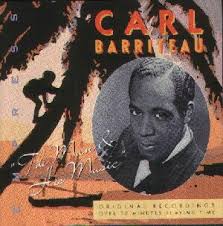
Carl Alrich Stanley Barriteau was born on February 7, 1914 in Trinidad, but was raised in Maracaibo, Venezuela. He played tenor horn in Trinidad from 1926 to 1932, before playing the clarinet in a local police band from 1933 to 1936. At the same time, he also played in Port of Spain with the Jazz Hounds and the Williams Brothers Blue Rhythm Orchestra.
Moving to London, England where he played in Ken Johnson’s West Indian Swing Band. Melody Maker named him “best clarinetist” for seven consecutive years. In the 1940s Carl led his own group on recordings for Decca Records.
He did several USO tours for American troops from 1958 to 1966. He emigrated to Australia in 1970. Clarinetist Carl Barriteau passed away on August 24, 1998, in Sydney, Australia.
More Posts: clarinet,history,instrumental,jazz,music
Daily Dose Of Jazz…
Charlie Holmes was born on January 27, 1910 near Boston, Massachusetts and began playing alto saxophone at age 16 and emulated the style of his childhood friend, Johnny Hodges.
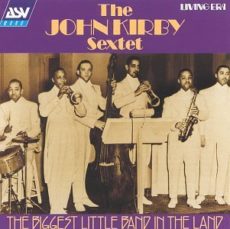
Beginning his professional career a week later, after moving to New York City Charlie worked for a variety of groups, including Luis Russell in 1928. Between 1929 and 1930 he recorded with Red Allen. He would work with Russell again a few times and in 1932 joined the Mills Blue Rhythm Band. He was in John Kirby’s Sextet, Cootie Williams’ Orchestra, and Louis Armstrong’s band for much of the next two decades.
Leaving music in 1951, Holmes did not return for twenty years then worked in Clyde Bernhardt’s Harlem Blues & Jazz Band. He later played for the Swedish band Kustbandet. He never acted as a leader in any recording or group.
Alto saxophonist Charlie Holmes, best known for composing Sugar Hill Function, not only performed during the swing era but also played clarinet and oboe for the Boston Civic Symphony Orchestra, passed away on September 19, 1985 in Stoughton, Massachusetts.
More Posts: composer,history,instrumental,jazz,music,saxophone

Daily Dose Of Jazz…
James Otis Wyble was born on January 25, 1922 in Port Arthur, Texas and in his early years worked for a radio station in Houston. He and guitarist Cameron Hill played Western swing, an outgrowth of jazz, in a band led by Burt “Foreman” Phillips. The sound of two guitars attracted Bob Wills, another fan of Western swing, and he hired both men for his band, the Texas Playboys.
His career interrupted by World War II, he served in the Army from 1942 to 1946, but returned to music after he came home. Jimmy continued to play in Western swing bands, but his interest in jazz surfaced on his 1953 debut album, The Jimmy Wyble Quintet. He would soon work with Barney Kessel and Benny Goodman, and then played with Red Norvo for eight years, including on a tour of Australia accompanying Frank Sinatra.
During the 1960s Wyble took a job as a studio musician in Los Angeles, California working as a guitarist for movies and television, playing on movie soundtracks, including The Wild Bunch, Ocean’s Eleven, Everything You Always Wanted to Know About Sex and Kings Go Forth, and played on TV shows such as The Flip Wilson Show and Kraft Music Hall.
He became an educator after taking classical guitar lessons from Laurindo Almeida, teaching guitar to Larry Koonse, Howard Roberts, Howard Alden and Steve Lukather among others. The 1970s saw Jimmy developing a two-line contrapuntal approach to guitar and composed numerous etudes in this style, publishing Classical/Country, The Art of Two-Line Improvisation, and Concepts for the Classical and Jazz Guitar.
During the 1980s, he left the music business, returning to performance in 2005. Larry Koonse, his former student, issued the album What’s in the Box with compositions by Wyble based on his book of etudes.
Guitarist, composer, and educator Jimmy Wyble continued to perform, record and teach until his death on January 16, 2010.
More Posts: composer,educator,guitar,history,instrumental,jazz,music