

Daily Dose Of Jazz…
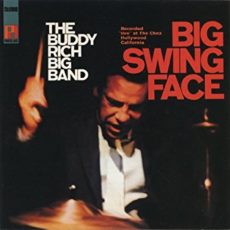
Born Martin Flachsenhaar, Jr. in New York City on October 7, 1924, Marty Flax played flute, clarinet and trombone in addition to baritone saxophone. He was a mainstay in the bands of Louis Jordan, Dizzy Gillespie, Perez Prado, and Tito Puente. He was also a member of the bands that performed on the soundtracks composed by Raymond Scott.
Marty worked with Les Elgart and Claude Thornhill in the late 1950s, then with Quincy Jones, Melba Liston and Gillespie, including on the State Department tours of the Middle East and South America.
Early in the 1960s he again toured South America with the Woody Herman Orchestra. When not on tour he led a house band at the Cafe Society and worked with Sammy Davis, Jr. and Buddy Rich recording on the Reprise, Norgran and Verve labels.
Baritone saxophonist Marty Flax, a consummate sideman and bandleader who never recorded under his own name, passed away on July 3, 1972.

Dose A Day-Blues Away

More Posts: saxophone
Daily Dose Of Jazz…
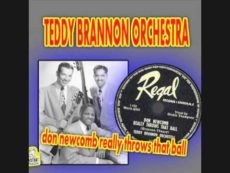
Teddy Brannon was born Humphrey Brannon on September 27, 1916 in Moultrie, Georgia. He began learning piano at age nine and played in dance bands in high school while working locally in Newark, New Jersey nightclubs from 1937 – 1942.
Between 1942 to 1945 he was a member of Benny Carter’s ensemble, after which he freelanced on 52nd Street in New York City. The 1950s and 1960s saw Brannon working in the studios with doo wop groups and though he never recorded as a leader, he recorded as a leader with his orchestra in the late Forties and played extensively in the jazz idiom with but not limited to Don Byas, Roy Eldridge, Buddy Rich, Bennie Green, Johnny Hodges, Jonah Jones, Don Newcomb and Illinois Jacquet.
An accomplished accompanied he performed and recorded with such singers as Dinah Washington, Ruth Brown, Billie Holiday, and Babs Gonzales, who was Brannon’s cousin. Pianist Teddy Brannon passed away on February 24, 1989 in Newark, New Jersey.
Give A Gift Of Jazz – Share
More Posts: piano
Daily Dose Of Jazz…
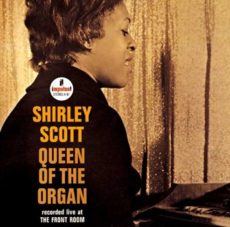
Otis “Candy” Finch Jr. was born on September 5, 1933 in Detroit, Michigan. He is presumed to be the son of saxophonist Otis Finch Sr. , who performed with John Lee Hooker and the Boogie Ramblers. Learning to play drums as a child he went on to perform and record in the 1960s in trio and quartet settings with among others Shirley Scott, Stanley Turrentine during the Blue Note years, and with John Patton, Grant Green, Bobby Hutcherson, Billy Mitchell and Dave Burns.
With Turrentine he recorded from 1962 and 1964 at Blue Note with Bob Cranshaw, Blue Mitchell, Curtis Fuller, Herbie Hancock, Herbie Lewis and Les McCann. In 1967 he accompanied Dizzy Gillespie on the Impulse! album Swing Low, Sweet Cadillac. The following year he joined Dizzy’s Reunion Big Band and performed with them at the Berlin Jazz Festival. He is a modern style swing drummer and was active in the 1960s and 1970s.
Bebop and swing drummer Candy Finch passed away on July 13, 1982 in Seattle, Washington. He was never recorded as a leader.
Jazz Is Global – Share
More Posts: drums
Daily Dose Of Jazz…
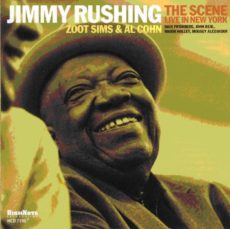
James Andrew Rushing was born on August 26, 1901 in Oklahoma City, Oklahoma into a family with musical talent and accomplishments. His father, Andrew, was a trumpeter and his mother, Cora and her brother were singers. He studied music theory with Zelia N. Breaux at Douglass High School, and was unusual among his musical contemporaries, having attended college at Wilberforce University.
Rushing was inspired to pursue music and eventually sing blues by his uncle Wesley Manning and George “Fathead” Thomas of McKinney’s Cotton Pickers. Touring the midWest and California as an itinerant blues singer in 1923 and 1924, he eventually moved to Los Angeles, California, where he played piano and sang with Jelly Roll Morton. He also sang with Billy King before moving on to Page’s Blue Devils in 1927. He, along with other members of the Blue Devils, defected to the Bennie Moten band in 1929.
When Moten died in 1935 Jimmy joined Count Basie for what would be a 13-year tenure. Due to his tutelage under his mentor Moten, he was a proponent of the Kansas City jump blues tradition as heard in his versions of Sent For You Yesterday and Boogie Woogie for the Count Basie Orchestra. After leaving Basie,, as a solo artist and a singing with other bands.
When the Basie band broke up in 1950 he briefly retired, then formed his own group and his recording career soared. He also made a guest appearance with Duke Ellington for the 1959 album Jazz Party. In 1960, he recorded an album with the Dave Brubeck Quartet, known for their cerebral cool jazz sound. Rushing appeared in the 1957 television special Sound of Jazz, singing one of his signature songs I Left My Baby backed by many of his former Basie band compatriots. In 1958 he was among the musicians included in an Esquire magazine photo by Art Kane, later memorialized in the documentary film A Great Day in Harlem.
In 1958 Jimmy toured the UK with Humphrey Lyttelton and his band, appeared in the 1969 Gordon Parks film The Learning Tree, and by 1971 was diagnosed with leukemia, that sidelined his performing career. On June 8, 1972 vocalist Jimmy Rushing, who was known as a blues shouter, balladeer and swing jazz singer, passed away in New York City. He was one of eight jazz and blues legends honored in a set of United States Postal Service stamps issued in 1994. Among his best known recordings are “Going to Chicago” with Basie, and “Harvard Blues”, with a famous saxophone solo by Don Byas.

Miami
Daily Dose Of Jazz…
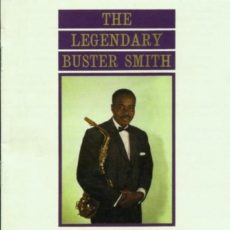
Buster Smith was born Henry Smith on August 24, 1904 Alsdorf, Texas, the third boy of five and earned the name “Buster” from his parents as he was an overweight baby when his mother gave birth. His early musical influences were his mother, and his father, who played guitar. At the age of four years, Buster and his brother Boston, a pianist, were playing organ, he played the keys and his brother stepped on the pedals. Soon thereafter, believing it would lead to a life of sin, his grandfather gave away the organ.
In 1919, Smith picked cotton for a week to earn himself the money to buy a $3.50 clarinet. He went on to learn to play several instruments by the time he was eighteen years old. Moving to Dallas in 1922, he joined the Voodie White Trio, playing alto saxophone and clarinet. The following year he began his professional career as an alto saxophonist with the medicine shows, though he had to play very loudly to draw in more customers. This experience defined his musical style, becoming known for being loud.
This period led to Oran “Hot Lips” Page inviting Smith to join his group, the Oklahoma City Blue Devils, in 1925. Over the next few years Buster wrote much of the group’s music, learning from banjo player Johnny Clark, writing lyrics with co-workers from the bank that he worked in.
As a Blue Devils he worked alongside Walter Page, Oran Page, Lester Young, Count Basie, Jimmy Rushing, and Emir “Bucket” Coleman. They toured the Kansas City area and the Midwest, playing jazz for a year, bringing all of its members into prominence. Basie and Page both left the group; and shortly afterwards so did Smith. He and Basie formed the Buster Smith-Count Basie Band of Rhythm, where the two innovated a louder style of jazz. Buster’s contribution to the unique sound was by using a tenor saxophone reed in his alto saxophone to achieve a louder, “fatter” sound. Young opted for a heavier reed, using a baritone saxophone reed on his tenor saxophone. This sound was later labelled the Texas Sax Sound.
Smith gained influence in the Texan music community and industry. He mentored saxophonist Charlie Parker during the 1930s, developing a father-son relationship. He played with a host of musicians including Duke Ellington, Ella Fitzgerald and Earl Hines but in 1941 he returned to Dallas and ceased touring but remained active in the local music scene. In the years that followed he wrote for jazz and blues bands, played often, and known as Professor Smith, taught many young Texan musicians, including Aaron “T-Bone” Walker and Red Garland among others. He also performed session work with Pete Johnson’s Boogie-Woogie Boys, Eddie Durham, Leo “Snub” Mosley, Bon and His Buddies, and the Don Redman Orchestra.
In the 1960s, Smith was involved in auto accident, his injuries causing him to give up the saxophone. Not to be dissuaded from performing he took up the bass guitar, led a dance band and played into the mid-Eighties with the Legendary Revelations. Alto saxophonist Buster Smith, who recorded only one album as a leader in 1959, passed away on August 10, 1991 of a heart attack in Dallas, Texas.
Jazz Is Global – Share
More Posts: saxophone