Daily Dose Of Jazz…
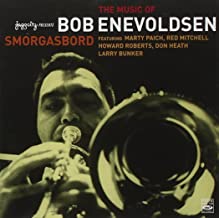
Robert Martin Enevoldsen was born on September 11, 1920 in Billings, Montana. He recorded sessions with Art Pepper and Shorty Rogers, and later extensively played with Shelly Manne.
Enevoldsen did most of the arranging for Steve Allen’s Westinghouse show in the early-1960s. During the 1970s, he performed with Gerry Mulligan. In the mid-1970s Bob taught arranging and directed the jazz band at Los Angeles Pierce College in Woodland Hills.
Tenor saxophonist and valve trombonist Bob Enevoldsen, who mainly played in the West Coast genre and was known for his work with Marty Paich, passed away on November 19, 2005 in Woodland Hills, Los Angeles, California.

More Posts: instrumental,jazz,music,saxophone,trombone
Daily Dose Of Jazz…
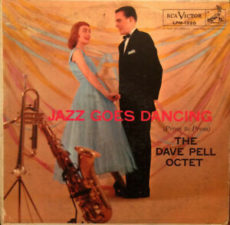
Bob Bates was born on September 1, 1923 in Pocatello, Idaho. His mother was an organist and his brothers Norman and Jim were also bassists. As a youth he played tuba, trumpet, and trombone. From 1944 to 1948 he studied classical bass and played with Sonny Dunham around 1946–47 and with Jack Fina in the late Forties.
The 1950s saw Bob playing in the Two Beaux & a Peep Trio before becoming the bassist in the Dave Brubeck Quartet between 1953 and 1955. In addition, he recorded with Paul Desmond in 1954, and Dave Pell in 1956. It was during this time that he stopped playing and performing. Bassist Bob Bates passed away on September 13, 1981 in San Francisco, California at the age of 58.
More Posts: bass,history,instrumental,jazz,music
Daily Dose Of Jazz…
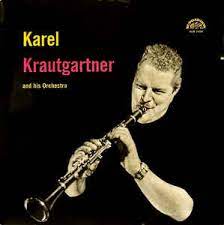
Karel Krautgartner was born on July 20, 1922 in Mikulov, Moravia into the family of a postmaster. He began studying clarinet on a private basis with Stanislav Krtička, and performed a demanding part of the Concertino by Leoš Janáček at the composer’s request at the festival of contemporary music in Frankfurt am Main, Germany in 1926. Acquiring the necessary skills of clarinet playing, and a fanatic passion for clarinet construction and components – reeds, mouthpieces, and barrels, which he later used his knowledge of wind instruments as a lecturer at German universities in Cologne and Düsseldorf.
In 1930 he began playing piano and by 1935 after moving to Brno, Czech Republic he became interested mainly in jazz radio broadcasts. 1936 saw Karel founding the student orchestra Quick band. In 1942, he signed his first professional contract as a saxophonist in the Gustav Brom orchestra in the hotel Passage in Brno. A year later he created Dixie Club and started to arrange in the Benny Goodman and Glenn Miller styles. From 1945 – 1955, the core of the Dixie Club moved to Prague and became a part of the Karel Vlach Orchestra.
He achieved a privileged position as the leader of the saxophone section and started to contribute with his own compositions. In 1956,along with Karel Velebný he put together the Karel Krautgartner Quintet, performed with the All Star Band, and with Studio 5. During the Sixties he became the head of the Dance Orchestra of Czechoslovakia Radio, renamed the Karel Krautgartner Orchestra. In 1968 he emigrated to Vienna, Austria and became the chief conductor of the 0RF Bigband. He eventually moved to Cologne, Germany. Clarinetist, saxophonist, arranger, composer, conductor and educator Karel Krautgartner passed away on September 20, 1982.

More Posts: arranger,clarinet,composer,conductor,educator,history,instrumental,jazz,music,saxophone
Daily Dose Of Jazz…
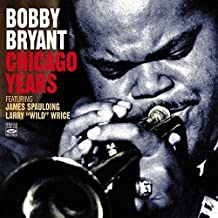
Bobby Bryant was born on May 19, 1934 in Hattiesburg, Mississippi, and played saxophone in his youth before moving on to the trumpet and then the flugelhorn. A move to Chicago, Illinois in 1952, where he studied at the Cosmopolitan School of Music until 1957. Remaining until 1960, he played with Red Saunders, Billy Williams, and other ensembles.
He relocated to New York City in 1960 and then Los Angeles, California in 1961, and became a fixture on the West Coast jazz scene. Leading his own groups, in addition, Bobby played with Vic Damone, Charles Mingus, Oliver Nelson, Gerald Wilson, Frank Capp/Nat Pierce, and the Clayton-Hamilton Jazz Orchestra. He also worked as a studio musician and a music educator.
His most famous solo was in the song “L.O.V.E” recorded with Nat King Cole in 1964. He recorded five albums as a leader, arranged two albums for Peggy Lee in 1969 and Gene Ammons in 1971, and more than two-dozen with Brass Fever, Earth, Wind & Fire, Clare Fischer, Benny Golson, Eddie Harris Richard “Groove” Holmes, Quincy Jones, Stan Kenton, B. B. King, Blue Mitchell, Oliver Nelson, Lalo Schifrin, Horace Silver, The Three Sounds, Gerald Wilson, and Jimmy Witherspoon.
Having sustained health problems which reduced his activity to part-time, trumpeter and flugelhornist Bobby Bryant passed away in Los Angeles of a heart attack at the age of 64 on June 10, 1998.

More Posts: bandleader,flugelhorn,history,instrumental,jazz,music,trumpet
Daily Dose Of Jazz…
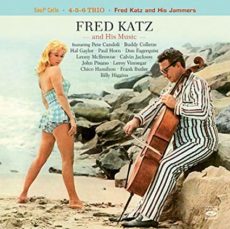
Frederick Katz was born on February 25, 1919 in the Williamsburg section of Brooklyn, New York City and was classically trained. He studied under Pablo Casals and performed with several symphony orchestras. He was a child prodigy on both the cello and piano and performed in public as a teenager and was drawn to the music of Manhattan nightclubs and to folk music. During World War II he conducted concerts and wrote musical revues for the U.S. Seventh Army. He was a member of the National Symphony Orchestra.
Katz was a member of drummer Chico Hamilton’s quintet, one of the most important West Coast jazz groups of the 1950s. His arco cello defined the chamber jazz focus of Chico Hamilton’s Quintet and the group quickly gained popularity. The Chico Hamilton Quintet, including Katz, appeared in the film noir The Sweet Smell of Success in 1957, starring Burt Lancaster and Tony Curtis, where Katz was described in passing as the Quintet’s primary composer. Katz and Hamilton wrote a score for the film which was ultimately rejected in favor of one by Elmer Bernstein.
As a leader Fred recorded several albums, wrote and conducted the arrangements for singer Carmen McRae’s 1958 album Carmen For Cool Ones, and recorded with Dorothy Ashby, Pete Rugolo, Ken Nordine and Paul Horn. He scored nineteen films and television shows including A Bucket of Blood, The Wasp Woman, Creature from the Haunted Sea and The Little Shop of Horrors. Later in his career, Katz became a professor of ethnic music in the Anthropology Department at California State University, Fullerton and California State University, Northridge, where he taught world music, anthropology and religion for over 30 years. One of his students was John Densmore, drummer of The Doors.
Cellist and composer Fred Katz, who was one of the earliest jazz musicians to establish the cello as a viable improvising solo instrument, passed away on September 7, 2013, in Santa Monica, California.