

Daily Dose Of Jazz…
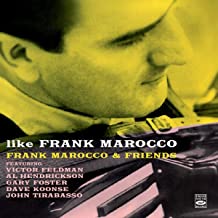
Frank L. Marocco was born January 2, 1931 in Joliet, Illinois but grew up in Waukegan, near Chicago, Illinois. At the age of seven years, his parents enrolled him in a six-week beginner class for learning to play the accordion. His first teacher was George Stefani, who supervised the young accordionist for nine years. Beginning with studying classical music, he soon encouraged the young musician to explore other musical genres. He went on to study piano and clarinet, as well as music theory, harmony, and composition.
At 17, Frank won the first prize in the 1948 Chicago Musicland Festival, and a guest performance with the Chicago Pops Orchestra. His success sent him on a professional music career, establishing a trio and touring the Midwestern states. In the early 1950s he married and moved to Los Angeles, California.
Creating a new band, Marocco played hotels and clubs in Las Vegas, Nevada, Lake Tahoe, Nevada and Palm Springs, California. He later began working in Hollywood, where television studios and movie production companies provided him a successful career.
In the 1960s, Frank recorded a solo album released by Verve Records, worked together with Brian Wilson and the Beach Boys, and performed on the world-famous album Pet Sounds. He performed on a USO tour in the Pacific, appearing onstage with Bob Hope, and also played in the Les Brown big band, during six Love Boat cruises. He performed and recorded in collaboration with hundreds of world-famous jazz musicians, classical artists and conductors during his career.
Marocco wrote and arranged music for solo, duet, and orchestra in a wide variety of musical styles, including jazz, popular standards, international, Latin, religious, and classical. He was the musical director and conductor of an annual music camp, the Frank Marocco Accordion Event, that brought together over 50 accordionists from around the U.S. and Canada.
Accordionist Frank Marocco passed away on March 3, 2012 at his home in San Fernando Valley, California from complications following hip replacement surgery. He was 81 years old.
More Posts: accordion,arranger,bandleader,composer,history,instrumental,jazz,music
Daily Dose Of Jazz…
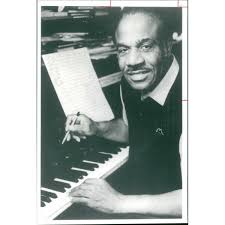
William Moore, Jr., better known as Billy Moore was born on December 7, 1917 in Parkersburg, West Virginia. Chiefly known as an arranger for most of his jazz career, Billy wrote charts for Jimmie Lunceford, Charlie Barnet, Jan Savitt, and Tommy Dorsey in the 1940s. He also worked for publishing companies in New York City.
In the 1950s he relocated to France, where he accompanied and wrote for The Peters Sisters from 1953 to 1960. Following this, he worked from 1960 to 1963 as an arranger for Berliner Rundfunk and then accompanied the Delta Rhythm Boys on tour.
He formed his own music publishing company in order to combat the then prevalent habit of band leaders taking credit for the work of their arrangers and composers. Amongst his uncredited works is the famous countermelody to Barnet’s million-selling hit Skyliner. Moving to Copenhagen, Denmark in the 1970s, he remained active as an arranger. Being friends with Leonard Feather, he sometimes used Moore’s name for songwriting credits.
In his later years in Denmark, he was the administrator of the music foundation established in Ben Webster’s name and for whom he also worked as a business aide. He was also the manager and musical director for the European tours of the Peters Sisters. Pianist and arranger Billy Moore passed away on February 28, 1989 in Copenhagen, Denmark.
Daily Dose Of Jazz…
Joe Britton was born on November 28, 1903 in Birmingham, Alabama and following his student days under the guidance of Fess Whatley, he went to work with Bessie Smith who took him on the road from 1924 through 1926 as a member of her backing group, followed with the Fred Longshaw Orchestra and then the Bill Woods Orchestra. The next year, he jumped to Frank Bunch & the Fuzzy Wuzzies, most likely the most obscure name in the list of the groups he played for.
Settling in New York in the ’30s and immediately got into the fast-paced jazz scene working with Ellsworth Reynold’s Bostonians, Teddy Hill, the band of classic jazz drummer Kaiser Marshall, Charlie Johnson, Edgar Hayes, and the Vernon Andrade Orchestra. In the ’40s: he worked with Benny Carter from 1940-1941 and Dizzy Gillespie, while at the same time collaborating on older styles of jazz.
In the 1940s Britton worked and recorded with Jelly Roll Morton, Jay McShann, and Lucky Millinder in 1942. He would go on to be employed by Wynonie Harris showing up on a half-dozen of her R&B records, and also recorded with Sister Rosetta Tharpe.
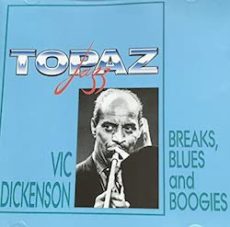
He performed and recorded with pianist Earl Hines. The trombonist dabbled into orchestra arrangements and his work in this field is highlighted on the album Breaks, Blues and Boogies by fellow bone-man Vic Dickenson. retired from full-time professional playing in the 1950s, however, he gigged off and on into the Sixties, including a regular stint in a band led by saxophonist Wesley Fagan. Trombonist Joe Britton passed away on August 12, 1972 in New York City, New York.
More Posts: arranger,bandleader,history,instrumental,jazz,music,trombone
Daily Dose Of Jazz…
Johnny Richards was born Juan Manuel Cascales on November 2, 1911 in Querétaro, Mexico. His father immigrated to the United States into Laredo, Texas in 1919, the family settling first in Los Angeles, California and then in San Fernando, California where he attended and graduated from San Fernando High School. From there he went to Fullerton College in 1930.
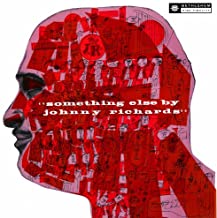
Working in Los Angeles, California from the late 1930s to 1952 when he moved to New York City. He had been arranging for Stan Kenton since 1950 and continued to do so through the mid~Sixties while leading his own bands throughout his career. Additionally, he composed the music for the popular song Young at Heart in 1953, made famous by Frank Sinatra. He recorded nine albums as a leader and as a sideman/arranger working with Charlie Barnet, Harry James, Stan Kenton, and Hugo Lowenstern recorded another eight.
Arranger, composer, and bandleader Johnny Richards, who was a pivotal arranger for some of the more adventurous performances by Stan Kenton’s big band in the 1950s and early 1960, passed away from a brain tumor in New York, New York on October 7, 1968.
More Posts: arranger,bandleader,composer,history,instrumental,jazz,music
Daily Dose Of Jazz…
Edgar Melvin Sampson, born October 31, 1907 in New York City, he started playing violin at the age of six and picked up the saxophone in high school. He started his professional career in 1924 with a violin-piano duo with Joe Colman and through the rest of the 1920s and early ’30s, he played with many bands, including those of Charlie “Fess” Johnson, Duke Ellington, Rex Stewart and Fletcher Henderson.
1933 saw him joining Chick Webb’s band. It was during his tenure with Webb that he created his most enduring work as a composer, writing Stompin’ at the Savoy and “Don’t Be That Way“. Leaving the Webb band in 1936 with a reputation as a composer and arranger, he was able to freelance with Benny Goodman, Artie Shaw, Red Norvo, Teddy Hill, Teddy Wilson, and Chick Webb.
Becoming a student of the Schillinger System in the early 1940s, Edgar continued to play saxophone through the late ’40s and led his own band from 1949 to 1951. Through the Fifties, he worked as an arranger for Latin performers Marcelino Guerra, Tito Rodríguez and Tito Puente.
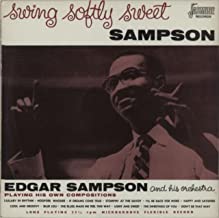
He recorded one album under his own name, Swing Softly Sweet Sampson, in 1956. Due to illness, he stopped working by the late 1960s. Saxophonist, violinist, composer, arranger Edgar Sampson passed away on January 16, 1973 at the age of 65 in Englewood, New Jersey.

More Posts: arranger,composer,history,instrumental,jazz,music,saxophone,violin