

Daily Dose Of Jazz…
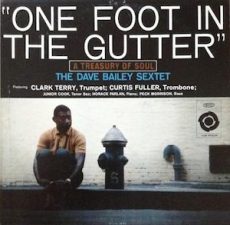
Peck Morrison was born John A. Morrison on September 11, 1919 in Lancaster, Pennsylvania. He was classically trained, and in addition to bass, being competent on trumpet and percussion was also his talent.
During World War II he played in military bands in Italy and after the war he moved to New York City to play professionally. He played with Lucky Thompson in the early 1950s, and then recorded with Horace Silver, Gigi Gryce, and Art Farmer. He played and toured Europe with Gerry Mulligan.
He was a noted accompanist and sideman with Carmen McRae, Tiny Bradshaw, King Pleasure, Zoot Sims, Dave Bailey, Betty Carter, Eddie Jefferson, the J. J. Johnson/Kai Winding Quintet, and Duke Ellington in the Fifties and the latter in the 1960s.
He performed or recorded in the Sixties with Lou Donaldson, Johnny Smith, Mal Waldron, Randy Weston, Babs Gonzales, the Newport Rebels, Shirley Scott, Red Garland, Charles McPherson, and Sy Oliver. In 1986 he performed as a member of the Harlem Blues and Jazz Band.
Bassist Peck Morrison, who never recorded as a session leader, died on February 25, 1988.

More Posts: bandleader,bass,history,instrumental,jazz,music
Daily Dose Of Jazz…
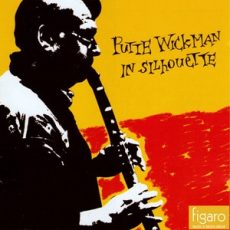
Putte Wickman was born Hans Olof Wickman on September 10, 1924 in Falun, Sweden and grew up in Borlänge, Sweden where his parents hoped he would become a lawyer. He nagged them to allow him to go to high school in Stockholm, Sweden and when he arrived in the capital he still did not know what jazz was and probably the only 15 year-old who did not.
Not having access to a piano in Stockholm, he was given a clarinet by his mother as a Christmas present. As it turned out, he started to hang out with the worst elements in the class, those with jazz records. Wickman considered himself self-taught, having never taken classes on the instrument.
Artie Shaw and Benny Goodman were the role models for the young Wickman, who, in 1944 had turned to music full-time. He was taken on as band leader at Stockholm’s Nalen. He led a band at Nalen for eleven years, and during the 1960s he ran the big band at Gröna Lund and at Puttes, the club he co-owned, at Hornstull in Stockholm.
In 1994, Wickman received the Illis Quorum gold medal, today the highest award that can be conferred upon a private Swedish citizen by the government of Sweden.
Clarinetist Putte Wickman, who was a member of the Royal Swedish Academy of Music and active as a musician until shortly before his passing, died on February 14, 2006.
More Posts: bandleader,clarinet,history,instrumental,jazz,music
Daily Dose Of Jazz…
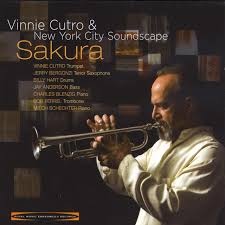
Vinnie Cutro was born in New Jersey on September 9, 1953 and received his formal musical training throughout his formative years. He continued his education at New Jersey University, receiving his B.A in Music Education, then got his Masters in Jazz Performance from New York University. He furthered his studies in jazz composition, classical studies, jazz arranging and counterpoint with Dr. Tom Boras and Jim McNeely.
His working education began as a freelance musician in the New York City area. During the past 30 years Vinnie has performed with Horace Silver, Buddy Rich and Lionel Hampton. During his tenure with the latter he performed guest appearances with various American symphonic orchestras.
He has traveled extensively throughout the world appearing at jazz festivals and concerts in Europe, Japan, Africa, Canada, South America and the U.S.A. Cutro’s debut release as a leader, Blues for the Optimist, came in 1995 and featured Bob Mintzer, Jim McNeely, Victor Jones, and Mike Richmond. His sophomore release, Aberration, features guitarist Mike Stern, trombonist Bob Farrel, bassist Martin Wind, Sarah Jane Cion on piano, Victor Jones on drums and pianist Mitch Schechter.
Trumpeter Vinnie Cutro continues to compose, record and perform in the New York City area with his new ensemble New York City Soundscape.
More Posts: bandleader,history,instrumental,jazz,music,trumpet

MEL BROWN’S B3 ORGAN GROUP
In fact, this true all-star band (all four members are Oregon Music Hall Of Fame inductees) has been a sensation going back to 1997, when they began a 20-year run on Thursday evenings at Portland’s legendary “Jimmy Mak’s” (The Oregonian dubbed them “Jimmy Mak’s signature group”). They’ve continued their Thursday night tradition at the Jack London Revue for the past 6 years. With a collective resume that reads like a “Who’s Who” of NW jazz, blues, and soul, this group has the talent and confidence to be completely spontaneous–from their blistering solos to their improvised arrangements and segues. No wonder they’ve thrilled audiences wherever they’ve played.
More Posts: bandleader,club,drums,history,instrumental,music,organ,preserving,travel
GEORGE COLLIGAN QUARTET
George Colligan Quartet Featuring Devasate’ Phelps
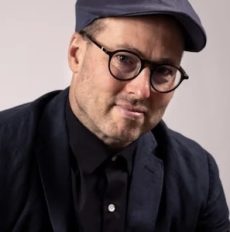
Jazz pianist and Portland State University Professor, George Colligan has made a name for himself not only as an impressive, world-class performer, but also as a mentor and collaborator with younger musicians on the Portland jazz scene. George will be hosting an intimate evening at The 1905 with some of the most talented, young musicians in Portland.
He will be joined by versatile drummer and band leader, Cory Limuaco, virtuoso bassist, Robert Rodriguez, and extraordinary pianist and promising vocalist, Devasate’ Phelps.
More Posts: adventure,bandleader,club,genius,history,instrumental,music,piano,preserving,travel,vocal