

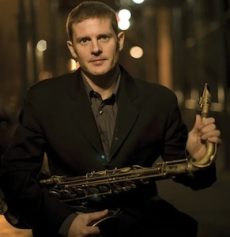
ERIC ALEXANDER
Eric Alexander is one of the most sought-after saxophonists on the modern jazz scene. “The people I listened to in college are still the cats that are influencing me today,” says Alexander. “Monk, Dizzy, Sonny Stitt, Clifford Brown, Sonny Rollins, Jackie McLean, Joe Henderson – the legacy left by Bird and all the bebop pioneers, that language and that feel, that’s the bread and butter of everything I do.”
More Posts: adventure,bandleader,club,composer,genius,history,instrumental,music,preserving,saxophone,travel
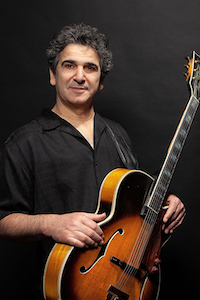
RONI BEN-HUR QUARTET
While many of the compositions on Love Letters were written by giants such as Leonard Bernstein (“Lonely Town”), Benny Golson (“Fair Weather”), and Ben-Hur’s long-time mentor, the late, great Barry Harris (“To Dizzy with Love”), Ben-Hur once again showcases his formidable composing chops with four original compositions. With the Quartet on Love Letters, Ben-Hur creates an irresistible atmosphere of musical harmony and loving connection. Each of Ben-Hur’s compositions reflect an aspect of the love that has propelled the guitarist to ever greater heights in the life and in jazz. With “To Dizzy with Love,” he shares a memory of his friend Barry Harris with a buoyant rendition of a song they once played together at Birdland. In this interpretation we are treated to a joyous dance of swing and Caribbean rhythms. On “Seul `a Paris” (alone in Paris), Ben-Hur’s wistful strings and muted trumpet speak of what it is like to fly solo in the “City of Love.” With the composition, “Waiting for JH”, co-written with the late American pianist Chris Anderson,
Ben-Hur sends a “love letter” to the late Jim Harrison, one of the genre’s most indomitable advocates and promoters, who worked tirelessly for a “who’s who” in jazz. The voice of the unspeakable is heard in “The House that Yosef Built,” a love letter to Ben-Hur’s father. The tune evokes a rush of memories about the hardships his parents faced in their escape from Tunisia in the aftermath of World War II. Guitar, bass and drum deftly lay a rhythmic foundation, and Jensen’s triumphant trumpet celebrates the family’s resilience and the sturdy house and home that Yosef Ben-Hur was determined to build for his family.
More Posts: adventure,bandleader,club,genius,guitar,history,instrumental,jazz,music,preserving,travel

AGUANKÓ
Conga player and composer Alberto Nacif and the superlative musicians who make up the sizzling Latin Jazz group Aguankó have a new, all original Latin Jazz recording titled “Unidad”, which was released at the July 2023 performance at Blue LLama.
This recording features the core group of Aguanko musicians from the incredibly rich Detroit area jazz scene performing original music which will continue the trajectory of this exciting group. Aguanko’s four previous recordings of original music since 2012 have been top 50 in the Jazzweek charts.
More Posts: adventure,bandleader,club,composer,conga,genius,history,music,preserving,travel
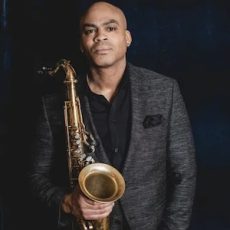
WAYNE ESCOFFERY
The saxophone is presenting his new West Coast Album Release of Alone.
Grammy Award-winning saxophonist Wayne Escoffery is an electrifying force in the jazz world. A two-time Downbeat Critics Poll Winner (2014 & 2021) for both tenor and soprano saxophones, he is a powerhouse talent and one of the most sought-after sidemen in the game.
Leading his own cutting-edge ensembles, Escoffery commands the global stage with jaw-dropping performances that push the boundaries of jazz. His current quartet featuring virtuoso pianist David Kikoski, dynamic bassist Ugonna Okegwo, and the explosive Mark Whitfield Jr. on drums, has been making waves, taking over after the legendary Ralph Peterson Jr.
The group’s 2020 release, The Humble Warrior on Smoke Sessions Records, has been setting the scene on fire with rave reviews and a glowing four-star rating in Downbeat Magazine’s June 2020 issue. This is a band that’s redefining the sound of modern jazz.
Band lineup: Wayne Escoffery, tenor saxophone | Orrin Evans, piano | Ugonna Okegwo, bass | Carl Allen, drums
More Posts: adventure,bandleader,club,genius,history,instrumental,music,preserving,saxophone,travel

KASAN BELGRAVE
Multi-woodwind-instrumentalist and Detroit native Kasan Belgrave is well-rounded within the Detroit music community. His musical heritage of passing down the knowledge and exposure of Detroit music to the youth; like his father, late trumpeter Marcus Belgrave. Kasan has worked with many greats in his young career such as the Queen of Soul Aretha Franklin, Wynton Marsalis & Jazz @ Lincoln Center, Dee Bridgewater, Karriem Riggins, Theo Crocker, Etienne Charles, and many others. In his scholar years at University of Michigan he studied under Robert Hurst, pianist Benny Green, and Andrew Bishop, then continued his studies at MSU under the direction of Diego Rivera and Rodney Whitaker.
Deeply rooted in the tradition of Black American Music, Kasan is also congruently involved in parallel domains of the strong techno scene in Detroit; he appeared on the track “On My Own” with Jon Dixon & Moodyman; he has also performed with Scott Grooves, Carl Craig, Shigeto, and Kyle Hall.
More Posts: adventure,bandleader,club,genius,history,instrumental,jazz,music,preserving,saxophone,travel