

Daily Dose Of Jazz…
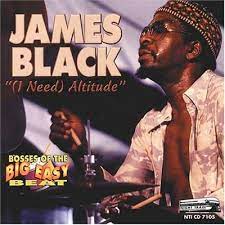
James Norbert Black was born on February 1, 1940 in New Orleans, Louisiana. He played piano and trumpet during his youth and studied music at Southern University in Baton Rouge, Louisiana. He first started working in R&B ensembles as a drummer in the late 1950s, but took a job drumming with Ellis Marsalis in the New Orleans Playboy Club, leading to further work in jazz idioms.
A move to New York City in the mid-Sixties and worked in jazz idioms during the decade with Nat Perrilliat, Roy Montrell, Ellis Marsalis, Nat Adderley and Cannonball Adderley, Joe Jones, Horace Silver, Lionel Hampton, Yusef Lateef, Freddie Hubbard, and Eric Gale.
Returning to New Orleans near the end of the 1960s, playing there with Dr. John, James Booker, Fats Domino, Professor Longhair, Charles Neville, James Rivers, Earl Turbinton and the Dukes of Dixieland. Scram Records brought James on as a session musician, and can be heard on Eddie Bo’s single Hook and Sling. In the 1980s he worked with Cassandra Wilson, Wynton Marsalis, and Germaine Bazzle.
Black was a composer and received two grants from the National Endowment for the Arts. Among his works are Monkey Puzzle and Dee Wee, both of which were recorded by Ellis Marsalis’s ensemble in the early 1960s. Recordings under his name were compiled by Night Train Records and released on CD as I Need Altitude: Rare and Unreleased New Orleans Jazz and Funk, 1968-1978.
Drummer James Black, closely associated with the New Orleans jazz scene, transitioned on August 30, 1988.

More Posts: bandleader,drums,history,instrumental,jazz,music
Daily Dose Of Jazz…
Bob Harrington was born Robert Maxon Harrington in Marshfield, Wisconsin on January 30, 1912. He played piano with Charlie Barnet in the early 1950s and worked with both Red Nichols and Bud Freeman during that decade as a drummer.
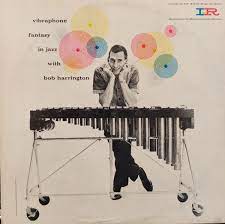
On vibraphone, he played with Georgie Auld, Buddy DeFranco, Vido Musso, Ben Webster, Ann Richards, and Harry Babasin’s Jazzpickers. He released one solo album, Vibraphone Fantasy in Jazz, on Imperial Records in 1957, which is now a collector’s item.
Vibraphonist Bob Harrington, who was adept on drums and piano, transitioned on August 20, 1983 in Kona, Hawaii.

More Posts: bandleader,drums,history,instrumental,jazz,music,piano,vibraphone
Daily Dose Of Jazz…
Big Eye Louis Nelson was born Louis Nelson Delisle on January 28, 1885 in New Orleans, Louisiana into a family who were Creoles of color. He spent most of his life in his hometown and studied clarinet with the elder Lorenzo Tio.
By the age of 15, Big Eye was working professionally in the music venues of Storyville, an area of brothels and clubs in New Orleans where Black musicians could find work. He developed a style of hot jazz, also known as Dixieland, and was an influence on clarinetists Johnny Dodds and Jimmie Noone.
In 1917, Nelson joined the reconstituted Original Creole Orchestra that included Freddie Keppard and Bill Johnson. Disbanded in Boston in the spring of that year, it was reassembled in New York City later in the fall. After a short while, he was replaced by Jimmie Noone. He was the regular clarinetist with the Jones & Collins Astoria Hot Eight but did not play on their 1929 recording sessions.
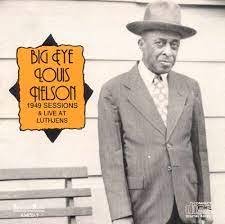
He made his only recordings in his later years in the 1940s, by which time he was often in poor health. Dixieland clarinetist Big Eye Louis Nelson, who also played double bass, banjo, and accordion, transitioned on August 20, 1949.
More Posts: accordion,bandleader,banjo,bass,clarinet,history,instrumental,jazz,music
Daily Dose Of Jazz…
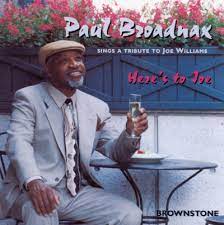
Paul Broadnax was born on January 27, 1926 in Cambridge, Massachusetts to a tenor father with the Lyric Male Quartet who was also a choral director and voice teacher. She also was a dressmaker and bartered those talents to secure piano lessons for the youngster from the age of eight until he was fourteen. They moved to the Roxbury neighborhood of Boston, Massachusetts when he was very young and where he grew up.
He studied clarinet in Junior High School which allowed him to play in the marching band. His classmates were Roy Haynes, Alan Dawson and Ray Perry, and during this period in life he formed his own band. After graduating from Mechanic Arts High School he was drafted into the Army Air Forces and sent to Texas. After being a foot soldier for only two days he was assigned to Special Services as a musician. It was here that he met arranger and pianist Donn Trenner, who he would later collaborate with on a later album.
Returning to Roxbury after World War II, Paul hooked up with alto saxophonist Harold Emerson, trumpeter Buster Daniels and tenor saxophonists Doug Lee and Fred Williams. He began playing with ensembles at jazz venues throughout the region. Nat King Cole and Duke Ellington would become huge influences inhis development. In the late 1940s, Broadnax began writing arrangements for Sabby LewisIn the late 1940s, Broadnax began writing arrangements for Sabby Lewis for more than five years, and worked with Paul Gonsalves before he joined the Ellington Orchestra.
In addition to supplying arrangements for Lewis, directing his own groups and working with the Tom Kennedy and Buster Daniels bands, he played tenor, piano and sang with the Gilmore Big Band, all the while writing arrangements for the group. Setting up other sources of revenue to supplement his earnings as a musician, Broadnax attended what is now the Wentworth Institute of Technology to be certified as an airplane mechanic, and he graduated from Northeastern University with an associate’s degree in engineering. He worked at Raytheon for many years, then left to focus more on music, while also running an Amway business.
He would go on to form the Paul Champ Three featuring bassist Champlain “Champ” Jones and drummer Tony Sarni, have a regular spot on the ABC affiliate in Boston and for another group with bassist Dave Trefethen and drummer Les Harris, Jr. He would appear with among others, Cab Calloway, Dorothy Donnegan, Lionel Hampton, Clark Terry, Joe Williams, and Jimmy Witherspoon. Vocalist and pianist Paul Broadnax, who in 2003 was chosen as Musician of the Year by the Boston Musicians’ Association, transitioned on August 1, 2018.
More Posts: bandleader,history,instrumental,jazz,music,piano,vocal
Daily Dose Of Jazz…
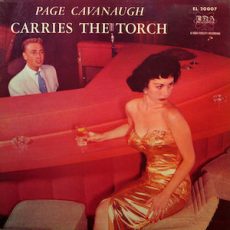
Page Cavanaugh was born Walter Page Cavanaugh on January 26, 1922 in Cherokee, Kansas and began on piano at age nine. By the time he turned 16 he was playing with Ernie Williamson’s band for a year before moving to Los Angeles, California and joining the Bobby Sherwood band at age 20.
While serving in the military during World War II, he met guitarist Al Viola and bassist Lloyd Pratt, and they formed a trio. After the war’s end they performed together in the style of the Nat King Cole Trio, scoring a number of hits in the late 1940s, including The Three Bears, Walkin’ My Baby Back Home, and All of Me. The trio appeared in the films A Song Is Born, Big City, Lullaby of Broadway and Romance on the High Seas. He recorded dozens of tracks with Doris Day, Frank Sinatra, Dinah Shore, June Christy, Mel Torme and other legendary singers.
During the early Fifties he had a program, Page Pages You, on the short-lived Progressive Broadcasting System, the trio played on Frank Sinatra’s radio program, Songs by Sinatra, and on The Jack Paar Show. Cavanaugh played in Los Angeles nightclubs through the 1990s, both in a trio setting and as a septet, the Page 7. He recorded with Bobby Woods & Les Deux Love Orchestra, and as a bandleader with MGM, Capitol, RCA, Star Line, Tiara, and Dobre Records over the course of his career, releasing his final trio album, Return to Elegance, in 2006.
Pianist, vocalist, and arranger Page Cavanaugh transitioned from kidney failure on December 19, 2008 in Los Angeles, California.
More Posts: arranger,bandleader,history,instrumental,jazz,music,piano,vocal