

Daily Dose Of Jazz…
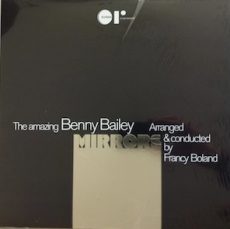
Anthony Frank “Tony” Inzalaco, Jr. was born January 14, 1938 in Passaic, New Jersey. From childhood drumming he went on to obtain bachelor’s and master’s degrees from the Manhattan School of Music. He was active in the United States from 1959 to 1968, performing and/or recording with Vinnie Burke, Jaki Byard, Donald Byrd, Chris Connor, Maynard Ferguson, Jim Hall, Roger Kellaway, Morgana King, Lee Konitz, Morris Nanton, Duke Pearson, Benny Powell, Buddy Rich, Charlie Shavers, Johnny Smith, Billy Taylor, and Ben Webster.
Moving to Germany in 1968 he lived there for a decade as a member of the bands of Kurt Edelhagen and Eugen Cicero. He worked with Benny Bailey, Don Byas, Kenny Clarke and Francy Boland, Kenny Drew, Art Farmer, Dizzy Gillespie, Dexter Gordon, Johnny Griffin, Peter Herbolzheimer, Carmen McRae, Sal Nistico, Horace Parlan, Fritz Pauer, Oscar Peterson, Idrees Sulieman, Ben Webster again, Jiggs Whigham, Jimmy Woode, and Leo Wright during his time in the country.
After moving back to the States, he was active principally in Boston, Massachusetts in the 1980s, working with Byrd, Griffin, and Farmer again, as well as with Ruby Braff, Al Cohn, and Dakota Staton.
Relocating again to Los Angeles in the 1990s, drummer Tony Inzalaco has led his own ensemble for the past decade.

More Posts: bandleader,drums,history,instrumental,jazz,music
Daily Dose Of Jazz…
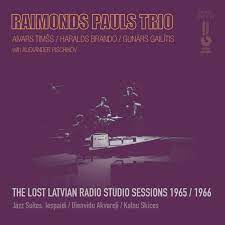
Ojārs Raimonds Pauls was born January 12, 1936 in Iļģuciems, Riga, Latvia and is the second child of a glass blowing factory worker and a seamstress. His father played drums and his grandfather played the violin, and following in his grandfather’s footsteps he is enrolled into Riga’s institute of Music kindergarten branch. Being too young and his fingers unfit for playing violin, he started on the piano.
By 1943 he was studying at Riga’s 7th Elementary school while continuing piano lessons with professor Valerijs Zosts and teachers Emma Eglīte and Juta Daugule. 1946 saw Raimonds admitted to the Secondary Musical School of Emīls Dārziņš, combining his studies at the elementary school for three years.
When he turns 14, Pauls was playing piano at restaurants and clubs with a violin and saxophone virtuoso Gunārs Kušķis. Five years later he completed his studies at the Riga’s 7th Elementary school, however, during this time, he independently developed a liking for playing jazz by studying and imitating various jazz records.
He would go on to compose for musicals, ballets, theater performances, puppet shows, films, choirs, and instrumentals, He has received several honors from his home country, the USSR, Sweden, Japan and Armenia.
Composer, arranger and pianist Raimonds Pauls, who was the Minister of Culture of Latvia from 1988 to 1993, continues to record and perform.
More Posts: arranger,bandleader,composer,instrumental,jazz,music,piano
Daily Dose Of Jazz…
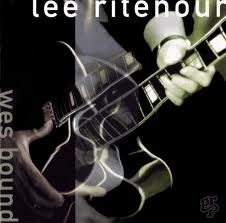
Lee Mack Ritenour was born January 11, 1952 in Los Angeles, California and at the age of eight he started playing guitar. Four years later decided on a career in music and by 16 he was playing on his first recording session with the Mamas & the Papas. He developed a love for jazz, influenced by guitarist Wes Montgomery. A year later he worked with Lena Horne and Tony Bennett, then studied classical guitar at the University of Southern California.
His solo career began with his debut album First Course in 1976 which was a jazz-funk sound of the 1970s. Lee followed with Captain Fingers, The Captain’s Journey, and Feel the Night to close out the decade. The Eighties saw Ritenour adding pop elements to his music, which got him charting so he stayed the course. During this period he added vocals to his music, recruiting such artists as Djavan, Bill Champlin, Eric Tagg, Patti Austin, Ivan Lins, Phil Perry, João Bosco, Kate Markowitz, Maxi Priest, Lisa Fischer and Michael McDonald.
In 1988, his Brazilian influence came to the forefront on Festival, an album featuring his work on nylon-string guitar. He changed direction with his straight-ahead jazz album Stolen Moments which he recorded with saxophonist Ernie Watts, pianist Alan Broadbent, bassist John Patitucci, and drummer Harvey Mason.
Then 1991 had Ritenour and keyboardist Bob James forming the group Fourplay, where he stayed until 1997. He released the career retrospective Overtime in 2005. Smoke n’ Mirrors came out the next year with the debut of his thirteen-year-old son, Wesley, on drums.
Guitarist Lee Ritenour has recorded 34 albums, garnered 16 Grammy nominations, received one Grammy Award and has been a judge for the Independent Music Awards. He continues to explore, record, compose and perform.
More Posts: bandleader,guitar,history,instrumental,jazz,music

Daily Dose Of Jazz…
Waymon Reed was born on January 10, 1940 in Fayetteville, North Carolina and attended the Eastman School of Music. He went on to play with trumpeter/saxophonist Ira Sullivan. Joining James Brown’s band from 1965 to 1969, he played on It’s a Man’s Man’s Man’s World.
Reed worked with the big bands of Frank Foster and Thad Jones-Mel Lewis. He became a member of the Count Basie Orchestra in 1969, staying until 1973. He returned to play with Basie again in 1977–78.
He married Sarah Vaughan and worked with her from 1978–80, but shortly afterwards they divorced. He played on B.B. King’s album There Must Be A Better World Somewhere in 1981. In 1977, Reed recorded his one album as leader, 46th and 8th, featuring tenor saxophonist Jimmy Forrest, pianist Tommy Flanagan, bassist Keter Betts and drummer Bobby Durham.
Trumpeter Waymon Reed, who was principally a bebop soloist, transitioned from cancer on November 25, 1983 in Nashville, Tennessee.
More Posts: bandleader,history,instrumental,jazz,music,trumpet
Daily Dose Of Jazz…
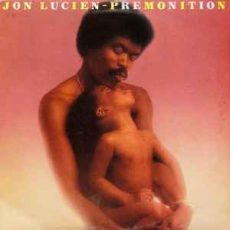
Lucien Leopold Harrigan, professionally known as Jon Lucien was born on January 8, 1942 in Tortola in the British Virgin Islands but was raised in St. Thomas. His father was a musician whose main instrument was a three-coursed Latin guitar-like chordophone known as a Tres. As a teenager, he played bass in his father’s band.
During the 1960s he moved to New York City and while performing at a party, he was discovered by an executive from RCA. He released his debut album (I Am Now in 1970 with a mix of pop and jazz standards. His sophomore album, Rashida, contained only songs written by Lucien, with Lady Love receiving radio airplay, and Dave Grusin receiving a Grammy Award nomination for his arrangements. He went on to record two albums for Columbia and made guest appearances on Yesterday’s Dreams by Alphonso Johnson and Mr. Gone by Weather Report.
After his daughter drowned in 1980 Jon spent much of the decade struggling with drug addiction. He returned to music in the Nineties with the albums Listen Love and Mother Nature’s Son. When a second daughter died tragically in the crash of TWA Flight 800, Lucien dedicated his album Endless Love to her.
Vocalist and composer Jon Lucien transitioned from respiratory failure in Orlando, Florida on August 18, 2007.
More Posts: bandleader,history,instrumental,jazz,music,vocal