

Daily Dose Of Jazz…
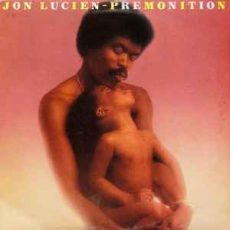
Lucien Leopold Harrigan, professionally known as Jon Lucien was born on January 8, 1942 in Tortola in the British Virgin Islands but was raised in St. Thomas. His father was a musician whose main instrument was a three-coursed Latin guitar-like chordophone known as a Tres. As a teenager, he played bass in his father’s band.
During the 1960s he moved to New York City and while performing at a party, he was discovered by an executive from RCA. He released his debut album (I Am Now in 1970 with a mix of pop and jazz standards. His sophomore album, Rashida, contained only songs written by Lucien, with Lady Love receiving radio airplay, and Dave Grusin receiving a Grammy Award nomination for his arrangements. He went on to record two albums for Columbia and made guest appearances on Yesterday’s Dreams by Alphonso Johnson and Mr. Gone by Weather Report.
After his daughter drowned in 1980 Jon spent much of the decade struggling with drug addiction. He returned to music in the Nineties with the albums Listen Love and Mother Nature’s Son. When a second daughter died tragically in the crash of TWA Flight 800, Lucien dedicated his album Endless Love to her.
Vocalist and composer Jon Lucien transitioned from respiratory failure in Orlando, Florida on August 18, 2007.

More Posts: bandleader,history,instrumental,jazz,music,vocal
Daily Dose Of Jazz…
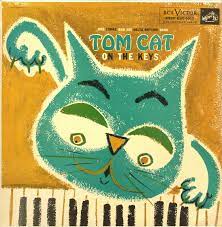
Bob Zurke came into the world as Boguslaw Albert Zukowski on January 7, 1912 in Hamtramck, Michigan. By the age of 16 he was already using the name Bob Zurke professionally when he first recorded with a group led by pioneering female jazz bassist Thelma Terry. At that time, Zurke also began to work as a copyist for the Detroit-based booking agency run by Jean Goldkette.
Through the end of 1936, he worked in various Detroit, Michigan clubs, mostly as a band pianist, but he occasionally went on tour with other groups. During this period he developed a long friendship with pianist Marvin Ash, who would later go on to record some of Zurke’s compositions.
1937 saw Bob was hired by bandleader Bob Crosby to fill in for Joe Sullivan, then ailing with tuberculosis and it was here that he gained notice, contributing arrangements to the band’s book and as a featured soloist.
As an arranger his arrangement of Meade Lux Lewis’ Honky Tonk Train Blues, became a hit. In 1938 he was named the winner in the piano category in the DownBeat Reader’s Poll. By 1939 Sullivan was back with the Bob Crosby Orchestra and Zurke subsequently worked with the William Morris Agency to form his own band. They debuted at an RCA Victor recording session that same year as Bob Zurke and his Delta Rhythm Orchestra. His alcohol dependency, alleged drug use and unreliability and volatility led to the group disbanding.
After a period of wandering from job to job Zurke settled in Los Angeles, California in mid-1942 and began an engagement at the Hangover Club in Los Angeles that he held until the end of his days. In 1943, he made one final recording, synchronizing an original piano part to the Walter Lantz cartoon Jungle Jive (in the Swing Symphony series), one of his most difficult and challenging solos.
He published two folios of jazz piano solos and several sheet music editions of single pieces; in addition to that, 14 original compositions from Zurke are known to exist.
Pianist, arranger, composer and bandleader Bob Zurke, who was considered one of the finest boogie~woogie pianists of the time, collapsed at the Hangover Club and was taken to the hospital where he transitioned on February 16, 1944 from complications of pneumonia, aggravated by acute alcohol poisoning. He was 32.
More Posts: arranger,bandleader,composer,history,instrumental,jazz,music,piano

Daily Dose Of Jazz…
John McLaughlin was born on January 4, 1942 into a family of musicians in Doncaster, West Riding of Yorkshire, England. As a child he took up the guitar at the age of 11, exploring styles from flamenco to the jazz of Tal Farlow, Django Reinhardt and Stéphane Grappelli. Moving to London, England from Yorkshire in the early Sixties, hestarted playing with Alexis Korner and the Marzipan Twisters before moving on to Georgie Fame and the Blue Flames, the Graham Bond Organisation, and Brian Auger.
During this period he often supported himself with session work, which he often found unsatisfying but which enhanced his playing and sight-reading. Also, he gave guitar lessons to Jimmy Page. In 1963, Jack Bruce formed the Graham Bond Quartet with Bond, Ginger Baker and John McLaughlin. They played an eclectic range of music genres, including bebop, blues and rhythm and blues.
By the end of the decade McLaughlin recorded his debut album Extrapolation in London. The album’s post-bop style is quite different from McLaughlin’s later fusion works. He moved to the U.S. in 1969 to join Tony Williams’ group Lifetime. He went on to play on Miles Davis’ albums In a Silent Way, Bitches Brew, Live-Evil, On the Corner, Big Fun and A Tribute to Jack Johnson.
As his reputation as a “first-call” session player grew, he was tapped to record as a sideman with Miroslav Vitous, Larry Coryell, Joe Farrell, Wayne Shorter, Carla Bley, the Rolling Stones, DExter Godon, Santana, Paco de Lucia and others.
The Seventies saw him put together the Mahavisnu Orchestra, delved into Indian classical music, and recorded with Stanley Clarke on his School Days album. Throughout the rest of the century he continued to perform with Mahavisnu, no longer the orchestra, as well as sideman duties on a variety of albums, performances and genres well into the new century.
He has recorded nineteen albums as a leader, six collaborative albums, twelve live albums, and 45 as a sideman. Guitarist John McLaughlin continues to perform and record.
More Posts: bandleader,guitar,history,instrumental,jazz,music
Daily Dose Of Jazz…
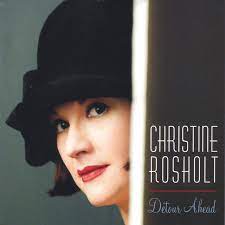
Christine Rosholt was born January 3, 1965 in Minneapolis, Minnesota. Graduating from the Minneapolis Children’s Theater Company & School, she went on to earn a bachelor’s degree in performance art and photography from the Art Institute of Chicago.
Her training in theater helped her become adept at working and holding a room. She was a consummate entertainer, connecting instantly with her audience, bantering with her band, telling stories, laughing at herself.
She first appeared in theaters as an actress and singer. By the early 2000s she began performing as a jazz vocalist in clubs in her hometown, as the band singer of Beasley’s Big Band. Influences from Anita O’Day, Ella Fitzgerald, Billie Holiday, Blossom Dearie and Frank Sinatra were prevalent in her delivery.
She recorded and released three full-length CDs between 2006 and 2011, Detour Ahead, Lipstick: Live at the Dakota, and Pazz with British songwriter Kevin Hall, featuring a new direction blending pop, jazz and R&B.
Beyond a packed performance schedule which took her across the twin cities and as far as Fargo, or cramming in rehearsals for fundraisers, she was an avid volunteer, activist, committee member, craftspeople recruiter. Vocalist Christine Rosholt transitioned suddenly on December 27, 2011 in Minneapolis.
More Posts: bandleader,history,instrumental,jazz,music,vocal

Daily Dose Of Jazz…
Judd Proctor was born Procter on January 2, 1931 in Doncaster, Yorkshire, England. He played banjo in his youth and joined a local trio, but switched to guitar in his teens. He won a regional Melody Maker contest in a group, The Zetland Players. By the age of 18 he was conscripted into the Royal Air Force, where he met and was influenced by guitarist Ike Isaacs. After his military service ended, he worked in accountancy for British Rail, but soon left to join a dance band in Nottingham and became a professional musician.
After playing in various bands he joined Ray Ellington’s quartet in 1955, remaining for six years. He appeared on many radio broadcasts including The Goon Show. The early Sixties saw Proctor become a session musician, appearing on recordings by Cliff Richard, Helen Shapiro, The Springfields, Cilla Black, Serge Gainsbourg, Harry Nilsson and many others. In his later years he worked with the Benny Goodman Orchestra. He recorded some instrumentals under his own name, including the 1961 single Palamino/Nola, and a 1968 LP, Guitars Galore.
Judd appeared on many television shows with Ella Fitzgerald, Sammy Davis Jr., and Victoria Wood, and on many film soundtracks. The 1960s through the ‘80s had him touring with Stanley Black, a member of the Don Lusher Orchestra, and with the Bert Kaempfert Orchestra. His last and longest regular gig was providing incidental music for the TV comedy series Last of the Summer Wine.
Guitarist and session musician Judd Proctor, whose name was often misspelled on early recordings, transitioned on August 21, 2020 in Market Deeping, Lincolnshire, England at the age of 89.
More Posts: bandleader,guitar,history,instrumental,jazz,music