

Daily Dose Of Jazz…
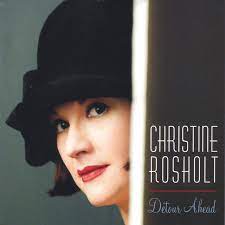
Christine Rosholt was born January 3, 1965 in Minneapolis, Minnesota. Graduating from the Minneapolis Children’s Theater Company & School, she went on to earn a bachelor’s degree in performance art and photography from the Art Institute of Chicago.
Her training in theater helped her become adept at working and holding a room. She was a consummate entertainer, connecting instantly with her audience, bantering with her band, telling stories, laughing at herself.
She first appeared in theaters as an actress and singer. By the early 2000s she began performing as a jazz vocalist in clubs in her hometown, as the band singer of Beasley’s Big Band. Influences from Anita O’Day, Ella Fitzgerald, Billie Holiday, Blossom Dearie and Frank Sinatra were prevalent in her delivery.
She recorded and released three full-length CDs between 2006 and 2011, Detour Ahead, Lipstick: Live at the Dakota, and Pazz with British songwriter Kevin Hall, featuring a new direction blending pop, jazz and R&B.
Beyond a packed performance schedule which took her across the twin cities and as far as Fargo, or cramming in rehearsals for fundraisers, she was an avid volunteer, activist, committee member, craftspeople recruiter. Vocalist Christine Rosholt transitioned suddenly on December 27, 2011 in Minneapolis.

More Posts: bandleader,history,instrumental,jazz,music,vocal

Daily Dose Of Jazz…
Judd Proctor was born Procter on January 2, 1931 in Doncaster, Yorkshire, England. He played banjo in his youth and joined a local trio, but switched to guitar in his teens. He won a regional Melody Maker contest in a group, The Zetland Players. By the age of 18 he was conscripted into the Royal Air Force, where he met and was influenced by guitarist Ike Isaacs. After his military service ended, he worked in accountancy for British Rail, but soon left to join a dance band in Nottingham and became a professional musician.
After playing in various bands he joined Ray Ellington’s quartet in 1955, remaining for six years. He appeared on many radio broadcasts including The Goon Show. The early Sixties saw Proctor become a session musician, appearing on recordings by Cliff Richard, Helen Shapiro, The Springfields, Cilla Black, Serge Gainsbourg, Harry Nilsson and many others. In his later years he worked with the Benny Goodman Orchestra. He recorded some instrumentals under his own name, including the 1961 single Palamino/Nola, and a 1968 LP, Guitars Galore.
Judd appeared on many television shows with Ella Fitzgerald, Sammy Davis Jr., and Victoria Wood, and on many film soundtracks. The 1960s through the ‘80s had him touring with Stanley Black, a member of the Don Lusher Orchestra, and with the Bert Kaempfert Orchestra. His last and longest regular gig was providing incidental music for the TV comedy series Last of the Summer Wine.
Guitarist and session musician Judd Proctor, whose name was often misspelled on early recordings, transitioned on August 21, 2020 in Market Deeping, Lincolnshire, England at the age of 89.
More Posts: bandleader,guitar,history,instrumental,jazz,music
Daily Dose Of Jazz…
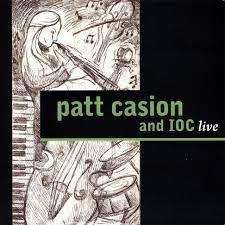
Patt Casion was born on December 31, 1963. She graduated from Berklee College of Music in Boston, Massachusetts and pursued a career that led her around the world, working in multiple genres. Along with playing with her own band, IOC with its rotating membership, she performed regularly in every kind of venue. Her versatility also made her an in-demand musical instructor.
Casion returned to the sound of the 50s and 60s, and introduced African based music into the post bop era music. Her music is also rooted in the Black church gospel idiom as she weaved improvisation into all her music.
Soprano saxophonist Patt Casion, who performed in both gospel and jazz genres, transitioned from cancer in Monterey, California on December 31, 2017. She was 55.

More Posts: bandleader,history,instrumental,jazz,music,saxophone

Daily Dose Of Jazz…
Ben Williams was born on December 28, 1984 in Washington, D.C. and began playing bass at age 10. He graduated from Duke Ellington School of the Arts. He received a Bachelor of Arts in Music Education from Michigan State University and a Master of Music in Jazz Studies at the Juilliard School.
In 2009, he won the prestigious Thelonious Monk International Jazz Bass Competition as judged by Ron Carter, Charlie Haden, Dave Holland, Robert Hurst, Christian McBride, and John Patitucci. The honor included a recording contract with Concord Records through which Ben released his debut album, State of Art, in 2011. The album featured saxophonist Marcus Strickland, guitarist Matthew Stevens, pianist Gerald Clayton, drummer Jamire Williams, and percussionist Etienne Charles.
Williams’ 2015 album Coming of Age brought together sidemen Marcus Strickland on tenor and soprano saxophones, Matthew Stevens on electric guitar, Christian Sands on piano, and John Davis on drums.
By 2020, Ben contributed to the live streamed recording of the singer Bilal’s EP Voyage-19, created remotely during the COVID-19 lockdowns. It was released the following month with proceeds from its sales going to participating musicians in financial hardship from the pandemic.
He was a member of guitarist Pat Metheny’s Unity Band, which won a Grammy Award for Best Jazz Instrumental Album for Unity Band at the 2013 award show. He was introduced as one of the “25 for the Future” by DownBeat magazine in 2016. Double bassist Ben Williams continues to compose, perform and record.
More Posts: bandleader,bass,history,instrumental,jazz,music
Three Wishes
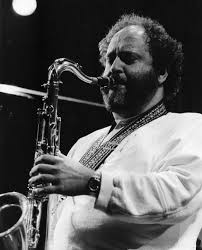
The Baroness asked Joe Farrell what his three wishes would be and his response was:
- “Money! And if I had that, it would satisfy the second and third wish.”

More Posts: bandleader,history,instrumental,jazz,music,saxophone