

Daily Dose Of Jazz…
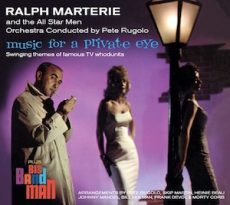
Ralph Marterie was born in Acerra near Naples, Italy on December 24 1914 and first played professionally at age 14 in Chicago, Illinois. In the 1940s, he played trumpet for various bands. During World War II he got his first job as a bandleader courtesy of the US Navy. He was then hired by the ABC Radio network and the reputation built from these broadcasts led to a recording contract in 1949 with Mercury Records.
In 1953 Ralph recorded a version of Bill Haley’s Crazy, Man, Crazy, which reached No. 13 on the Billboard jockey chart and No. 11 on Cashbox that year. His recordings of Pretend and Caravan made the Top 10 and the latter sold over one million copies and was awarded a gold disc. His highest success in the U.S. charts was a cover of Skokiaan in 1954. He had other hits with Tricky, Shish-Kebab, Dancing Trumpet, Dry Marterie, and Carla.
Trumpeter and big band leader Ralph Marterie transitioned on October 10, 1978 in Dayton, Ohio.

More Posts: bandleader,history,instrumental,jazz,music,trumpet
Daily Dose Of Jazz…
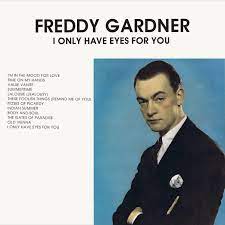
Frederick James Gardner was born on December 23, 1910 in London, England and took up the saxophone at 15 to help alleviate asthma. After minimal coaching he formed the semi-professional New Colorado Band in 1928, and a year later, while working as an office clerk, entered the band in a contest at Chelsea Town Hall and won. He was spotted by the founding editor of Melody Maker magazine who was distributing the prizes, and a year later secured his first professional position.
In 1933, Gardner was taken under the wing of Ray Noble and recorded with the New Mayfair Orchestra. He played in London clubs when working with Sidney Lipton’s Orchestra and at the Mayfair Hotel with Bert Firman’s band and with Billy Bissett. He became a prolific session musician, doubling on all the reeds, although his main instrument was alto saxophone.
He recorded with Benny Carter, Ray Noble, Valaida Snow, Jay Wilbur Buck Washington, and John W. Bubbles. From 1936 to 1937 Freddy arranged and performed on the radio, led small groups and his Swing Orchestra, which included Ted Heath.
During World War II, he was part of the official dance band for the RNPS called the Blue Mariners led by George Crow. He was regularly given special leave to continue his recording and broadcasting. Some recordings were made under the band name Freddie Gardner and his Mess Mates. Folowing the war he continued with extensive freelance work, including as a soloist with the Peter Yorke Concert Orchestra.
Saxophonist Freddy Gardner was taken ill while mending one of his son’s bicycles in the garden of his Brooke Street home in London. An hour later at St. Mary’s Hospital in London he transitioned from a stroke on July 26, 1950 at the age of 39.
More Posts: arranger,bandleader,history,instrumental,jazz,music,saxophone
Daily Dose Of Jazz…
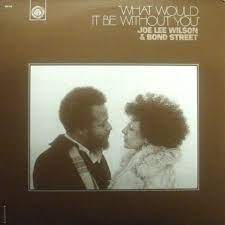
Joe Lee Wilson was born on December 22, 1935 in Bristow, Oklahoma of African-American and Creek Native American parentage who were farmers.
Seeing Billie Holiday perform in 1951 began his interest in a music-industry career. Moving to Los Angeles, California at the age of 15, he went to Los Angeles High School, where he majored in music and sang in an a cappella choir. Graduating with honors in 1954, Joe won a scholarship to the Los Angeles Conservatory of Music, where he studied opera, leaving after a year and then attending Los Angeles Junior College.
He began singing with local bands in 1958 and toured the West Coast, where he sat in with Sarah Vaughan, and down to Mexico. Relocating to New York City by 1962, he worked with Sonny Rollins, Lee Morgan, Miles Davis, Pharoah Sanders, Freddie Hubbard, Kenny Dorham and Jackie McLean. During the 1970s, Wilson operated a jazz performance loft in New York’s NoHo district known as the Ladies’ Fort at 2 Bond Street. His regular band, Joe Lee Wilson Plus 5, featured the alto saxophonist Monty Waters and for several years the Japanese guitarist Ryo Kawasaki. Archie Shepp and Eddie Jefferson were frequent collaborators at these sessions.
Wilson had a minor radio hit on New York jazz radio in 1975, a rendition of Norman Mapp’s Jazz Ain’t Nothing But Soul. In 1977 he and his English wife Jill Christopher moved to Europe and settled in Brighton, Sussex. He recorded regularly with pianist Kirk Lightsey, including the Candid recording Feelin’ Good. One of his last albums was an Italian recording with Riccardo Arrighini and Gianni Basso, Ballads for Trane.
Inducted into the Oklahoma Jazz Hall of Fame in 2010, he gave his last public performance at the event. He is the subject of a documentary film, Around Joe Lee, by Yves Breux and Brad Scott. Vocalist Joe Lee Wilson transitioned from congestive heart failure at his Brighton home on July 17, 2011, aged 75.
More Posts: bandleader,history,instrumental,jazz,music,vocal
Daily Dose Of Jazz…
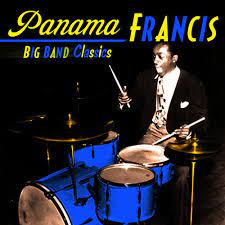
Panama Francis was born David Albert Francis on December 21, 1918 in Miami, Florida to a Haitian father and an English property-owning mother in the Bahamas. He began playing the drums even before attending school and initially played in marching bands and local drum and bugle corps.
His first professional playing was in the 1930s as part of George Kelly’s band from 1934 to 1938. He then became a member of the Florida Collegians in 1938. After his move to New York City that year, he worked with Tab Smith, Billy Hicks, and Roy Eldridge before the 1940s. Francis acquired his nickname from Eldridge at a moment when he was wearing a panama hat and Eldridge could not remember his new drummer’s name.
Joining Lucky Millinder’s big band in 1940, he often played at the Savoy Ballroom. After leaving Millinder he was with Willie Bryant’s band in 1946 and then Cab Calloway from 1947 to 1952. He performed in three short films alongside the latter. For much of the 1950s, Panama was a studio musician in New York, accompanying the likes of Bobby Darin, the Four Seasons, the Platters, Dion DiMucci, Neil Sedaka, and Jackie Wilson.
He went on to tour with Dinah Shore, then moved to California where he struggled to find work. The early Seventies saw him touring Japan with Sam “The Man” Taylor, then appeared on film in 1972, in Lady Sings the Blues. Back in New York in 1973, Francis was part of Sy Oliver’s nonet for two years and during this period he played jazz festivals and toured internationally with other bands.
He revived the Savoy Sultans jazz and dance band in 1979, and he appeared regularly at the Rainbow Room in New York City for eight years from 1980. Panama became drummer in the Benny Goodman Quartet for concerts in 1982. He appeared in the 1994 film The Statesmen of Jazz as a member of the Statesmen of Jazz.
Over his career he recorded with Ray Bryant, Eddie Barefield, Arnett Cobb, Earl Hines, Ray Conniff, Eubie Blake, Oscar Brown Jr., Dorothy Donegan, Roy Eldridge, Dizzy Gillespie and numerous others.Drummer Panama Francis, who mainly played swing jazz, transitioned in Orlando, Florida on November 13, 2001 following a stroke at age 82.
More Posts: bandleader,drums,history,instrumental,jazz,music
Daily Dose Of Jazz…
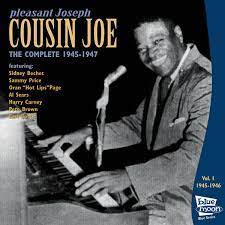
Cousin Joe was born Pleasant Joseph on December 20, 1907 in Wallace, Louisiana. He worked at Whitney Plantation throughout his childhood. Until 1945, he toured Louisiana, but that year he was asked to take part in the King Jazz recording sessions organized by Mezz Mezzrow and Sindey Bechet.
In the 1970s, Cousin Joe toured extensively throughout the United Kingdom and Europe, both individually and as part of the American Blues Legends ’74 revue organised by Big Bear Music. He also recorded the album Gospel-Wailing, Jazz-Playing, Rock’n’Rolling, Soul-Shouting, Tap-Dancing Bluesman From New Orleans for Big Bear.
Vocalist and pianist Cousin Joe transitioned in his sleep from natural causes in New Orleans, Louisiana at the age of 81 on October 2, 1989.
More Posts: bandleader,history,instrumental,jazz,music,piano,vocal